

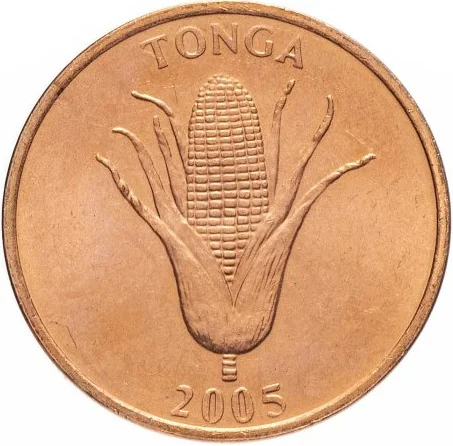
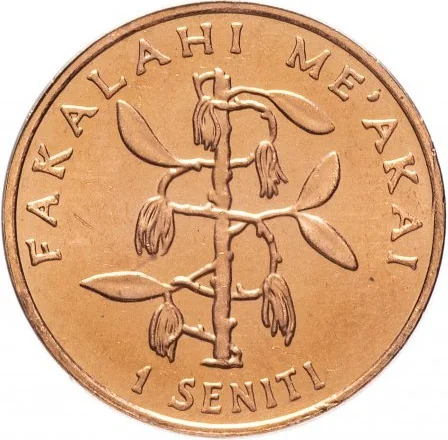
1 seniti – Tonga
Add to wishlist
Circulating commemorative coins
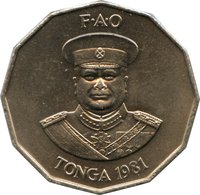
Commemoration: FAO - World Food Day
Tonga
Context
Years: 2002–2005
Issuer: Tonga
Ruler: Tāufaʻāhau Tupou IV
Currency:
(since 1967)
Demonetization: 1 October 2015
Material
References
KM: #
Numista: #15433
Value
Exchange value: 0.01 TOP
Obverse
Reverse
Edge
Plain
Categories
| Organization> FAO |
Mints
| Name | Mark |
|---|---|
| Royal Mint | — |
Mintings
| Year | Mint Mark | Mintage | Quality | Collection |
|---|---|---|---|---|
| 2002 | — | — | ||
| 2005 | — | — |
Historical background
In 2002, the Kingdom of Tonga was operating under a unique and long-standing currency arrangement. The national currency, the Pa'anga (TOP), was not freely convertible and was pegged to a basket of currencies, heavily weighted towards the Australian dollar, the New Zealand dollar, and the US dollar. This peg, managed by the National Reserve Bank of Tonga (NRBT), provided a crucial anchor for price stability and economic planning in a small, import-dependent island nation. However, it also meant that Tonga's monetary policy was largely reactive to the movements of these major currencies, limiting independent tools to manage domestic economic conditions.
The economy in the early 2000s was facing significant challenges that put pressure on this system. Tonga was recovering from a period of low growth and was heavily reliant on remittances from a large diaspora, export of squash, and a growing tourism sector. Fiscal deficits and a growing public debt burden were concerns, and the fixed exchange rate regime sometimes led to a perceived overvaluation of the Pa'anga. This overvaluation hurt the competitiveness of Tongan exports and encouraged imports, contributing to a persistent trade deficit. The currency peg also required careful management of foreign reserves to maintain confidence and defend the fixed rate.
Consequently, the currency situation in 2002 was one of stability on the surface, underpinned by the peg, but with underlying vulnerabilities. Discussions often centered on the sustainability of the peg in the face of external shocks and internal fiscal pressures. The focus for authorities was on maintaining sufficient foreign reserves, promoting export diversification to earn foreign exchange, and exercising fiscal discipline to support the fixed exchange rate regime—a system seen as essential for stability but requiring constant vigilance to maintain.
The economy in the early 2000s was facing significant challenges that put pressure on this system. Tonga was recovering from a period of low growth and was heavily reliant on remittances from a large diaspora, export of squash, and a growing tourism sector. Fiscal deficits and a growing public debt burden were concerns, and the fixed exchange rate regime sometimes led to a perceived overvaluation of the Pa'anga. This overvaluation hurt the competitiveness of Tongan exports and encouraged imports, contributing to a persistent trade deficit. The currency peg also required careful management of foreign reserves to maintain confidence and defend the fixed rate.
Consequently, the currency situation in 2002 was one of stability on the surface, underpinned by the peg, but with underlying vulnerabilities. Discussions often centered on the sustainability of the peg in the face of external shocks and internal fiscal pressures. The focus for authorities was on maintaining sufficient foreign reserves, promoting export diversification to earn foreign exchange, and exercising fiscal discipline to support the fixed exchange rate regime—a system seen as essential for stability but requiring constant vigilance to maintain.

🌱 Common