

25 centavos – Timor-Leste
Add to wishlist
Timor-Leste
Context
Years: 2003–2017
Issuer: Timor-Leste
Period:
(since 2002)
Currency:
(since 2003)
Total mintage: 8,006,500
Material
Diameter: 21.3 mm
Weight: 5.8 g
Thickness: 2.3 mm
Shape: Round
Composition: Nickel brass
Magnetic: No
Technique: Milled
Alignment: Medal alignment
flip
References
KM: #
Numista: #6199
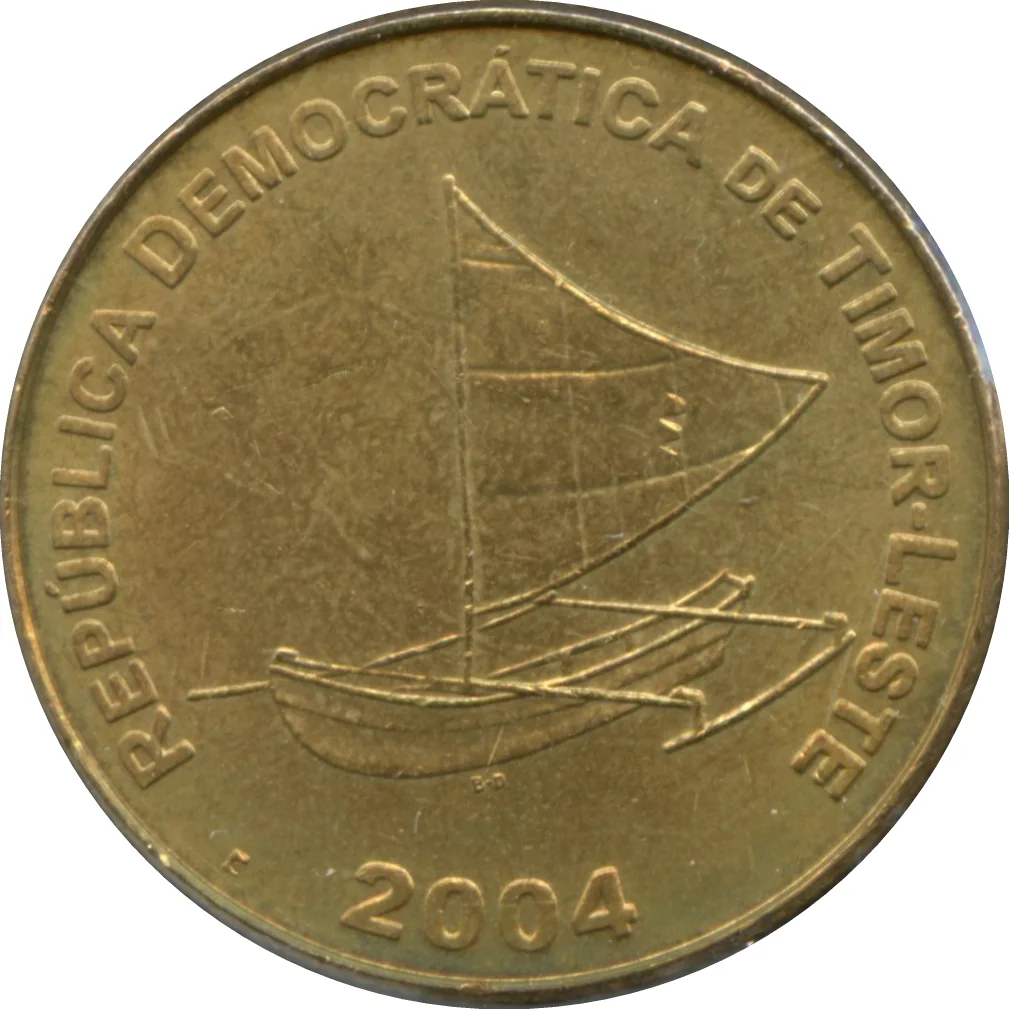
Obverse
Description:
Outrigger canoe
Inscription:
REPÚBLICA DEMOCRATICA DE TIMOR-LESTE
2004
2004
Script: Latin
Engraver: José Bandeira
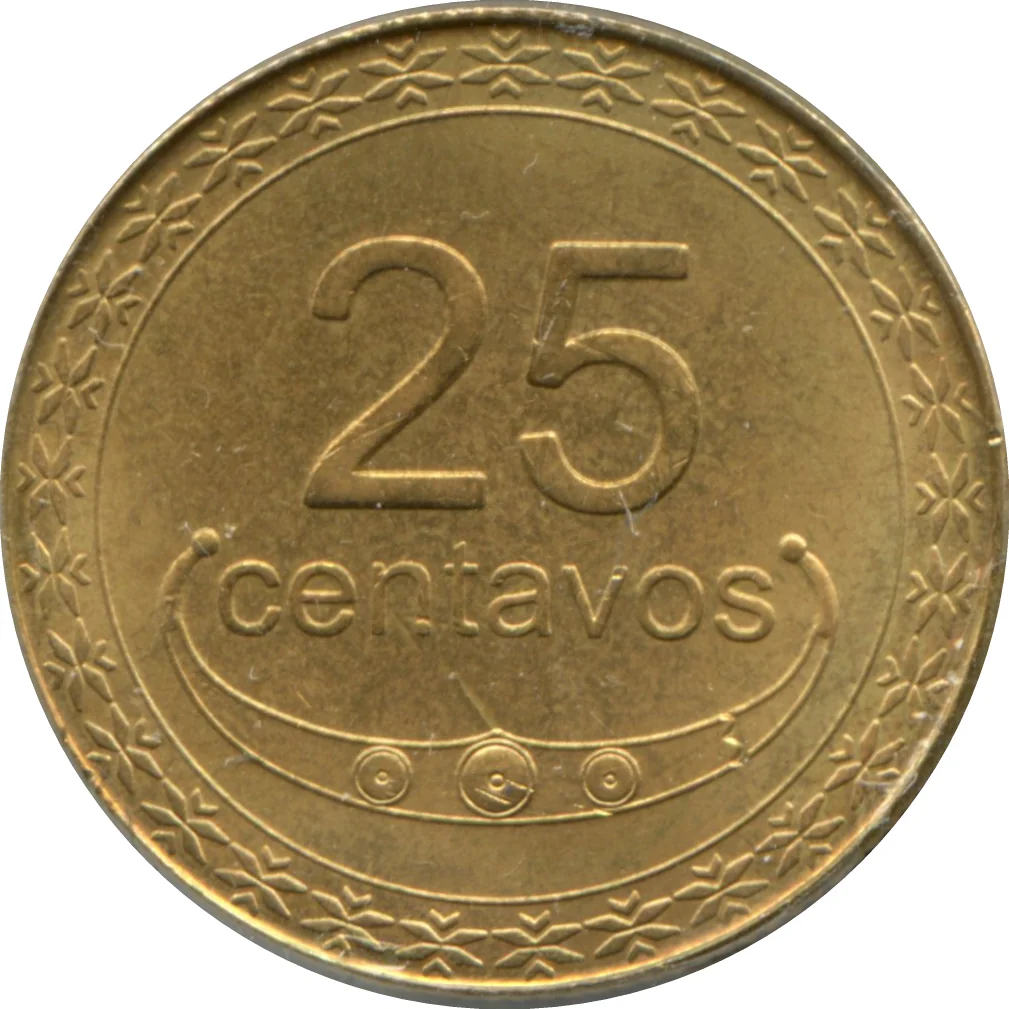
Reverse
Description:
Kaibauk: a traditional crescent-shaped crown or ornament. Name encircled.
Inscription:
25
centavos
centavos
Script: Latin
Engraver: José Bandeira
Edge
Reeded
Categories
| Transportation> Watercraft |
Mints
| Name | Mark |
|---|---|
| Imprensa Nacional - Casa da Moeda | — |
| Royal Australian Mint | — |
Mintings
| Year | Mint Mark | Mintage | Quality | Collection |
|---|---|---|---|---|
| 2003 | — | 1,500,000 | ||
| 2003 | — | — | In sets | |
| 2003 | — | 12,500 | Proof | |
| 2004 | — | 1,500,000 | ||
| 2004 | — | — | In sets | |
| 2004 | — | — | Proof | |
| 2005 | — | — | ||
| 2005 | — | — | In sets | |
| 2005 | — | — | Proof | |
| 2006 | — | — | ||
| 2011 | — | — | ||
| 2012 | — | — | ||
| 2012 | — | 2,000 | In sets | |
| 2012 | — | — | Proof | |
| 2013 | — | — | ||
| 2016 | — | 3,072,000 | ||
| 2017 | — | 1,920,000 |
Historical background
In 2003, Timor-Leste was navigating a complex dual-currency system just one year after gaining full independence. The official currencies were the US Dollar, introduced by the UN transitional administration in 2000 to ensure monetary stability, and the newly introduced centavo coins, which served as Timor-Leste's own subsidiary currency. This arrangement meant all banknotes in circulation were US Dollars, while low-value transactions were facilitated by centavo coins (worth 1/100th of a dollar), creating a de facto dollarized economy with a national symbolic currency.
This monetary framework presented significant challenges. While dollarization provided immediate stability and low inflation, it stripped the fledgling nation of independent monetary policy tools, such as setting interest rates or controlling money supply. The economy was highly vulnerable to external shocks and reliant on external financial inflows, primarily from international donors and oil fund savings not yet in use. Furthermore, the lack of low-denomination US banknotes caused a practical "small change" problem, hindering everyday commerce in a largely cash-based and rural economy.
The situation in 2003 was one of cautious transition, with the government and the newly established Banking and Payments Authority (BPA) focusing on building financial infrastructure rather than immediate currency reform. Priorities included establishing a functioning payments system and preparing for the future management of petroleum revenue. The long-term question of introducing a full national currency, the Pataca, was under discussion but wisely postponed, as authorities recognized that the immediate stability offered by the dollar was crucial for building confidence in the world's newest state.
This monetary framework presented significant challenges. While dollarization provided immediate stability and low inflation, it stripped the fledgling nation of independent monetary policy tools, such as setting interest rates or controlling money supply. The economy was highly vulnerable to external shocks and reliant on external financial inflows, primarily from international donors and oil fund savings not yet in use. Furthermore, the lack of low-denomination US banknotes caused a practical "small change" problem, hindering everyday commerce in a largely cash-based and rural economy.
The situation in 2003 was one of cautious transition, with the government and the newly established Banking and Payments Authority (BPA) focusing on building financial infrastructure rather than immediate currency reform. Priorities included establishing a functioning payments system and preparing for the future management of petroleum revenue. The long-term question of introducing a full national currency, the Pataca, was under discussion but wisely postponed, as authorities recognized that the immediate stability offered by the dollar was crucial for building confidence in the world's newest state.
🌱 Common