

2 Mohars – Nepal
Nepal
Context
Years: 1910–1911
Issuer: Nepal 
Ruler: Prithvi Bir Bikram Shah
Currency:
(1546—1932)
Demonetized: Yes
Material
References
KM: #Click to copy to clipboard656
Numista: #56458
Value
Bullion value: $31.83
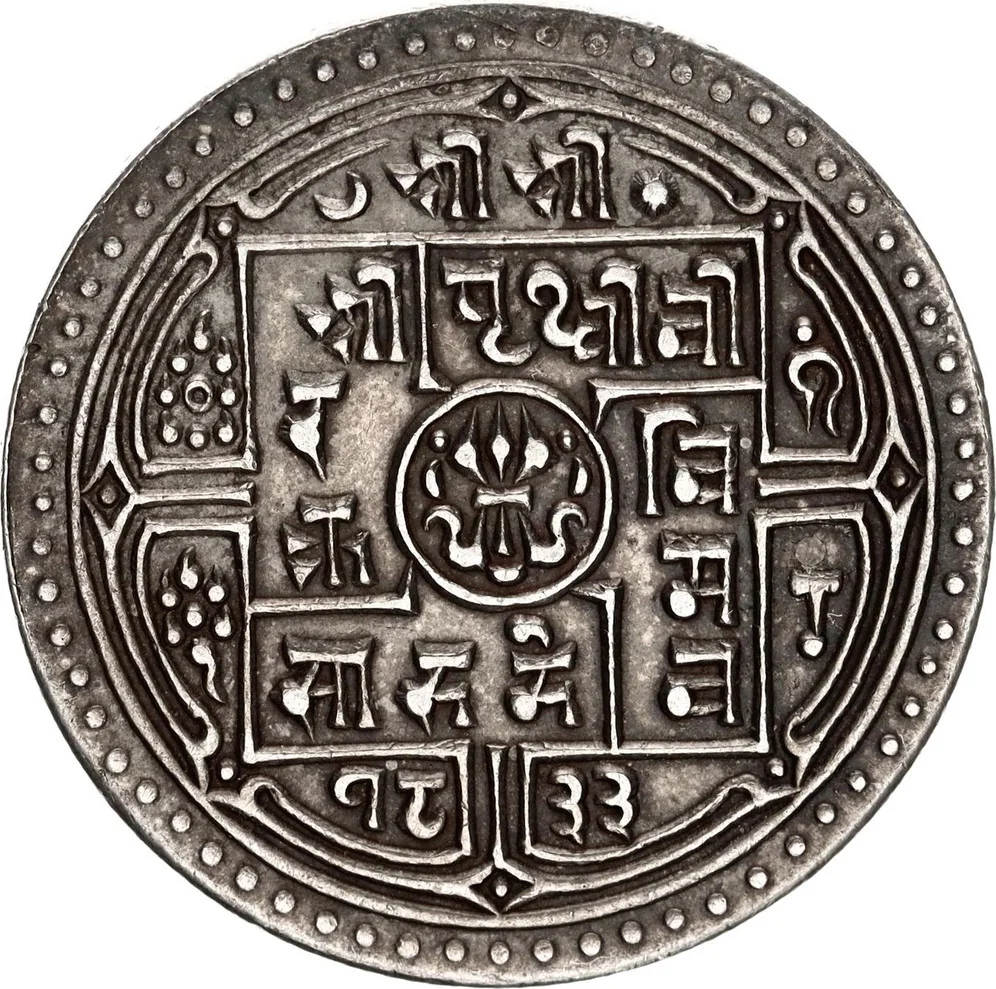
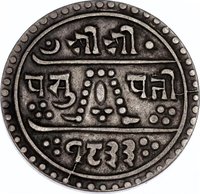
Obverse
Description:
King's Name & VS Date: Varieties Exist
Inscription:
श्री श्री
श्री पृथ्वी वी
र वि
क्र म
साहदे व
१८३२
श्री पृथ्वी वी
र वि
क्र म
साहदे व
१८३२
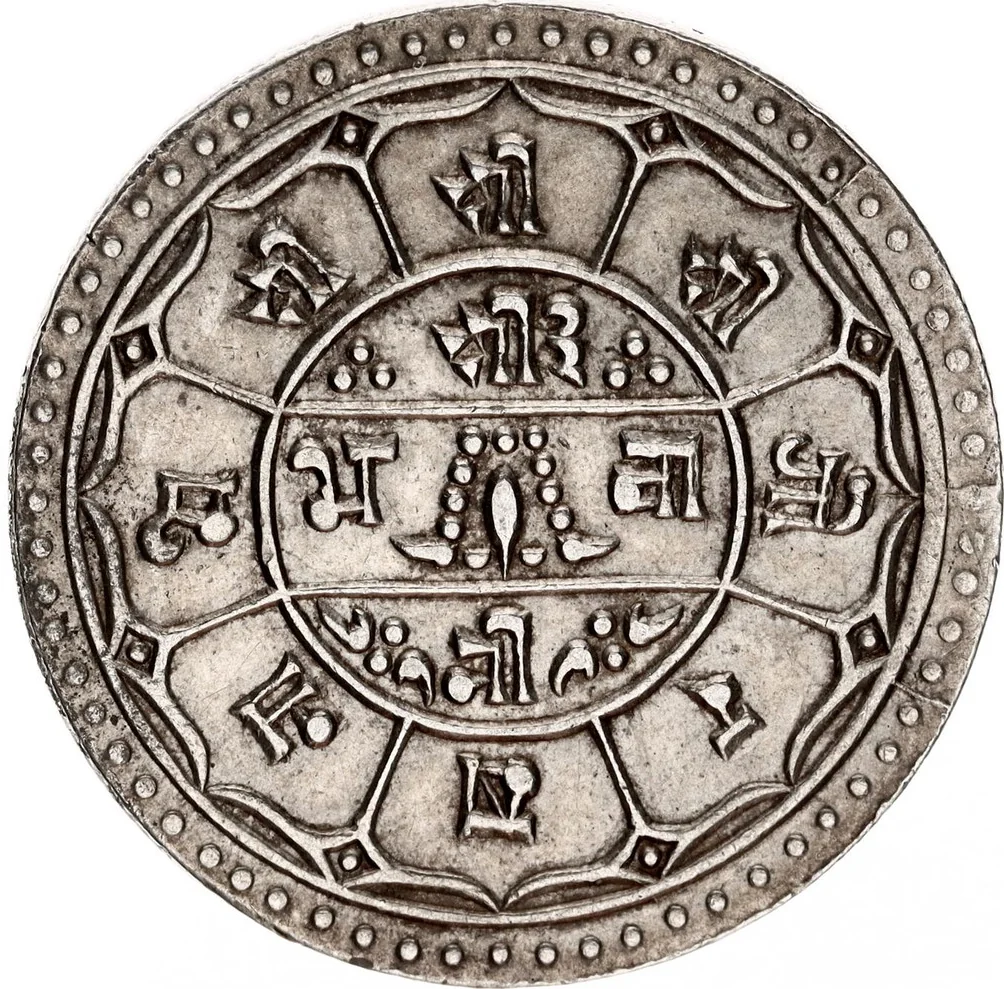
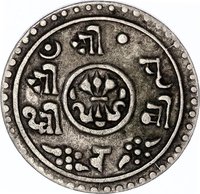
Reverse
Description:
Gorakhanath Bhawani
Inscription:
श्री श्री श्री गो र ख ना थ
श्री ३
भ वा
नी
श्री ३
भ वा
नी
Edge
Reeded
Mintings
| Year | Mint Mark | Mintage | Quality | Collection |
|---|---|---|---|---|
| 1910 | — | — | ||
| 1911 | — | — | ||
| 1911 | — | — | Proof |
Historical background
In 1910, Nepal’s currency system was a complex and dualistic one, operating under the shadow of British India’s economic dominance. Officially, the silver Mohar was the national coin, with its value traditionally tied to its weight in silver. However, the reality of cross-border trade and political influence meant that the Indian Rupee was the de facto standard for larger transactions and external commerce. This created a system where both currencies circulated, but the Rupee, being part of the robust British Indian monetary system, was often preferred for its stability and wider acceptance.
The Rana dynasty, which held absolute power, maintained a closed and controlled economy. The government minted its own coins—primarily silver Mohars and copper Paisa—at the mint in Kathmandu. The exchange rate between the Nepali Mohar and the Indian Rupee was fixed by the state, not by market forces, at an official rate of approximately 1.5 Mohars to 1 Rupee. This peg was crucial for managing trade deficits with India, which was Nepal’s almost exclusive trading partner. However, the fixed rate often failed to reflect the actual silver content of the Mohar, leading to periodic arbitrage and currency manipulation.
This monetary arrangement underscored Nepal’s broader political and economic status in 1910: a formally independent kingdom but one firmly within the British sphere of influence. The currency duality reflected a balancing act—asserting national sovereignty through its own coinage while pragmatically anchoring its economy to the Indian Rupee for regional stability. The system, while functional, was inherently fragile, susceptible to fluctuations in global silver prices and entirely dependent on the economic policies of British India, highlighting Nepal’s limited financial autonomy during the Rana period.
The Rana dynasty, which held absolute power, maintained a closed and controlled economy. The government minted its own coins—primarily silver Mohars and copper Paisa—at the mint in Kathmandu. The exchange rate between the Nepali Mohar and the Indian Rupee was fixed by the state, not by market forces, at an official rate of approximately 1.5 Mohars to 1 Rupee. This peg was crucial for managing trade deficits with India, which was Nepal’s almost exclusive trading partner. However, the fixed rate often failed to reflect the actual silver content of the Mohar, leading to periodic arbitrage and currency manipulation.
This monetary arrangement underscored Nepal’s broader political and economic status in 1910: a formally independent kingdom but one firmly within the British sphere of influence. The currency duality reflected a balancing act—asserting national sovereignty through its own coinage while pragmatically anchoring its economy to the Indian Rupee for regional stability. The system, while functional, was inherently fragile, susceptible to fluctuations in global silver prices and entirely dependent on the economic policies of British India, highlighting Nepal’s limited financial autonomy during the Rana period.
⭐ Rare