


2 Pounds (World War II) – United Kingdom
Non-circulating coins
Commemoration: 50th anniversary of the end of World War II
United Kingdom
Context

Material
References
KM: #Click to copy to clipboard970b
Numista: #56184
Value
Exchange value: 2 GBP = $2.71
Bullion value: $2442.46
Inflation-adjusted value: 5.08 GBP
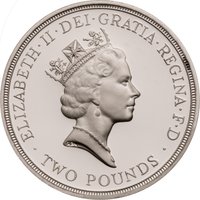
Obverse
Description:
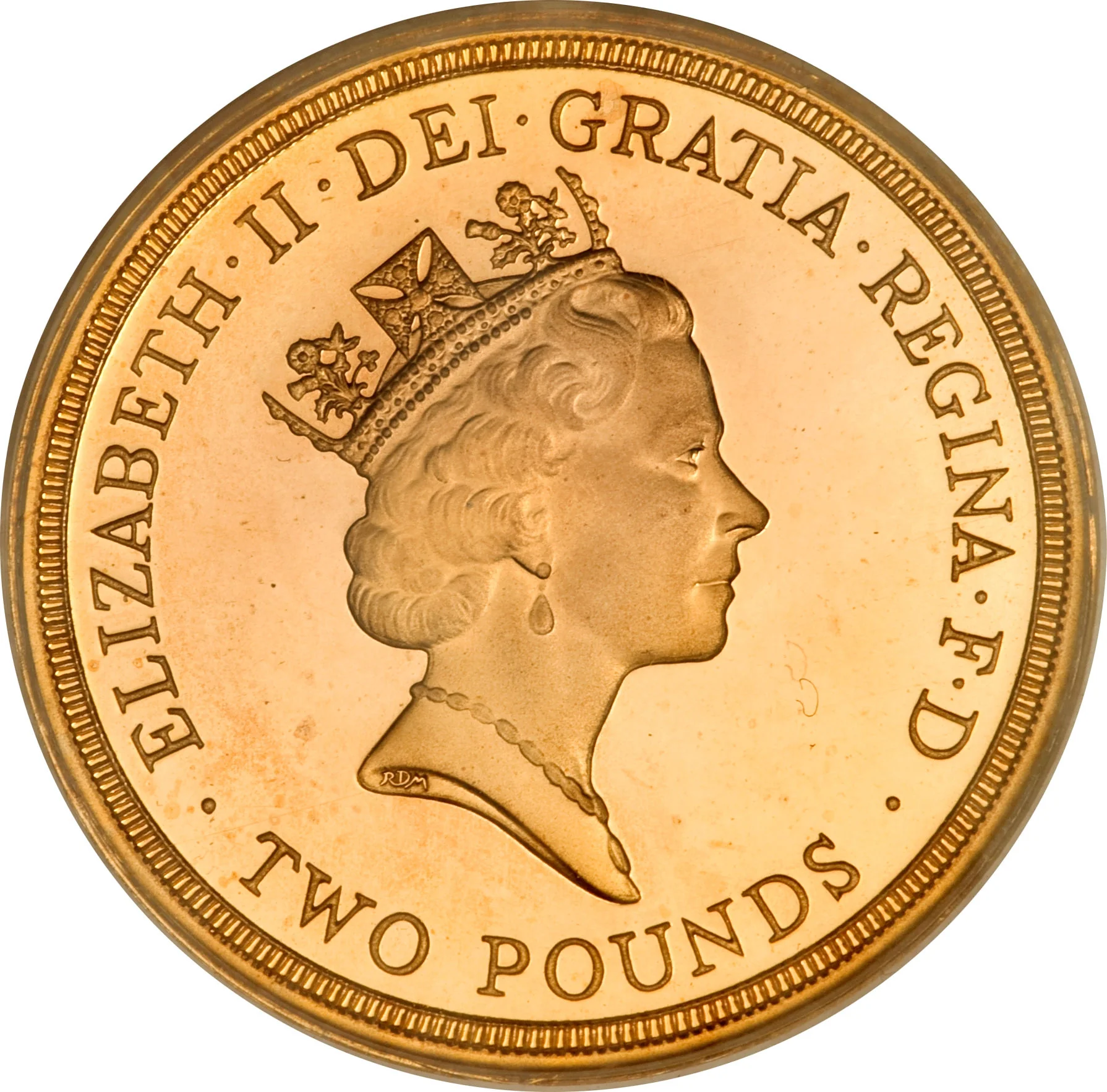
Third crowned portrait of Queen Elizabeth II facing right, wearing the George IV State Diadem.
Inscription:
ELIZABETH·II·DEI·GRATIA·REGINA·F·D
RDM
· TWO POUNDS ·
RDM
· TWO POUNDS ·
Script: Latin
Engraver: Raphael David Maklouf
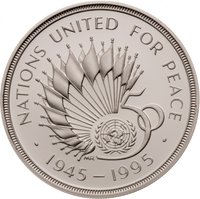
Reverse
Description:
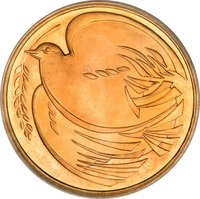
Dove with olive branch.
Engraver: John Mills
Edge
Plain with incuse lettering
Legend:
1945 IN PEACE GOODWILL 1995 *
Mints
| Name | Mark |
|---|---|
| Royal Mint | — |
Mintings
| Year | Mint Mark | Mintage | Quality | Collection |
|---|---|---|---|---|
| 1995 | — | 2,500 | Proof |
Historical background
In 1995, the United Kingdom's currency situation was defined by a period of relative stability and strength for the pound sterling, following the turbulence of its exit from the European Exchange Rate Mechanism (ERM) in September 1992. After "Black Wednesday," the pound was allowed to float freely, and it initially depreciated significantly. However, by 1995, a combination of factors, including rising UK interest rates to combat inflation and a comparatively strong economic recovery from the early 1990s recession, had bolstered the currency. Sterling traded in a robust range, notably performing well against a weakening US Dollar and other European currencies, which were under pressure from crises within the ERM.
This strength, however, presented a complex economic picture. A strong pound benefited consumers by making imports cheaper, helping to keep inflation in check. For the government and the Bank of England, which had operational independence in setting interest rates, it provided a favourable environment for maintaining monetary stability. Conversely, it posed a significant challenge for UK exporters, as British goods became more expensive on international markets. This export headwind was a persistent concern for manufacturing industries and contributed to a widening trade deficit during the period.
The broader context was the ongoing political debate about European monetary integration. The UK's opt-out from the Maastricht Treaty's single currency provisions meant it was not obligated to join the planned Euro. In 1995, the question of eventual membership was a live and divisive issue. The pound's independent strength and stability in the mid-1990s were often cited by sceptics as evidence that the UK could thrive outside a single European currency, setting the stage for the "wait and see" policy that would characterise the subsequent decades. Thus, the currency situation was not merely a matter of exchange rates but a reflection of deeper questions about the UK's economic sovereignty and its future relationship with Europe.
This strength, however, presented a complex economic picture. A strong pound benefited consumers by making imports cheaper, helping to keep inflation in check. For the government and the Bank of England, which had operational independence in setting interest rates, it provided a favourable environment for maintaining monetary stability. Conversely, it posed a significant challenge for UK exporters, as British goods became more expensive on international markets. This export headwind was a persistent concern for manufacturing industries and contributed to a widening trade deficit during the period.
The broader context was the ongoing political debate about European monetary integration. The UK's opt-out from the Maastricht Treaty's single currency provisions meant it was not obligated to join the planned Euro. In 1995, the question of eventual membership was a live and divisive issue. The pound's independent strength and stability in the mid-1990s were often cited by sceptics as evidence that the UK could thrive outside a single European currency, setting the stage for the "wait and see" policy that would characterise the subsequent decades. Thus, the currency situation was not merely a matter of exchange rates but a reflection of deeper questions about the UK's economic sovereignty and its future relationship with Europe.

💎 Extremely Rare