

50 Litų (Baltic Way) – Lithuania
Non-circulating coins
Commemoration: 10th Anniversary of the Baltic Way
Lithuania
Context

Material
References
KM: #Click to copy to clipboard123
Numista: #56127
Value
Exchange value: 50 LTL
Bullion value: $60.04
Inflation-adjusted value: 113.56 LTL
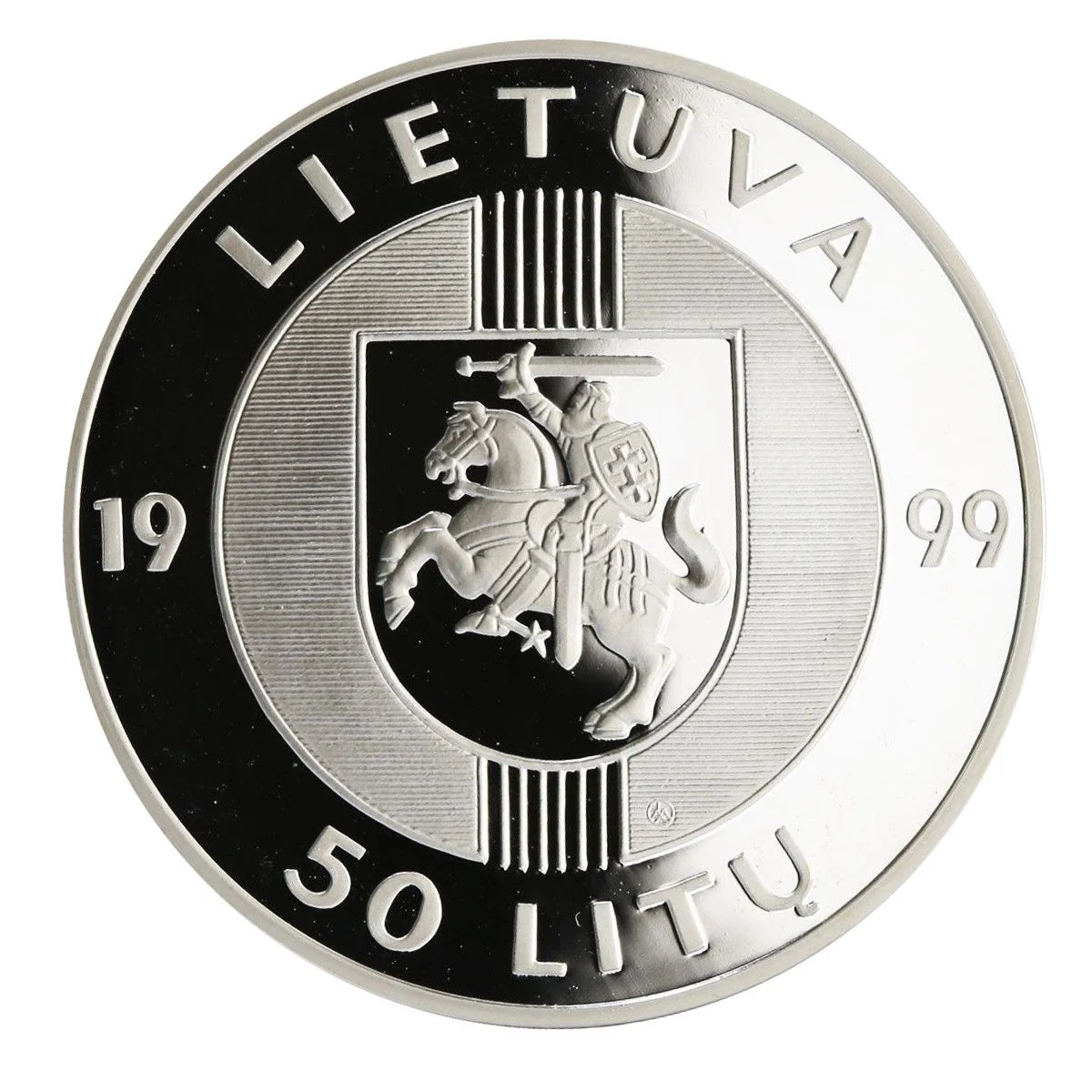
Obverse
Description:
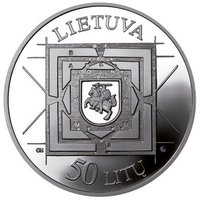
The Vytis within a shield, encircled by "LIETUVA," the denomination (50 litas), and the year 1999.
Inscription:
LIETUVA
19 99
50 LITŲ
19 99
50 LITŲ
Script: Latin
Engraver: Antanas Žukauskas
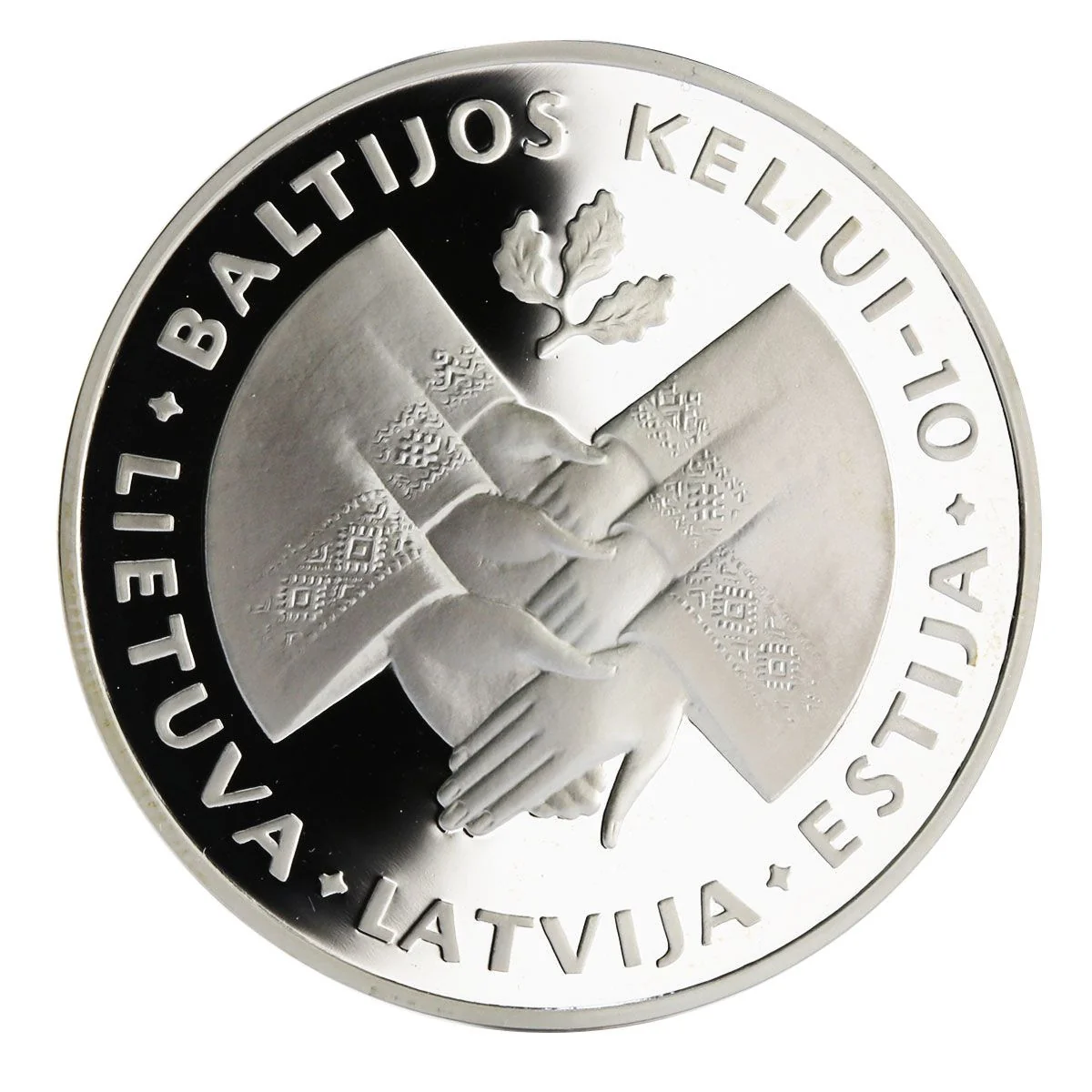
Reverse
Description:
The reverse features a stylized motif of hands encircled by the inscriptions "BALTIJOS KELIUI — 10," "LIETUVA," "LATVIJA," and "ESTIJA."
Inscription:
BALTIJOS KELIUI – 10
LIETUVA LATVIJA ESTIJA
LIETUVA LATVIJA ESTIJA
Script: Latin
Engraver: Antanas Žukauskas
Edge
Lettered
Legend:
VILNIUS RYGA TALINAS
Mints
| Name | Mark |
|---|---|
| Lithuanian Mint | — |
Mintings
| Year | Mint Mark | Mintage | Quality | Collection |
|---|---|---|---|---|
| 1999 | — | 2,542 | Proof |
Historical background
In 1999, Lithuania was in a pivotal period of monetary transition, operating under a currency board arrangement that had successfully tamed the hyperinflation of the early 1990s. Since 1994, the national currency, the litas (LTL), was rigidly pegged to the US dollar at a fixed rate of 4 to 1. This strict discipline provided crucial stability, restored public confidence, and laid the groundwork for economic recovery after the post-Soviet crisis. However, by the late 1990s, the dollar peg had begun to create significant economic strains, particularly following the 1997-1998 Russian financial crisis, which heavily impacted Lithuania's export markets.
The core issue was the misalignment of the peg with Lithuania's evolving trade patterns. While geographically and economically integrating with Europe, over 60% of its trade was with the EU, yet its currency was anchored to the dollar. This meant the litas effectively strengthened alongside the appreciating US dollar against European currencies, making Lithuanian exports to its main market less competitive. Furthermore, the Asian and Russian crises caused global volatility that questioned the sustainability of a dollar peg for a European economy aspiring for EU membership.
Consequently, 1999 was the year Lithuania decisively addressed this mismatch. In a carefully planned move, the government and the Bank of Lithuania announced the change of the anchor currency from the US dollar to the euro (then the European Currency Unit – ECU) at a rate of 3.4528 LTL to 1 EUR, effective February 2, 2002. The decision in 1999 was strategic, aimed at aligning the country's monetary policy with its strategic goal of joining the European Union and the future Eurozone. This pre-emptive switch, while maintaining the currency board's discipline, signaled Lithuania's unequivocal westward orientation and prepared its economy for eventual euro adoption, which would be realized over a decade later in 2015.
The core issue was the misalignment of the peg with Lithuania's evolving trade patterns. While geographically and economically integrating with Europe, over 60% of its trade was with the EU, yet its currency was anchored to the dollar. This meant the litas effectively strengthened alongside the appreciating US dollar against European currencies, making Lithuanian exports to its main market less competitive. Furthermore, the Asian and Russian crises caused global volatility that questioned the sustainability of a dollar peg for a European economy aspiring for EU membership.
Consequently, 1999 was the year Lithuania decisively addressed this mismatch. In a carefully planned move, the government and the Bank of Lithuania announced the change of the anchor currency from the US dollar to the euro (then the European Currency Unit – ECU) at a rate of 3.4528 LTL to 1 EUR, effective February 2, 2002. The decision in 1999 was strategic, aimed at aligning the country's monetary policy with its strategic goal of joining the European Union and the future Eurozone. This pre-emptive switch, while maintaining the currency board's discipline, signaled Lithuania's unequivocal westward orientation and prepared its economy for eventual euro adoption, which would be realized over a decade later in 2015.
💎 Extremely Rare