

5 Khumsiyyah – Qu'aiti Sultanate
Yemen
Context
Year: 1898
Islamic (Hijri) Year: 1315
Country: Yemen 
Issuer: Qu'aiti Sultanate
Currency:
Demonetized: Yes
Material
References
KM: #Click to copy to clipboard45
Numista: #55955
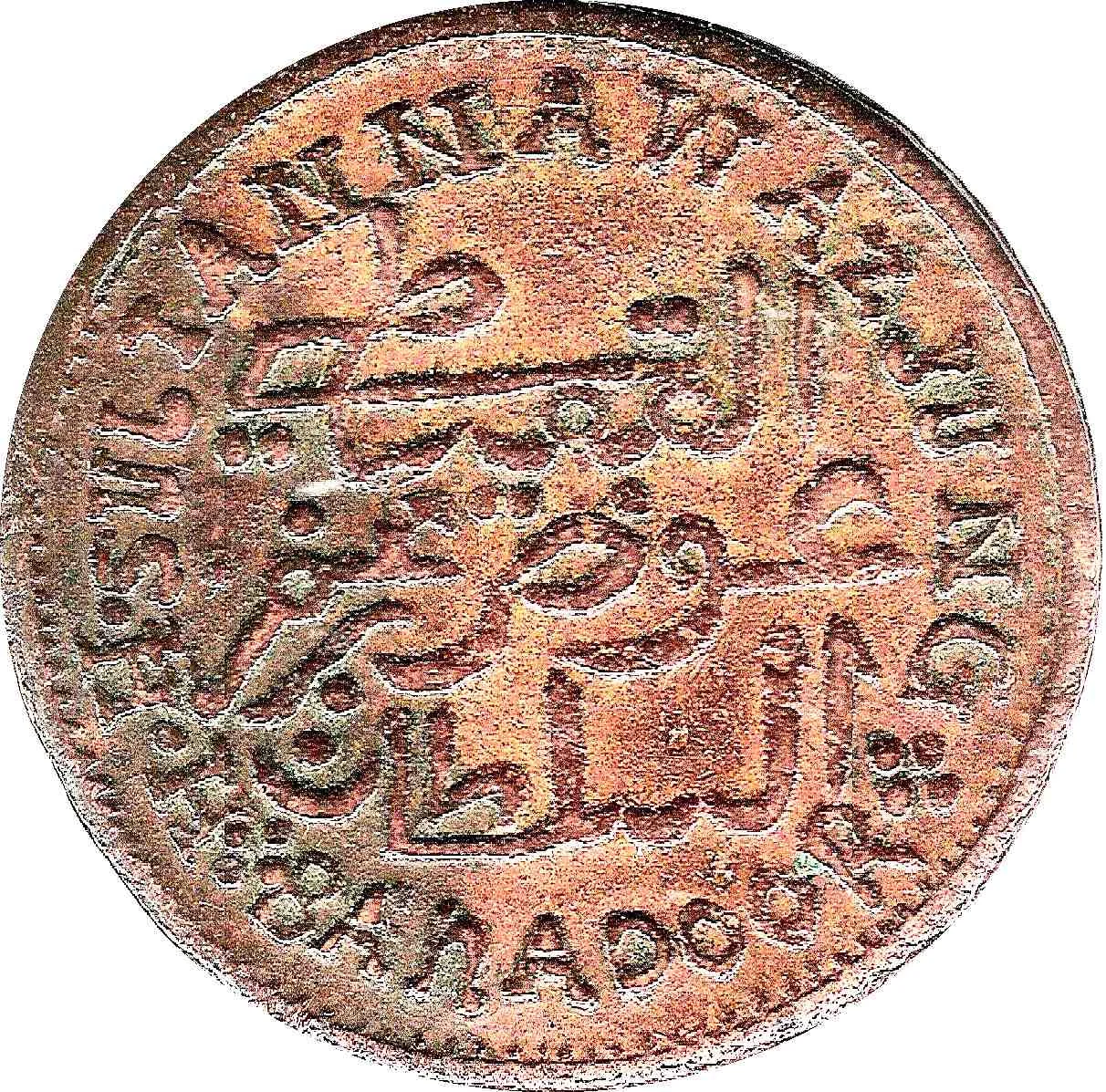
Obverse
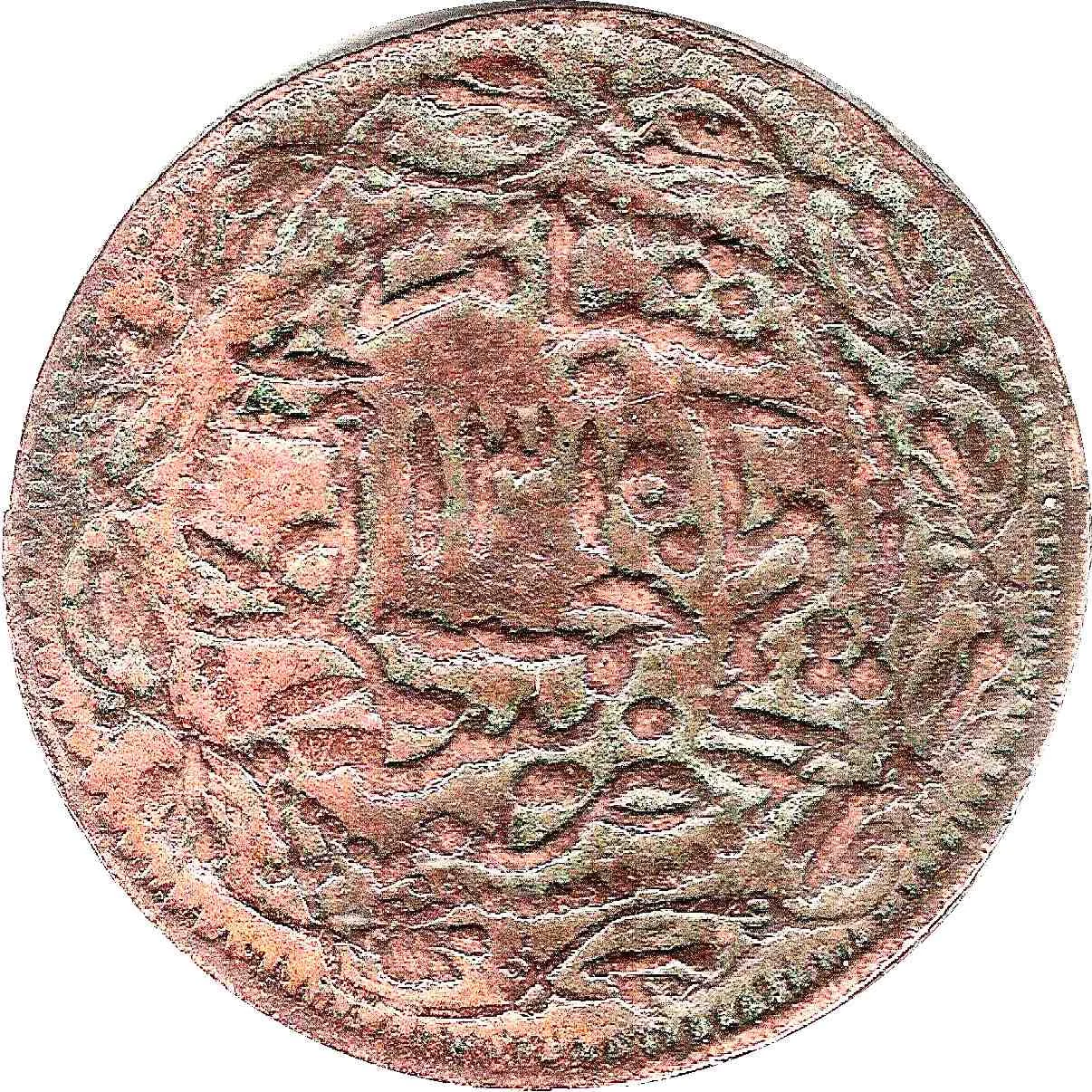
Reverse
Edge
Mintings
| Year | Mint Mark | Mintage | Quality | Collection |
|---|---|---|---|---|
| 1898 | — | — |
Historical background
In 1898, the Qu'aiti Sultanate in Hadhramaut (part of present-day eastern Yemen) operated within a complex and fragmented monetary environment, typical of the South Arabian coast. The state, while internally autonomous under its Sultan, was formally under the loose protectorate of British India, which influenced but did not dictate its economic policies. There was no unified Qu'aiti currency; instead, circulation was dominated by a variety of foreign silver coins. The most important of these was the Maria Theresa thaler (MT$), a large silver coin minted in Austria but used as a major trade currency throughout the Red Sea and Arabian Peninsula region. Alongside it, British Indian rupees and Ottoman coins circulated freely, their relative values fluctuating with trade flows and silver bullion prices.
The local economy's reliance on these external currencies created inherent instability. The Sultanate's revenue, derived from customs duties at its main port of Mukalla and limited agricultural taxes, was collected in this mix of specie. Furthermore, the economy was heavily dependent on remittances from the vast Hadhrami diaspora across the Indian Ocean, whose funds were often sent home in rupees or thalers. This meant that the Qu'aiti state had no control over its money supply, leaving it vulnerable to shifts in international silver markets and the monetary policies of foreign governments. The absence of a central mint or banking institution underscored the Sultanate's limited financial sovereignty.
This monetary patchwork reflected Qu'aiti's political position: a strategically located regional power caught between the spheres of British imperial interest and the lingering influence of the Ottoman Empire. While the British sought to maintain stability for strategic reasons, they showed little urgency in imposing a standardized currency. Consequently, the currency situation in 1898 was one of pragmatic acceptance, with transactions based on the weight and accepted purity of silver coins rather than a state-backed nominal value, a system that would persist for several more decades.
The local economy's reliance on these external currencies created inherent instability. The Sultanate's revenue, derived from customs duties at its main port of Mukalla and limited agricultural taxes, was collected in this mix of specie. Furthermore, the economy was heavily dependent on remittances from the vast Hadhrami diaspora across the Indian Ocean, whose funds were often sent home in rupees or thalers. This meant that the Qu'aiti state had no control over its money supply, leaving it vulnerable to shifts in international silver markets and the monetary policies of foreign governments. The absence of a central mint or banking institution underscored the Sultanate's limited financial sovereignty.
This monetary patchwork reflected Qu'aiti's political position: a strategically located regional power caught between the spheres of British imperial interest and the lingering influence of the Ottoman Empire. While the British sought to maintain stability for strategic reasons, they showed little urgency in imposing a standardized currency. Consequently, the currency situation in 1898 was one of pragmatic acceptance, with transactions based on the weight and accepted purity of silver coins rather than a state-backed nominal value, a system that would persist for several more decades.

💎 Extremely Rare