

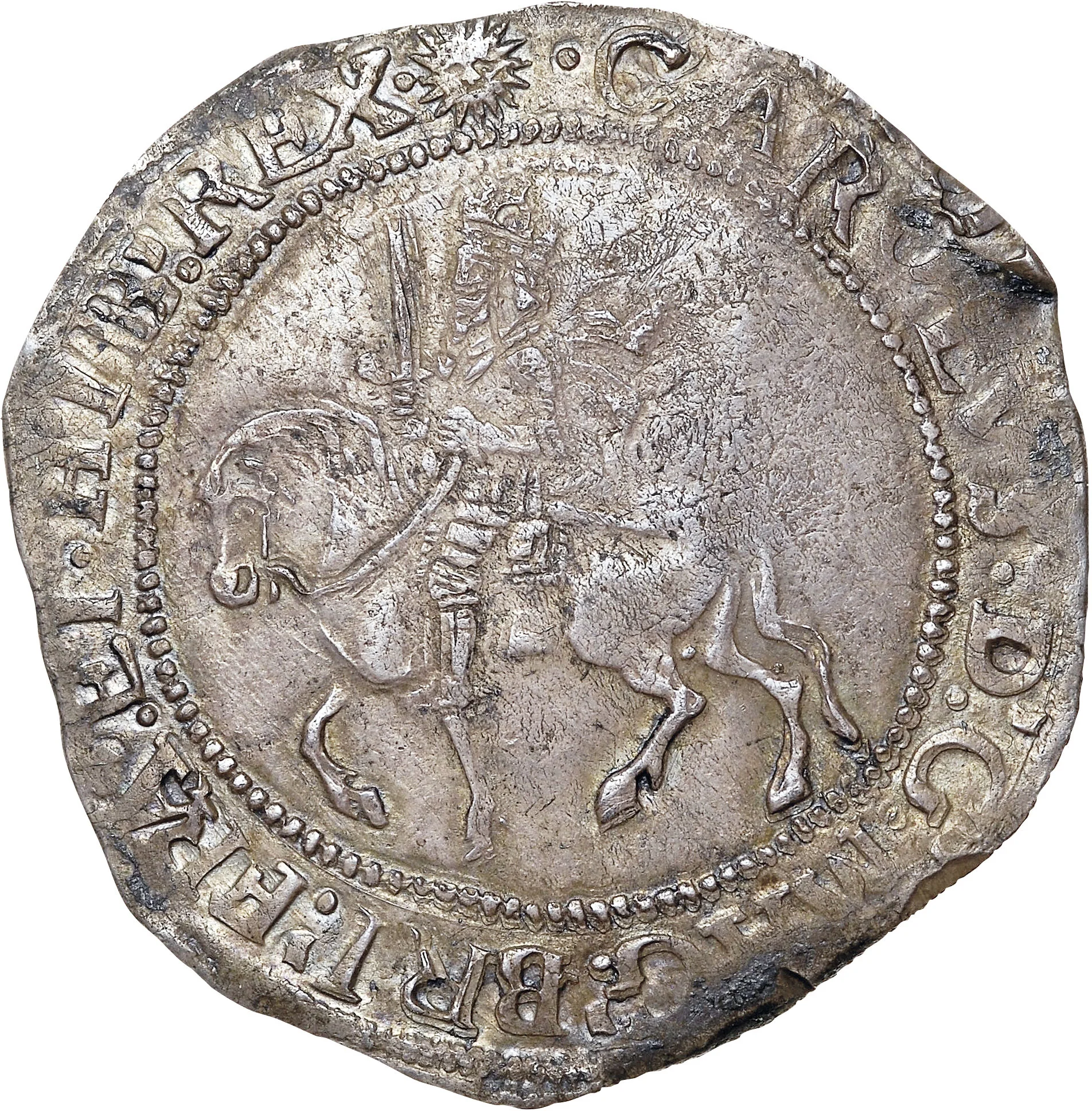
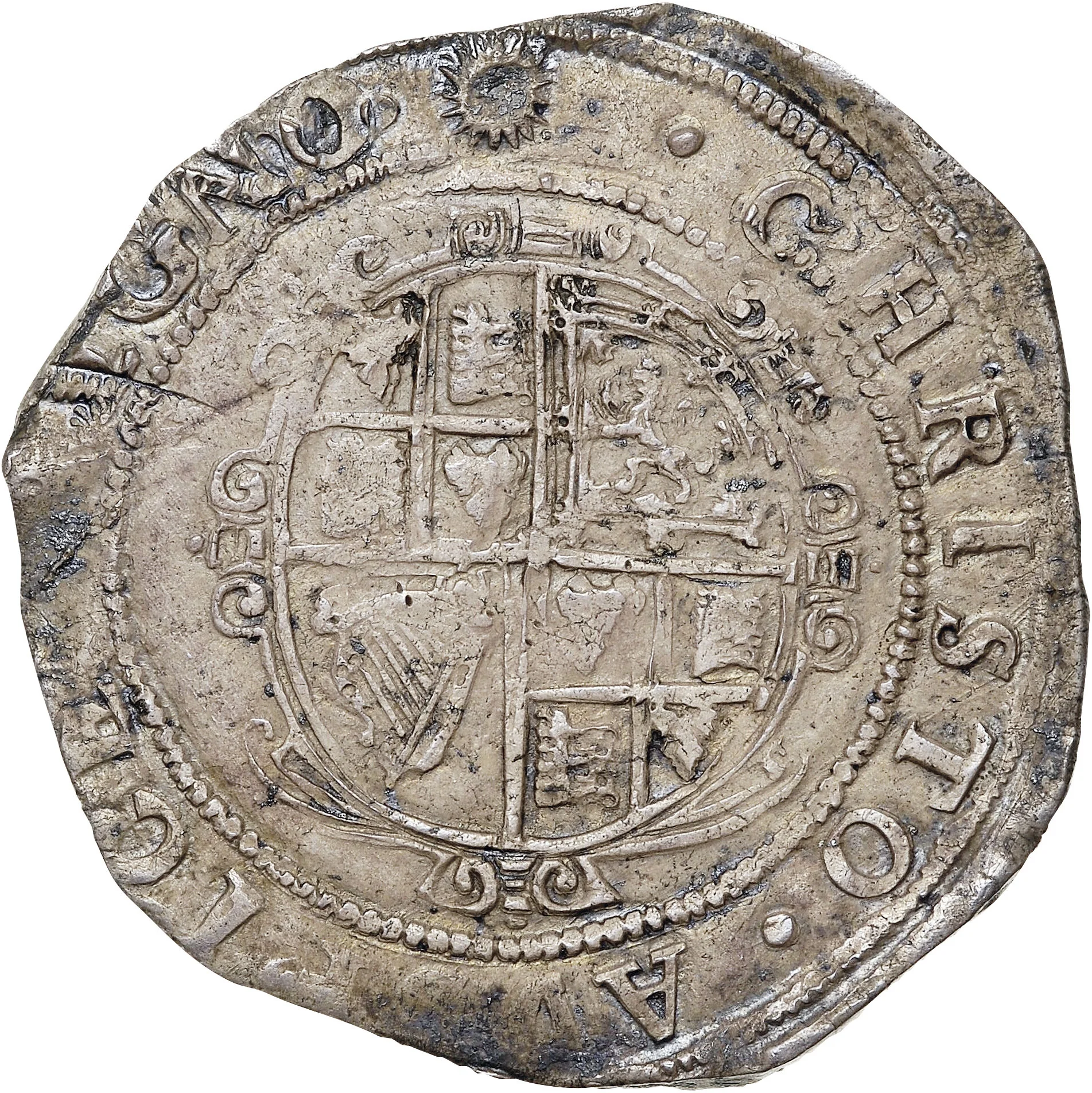
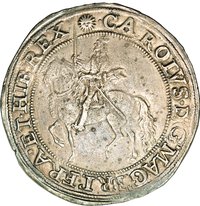
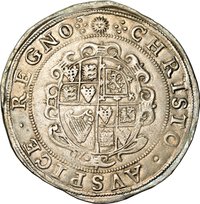
½ Crown – England
United Kingdom
Context
Years: 1645–1648
Country: United Kingdom 
Issuer: England 
Ruler: Charles I
Currency:
(1158—1970)
Demonetized: Yes
References
KM: #Click to copy to clipboard124
Numista: #55824
Value
Bullion value: $39.44
Mintings
| Year | Mint Mark | Mintage | Quality | Collection |
|---|---|---|---|---|
| — | — | — |
Historical background
In 1645, England was in the midst of the Civil War, a conflict that placed immense financial strain on both King Charles I and the Parliamentarian forces. The traditional royal revenue streams had collapsed, and both sides resorted to extreme measures to fund their armies. This led to a severe debasement of the currency, not through official recoinage but through the proliferation of clipped, counterfeit, and foreign coins circulating at inflated values. The system of hammered coinage, easily tampered with, was failing, creating widespread uncertainty in trade and exacerbating economic hardship for the population.
Parliament, controlling London and the major trading centres, faced a critical shortage of silver. To pay its troops, it was forced to melt down plate donated by supporters and seize bullion from the Royalist-controlled mint at Oxford. The most notable monetary feature of the year was the continued use of the "siege money" issued from the King's temporary mint at Oxford. Struck in 1642-1646 from silver plate donated by colleges and loyalists, these coins were often crude and of irregular weight, further undermining confidence in the currency's value, especially in regions under Royalist influence.
Consequently, the currency situation was one of fragmentation and devaluation. Different regions might recognise different coinages, and the intrinsic value of silver in a coin often fell below its face value, leading to hoarding of good coins (Gresham's Law in action). This monetary chaos highlighted the inability of the old Tudor and early Stuart financial systems to withstand the pressures of total war, and it planted the seed for the eventual great recoinage and the establishment of a mechanised mint under Parliament after its victory.
Parliament, controlling London and the major trading centres, faced a critical shortage of silver. To pay its troops, it was forced to melt down plate donated by supporters and seize bullion from the Royalist-controlled mint at Oxford. The most notable monetary feature of the year was the continued use of the "siege money" issued from the King's temporary mint at Oxford. Struck in 1642-1646 from silver plate donated by colleges and loyalists, these coins were often crude and of irregular weight, further undermining confidence in the currency's value, especially in regions under Royalist influence.
Consequently, the currency situation was one of fragmentation and devaluation. Different regions might recognise different coinages, and the intrinsic value of silver in a coin often fell below its face value, leading to hoarding of good coins (Gresham's Law in action). This monetary chaos highlighted the inability of the old Tudor and early Stuart financial systems to withstand the pressures of total war, and it planted the seed for the eventual great recoinage and the establishment of a mechanised mint under Parliament after its victory.
✨ Legendary