

1 Seniti – Tonga
Tonga
Context
Year: 1974
Issuer: Tonga 
Ruler: Tāufaʻāhau Tupou IV
Currency:
(since 1967)
Demonetization: 1 October 2015
Total mintage: 500,000
Material
References
KM: #Click to copy to clipboard27a
Numista: #5193
Value
Exchange value: 0.01 TOP
Obverse
Description:
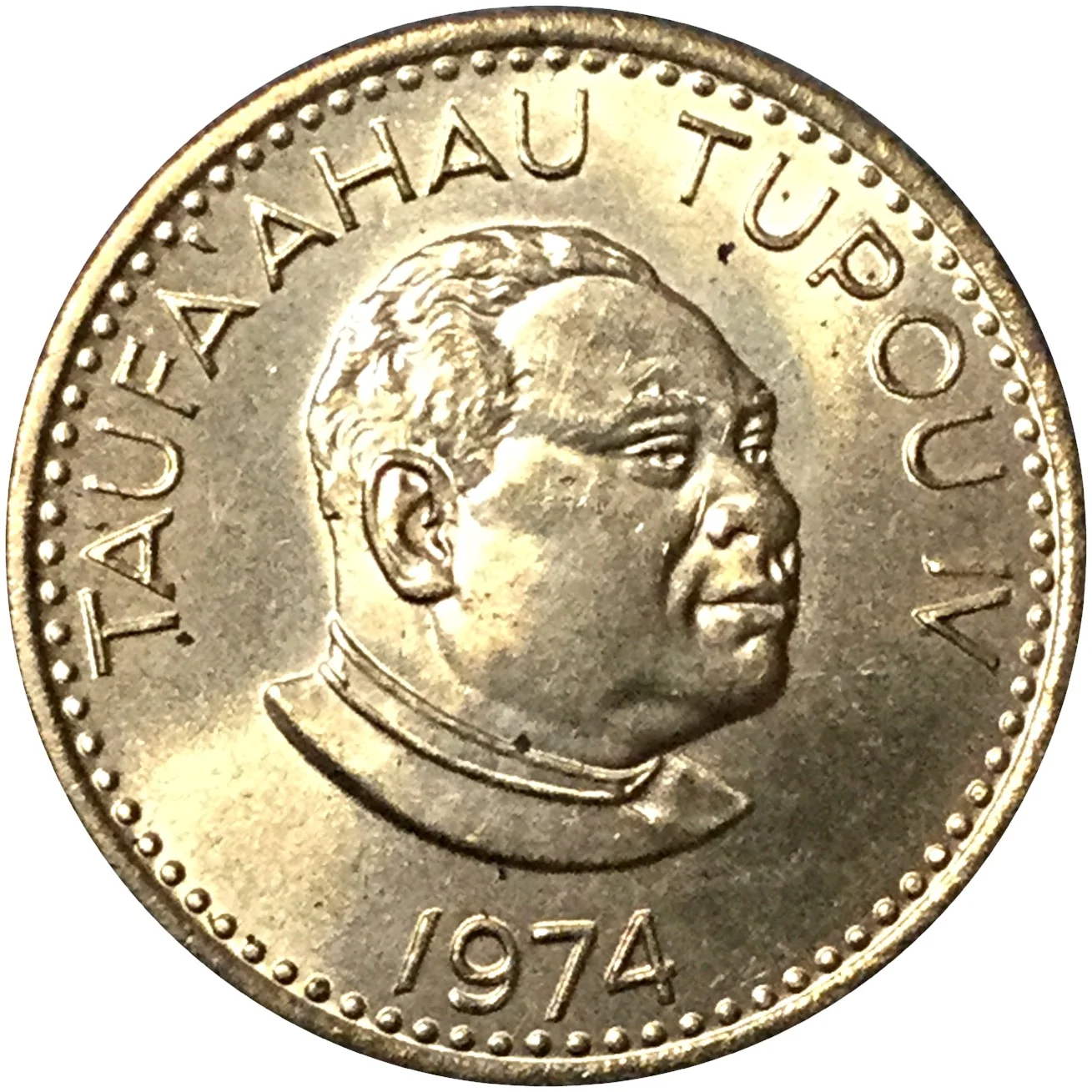
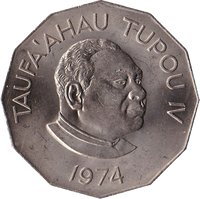
King Taufa'ahau Tupou IV effigy, right-facing, with date below.
Inscription:
TAUFA'AHAU TUPOU IV
1974
1974
Script: Latin
Reverse
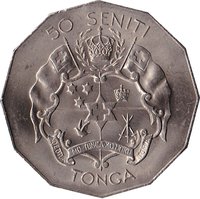
Description:
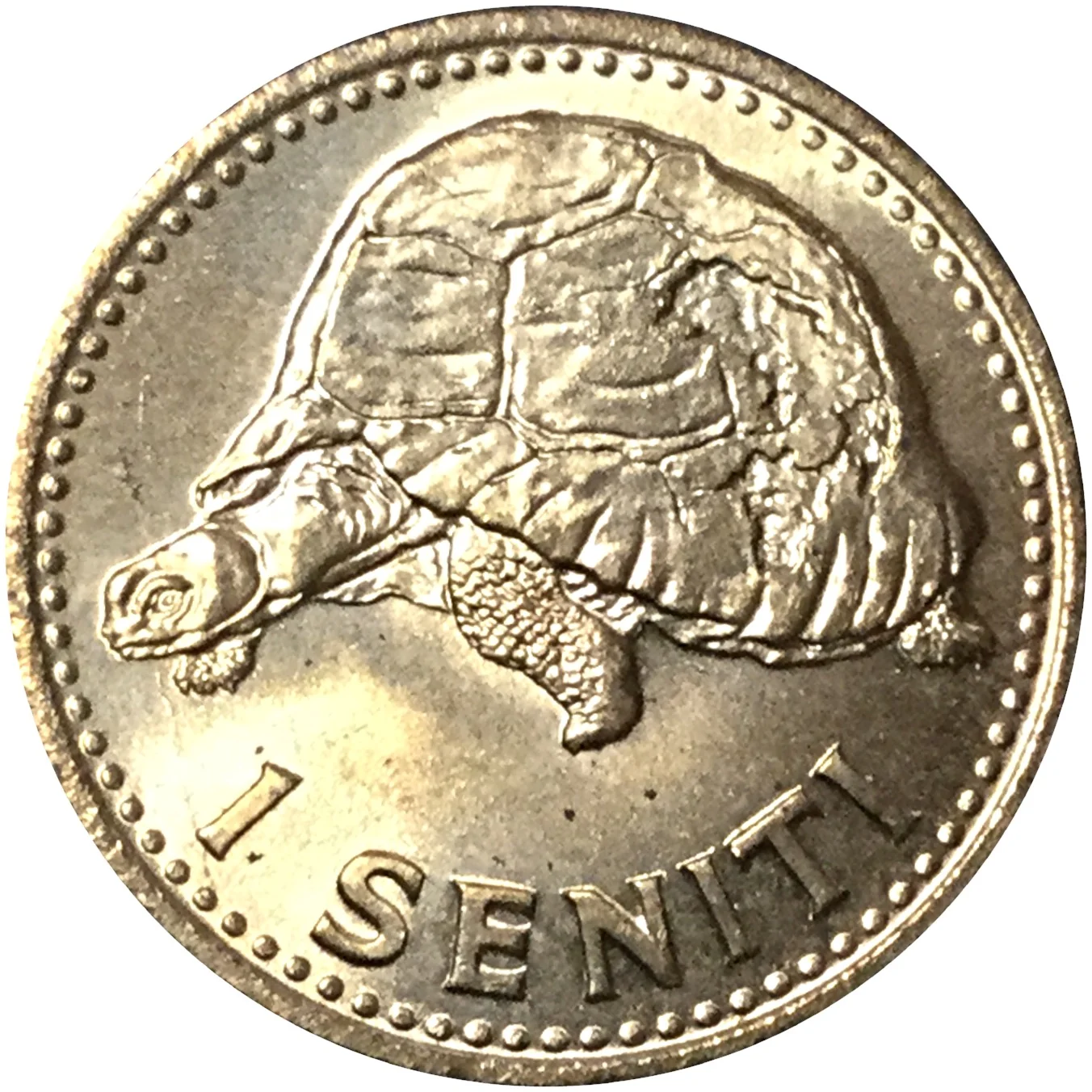
A Radiated Tortoise reportedly gifted to Tongan royalty around 1777.
Inscription:
1 SENITI
Script: Latin
Edge
Plain
Categories
| Animal> Turtle or tortoise |
Mints
| Name | Mark |
|---|---|
| Royal Mint | — |
Mintings
| Year | Mint Mark | Mintage | Quality | Collection |
|---|---|---|---|---|
| 1974 | — | 500,000 |
Historical background
In 1974, Tonga's currency situation was defined by its transition from a dual-currency system to a new, independent national currency. Prior to this, the Tongan pound, introduced in 1967, circulated alongside the Australian dollar. This arrangement was a legacy of British colonial influence and regional economic ties, but it created practical complexities for domestic monetary policy and everyday commerce. The government, under King Tāufaʻāhau Tupou IV, sought greater economic sovereignty and a simplified financial system to support national development.
Consequently, 1974 marked a pivotal year with the passage of the Decimal Currency Act. This legislation laid the groundwork to replace the Tongan pound with a decimal-based currency, the pa'anga, which would be divided into 100 seniti. The change was not merely technical; it was a symbolic assertion of Tongan identity and self-determination following full independence from British protectorate status in 1970. The preparations involved establishing a new exchange rate and minting coins, setting the stage for the pa'anga's official introduction the following year.
Thus, the currency situation in 1974 was one of active preparation and legislative foundation. The dual-currency era was being deliberately phased out to make way for a unified, decimalized system wholly administered by the Tongan government. This move aimed to enhance monetary control, reduce transaction costs, and foster a stronger sense of national economic unity, with the pa'anga poised to become a tangible symbol of the kingdom's modern sovereignty.
Consequently, 1974 marked a pivotal year with the passage of the Decimal Currency Act. This legislation laid the groundwork to replace the Tongan pound with a decimal-based currency, the pa'anga, which would be divided into 100 seniti. The change was not merely technical; it was a symbolic assertion of Tongan identity and self-determination following full independence from British protectorate status in 1970. The preparations involved establishing a new exchange rate and minting coins, setting the stage for the pa'anga's official introduction the following year.
Thus, the currency situation in 1974 was one of active preparation and legislative foundation. The dual-currency era was being deliberately phased out to make way for a unified, decimalized system wholly administered by the Tongan government. This move aimed to enhance monetary control, reduce transaction costs, and foster a stronger sense of national economic unity, with the pa'anga poised to become a tangible symbol of the kingdom's modern sovereignty.
🌱 Common