

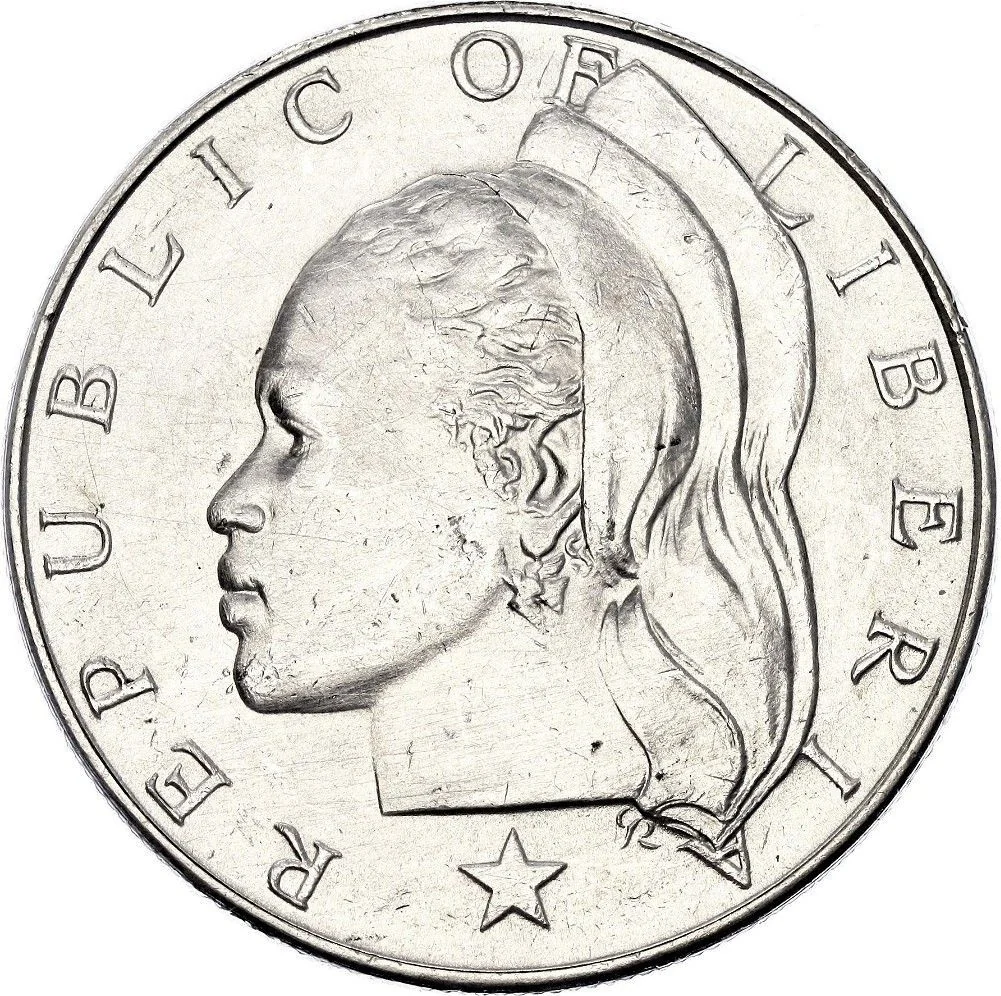
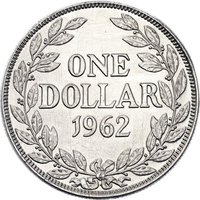
Obverse
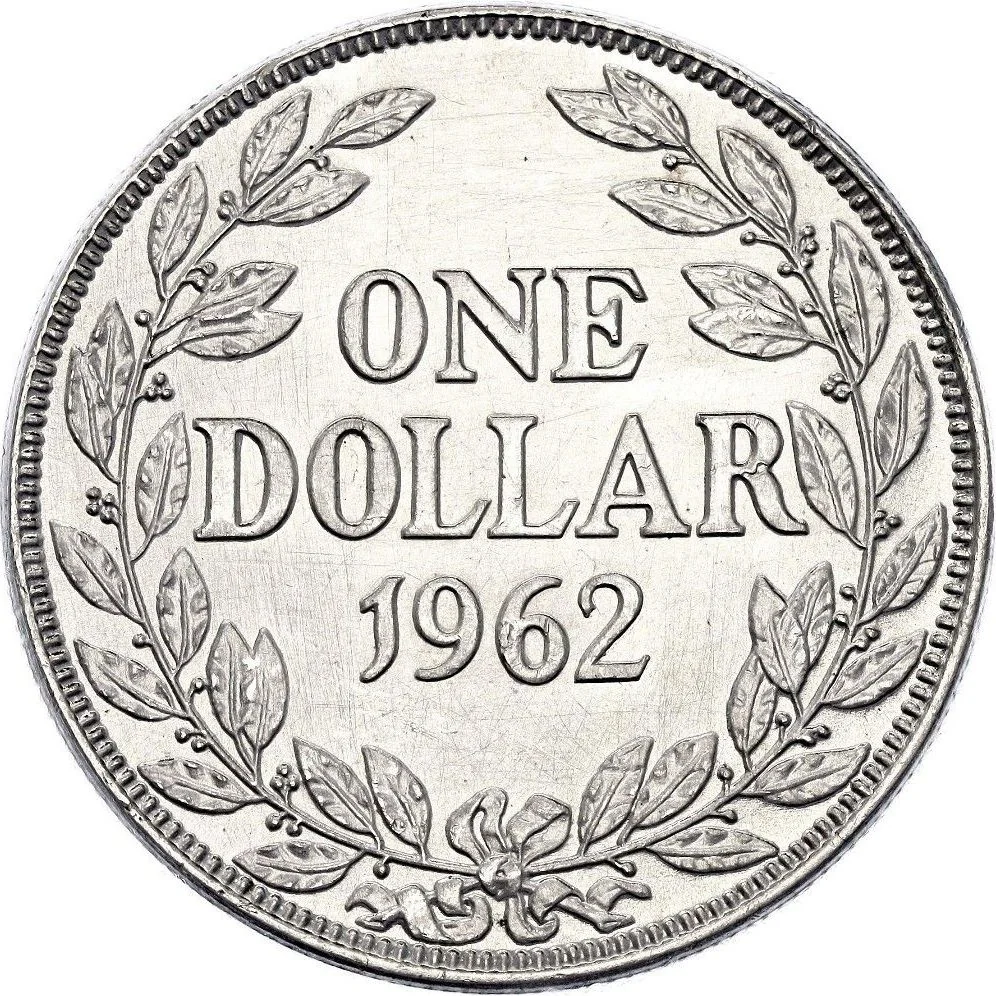
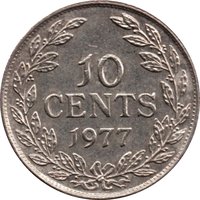
Reverse
Edge
Reeded
Mints
| Name | Mark |
|---|---|
| United States Mint of Philadelphia | — |
Mintings
| Year | Mint Mark | Mintage | Quality | Collection |
|---|---|---|---|---|
| 1961 | — | 200,000 | ||
| 1961 | — | 1,000,000 |
Historical background
In 1961, Liberia's currency situation was defined by its unique and longstanding relationship with the United States. The official currency was the Liberian dollar (LRD), which was pegged at par with the US dollar (USD). This parity was not merely a policy but a legal requirement, as the 1943 "Act to Amend the Currency Law" mandated that Liberian coins and notes be fully backed by US dollar reserves held in New York. Consequently, both currencies circulated interchangeably within the country, with US dollars being widely accepted and often preferred for larger transactions, creating a de facto dual-currency system.
This arrangement provided significant stability, anchoring Liberia’s financial system to a strong foreign reserve and curbing inflation. It facilitated trade and investment, particularly with American firms like Firestone, which dominated the rubber industry. However, it also rendered Liberia’s monetary policy largely passive and dependent on US economic conditions. The Central Bank of Liberia, established in 1956, had limited scope for independent action, as its primary function regarding currency was to maintain the fixed exchange rate and sufficient dollar reserves to back the Liberian notes in circulation.
The system in 1961, while stable, underscored the broader economic dependencies of the period. Liberia's economy relied heavily on exports of rubber and iron ore, with earnings in US dollars essential for maintaining the currency board-style backing. There was little public discussion of change, as the parity was seen as a cornerstone of financial credibility. However, this very structure meant that Liberia’s domestic money supply was ultimately determined by its balance of payments with the outside world, a characteristic that would later present challenges as the economy sought to diversify and develop.
This arrangement provided significant stability, anchoring Liberia’s financial system to a strong foreign reserve and curbing inflation. It facilitated trade and investment, particularly with American firms like Firestone, which dominated the rubber industry. However, it also rendered Liberia’s monetary policy largely passive and dependent on US economic conditions. The Central Bank of Liberia, established in 1956, had limited scope for independent action, as its primary function regarding currency was to maintain the fixed exchange rate and sufficient dollar reserves to back the Liberian notes in circulation.
The system in 1961, while stable, underscored the broader economic dependencies of the period. Liberia's economy relied heavily on exports of rubber and iron ore, with earnings in US dollars essential for maintaining the currency board-style backing. There was little public discussion of change, as the parity was seen as a cornerstone of financial credibility. However, this very structure meant that Liberia’s domestic money supply was ultimately determined by its balance of payments with the outside world, a characteristic that would later present challenges as the economy sought to diversify and develop.
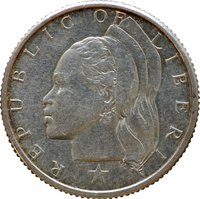
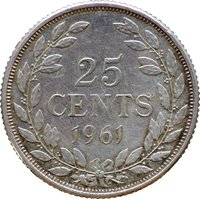
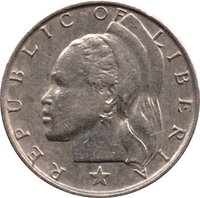
🌱 Fairly Common