

⅛ thaler – Brunswick-Lüneburg-Calenberg
Add to wishlist
Circulating commemorative coins
Commemoration: Death of John Frederick
Germany
Context
Year: 1679
Country: Germany
Issuer: Brunswick-Lüneburg-Calenberg
Ruler: John Frederick
Currency:
Demonetized: Yes
Material
References
KM: #
Numista: #533151
Obverse
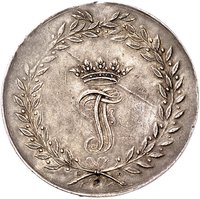
Description:
Crest with five helmets divides mint master's initials.
Inscription:
IOHANNES.FRIDERICUS DUX BRUNSU:ET LUNEB:
H B
H B
Script: Latin
Reverse
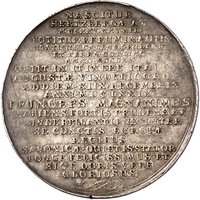
Description:
13-line inscription, dated on line 10.
Inscription:
NATUS
ANN:MDCXXV
XXV·APRILIS
POTITUS·RERUM
IN DUCATIBUS·CA
LENB:GRUBENH:ET
TERRA·GOTTING
ANNO·MDCLXV·
OPIIT·XIIX·DECEMB:
ANNO·MDCLXXIX
AUGUSTÆ
VINDELI
CORUM
ANN:MDCXXV
XXV·APRILIS
POTITUS·RERUM
IN DUCATIBUS·CA
LENB:GRUBENH:ET
TERRA·GOTTING
ANNO·MDCLXV·
OPIIT·XIIX·DECEMB:
ANNO·MDCLXXIX
AUGUSTÆ
VINDELI
CORUM
Script: Latin
Edge
Mints
| Name | Mark |
|---|---|
| Clausthal | — |
Mintings
| Year | Mint Mark | Mintage | Quality | Collection |
|---|---|---|---|---|
| 1679 | — | — |
Historical background
In 1679, the Duchy of Brunswick-Lüneburg, specifically the Principality of Calenberg under Duke John Frederick, was grappling with the severe and chronic monetary instability common across the Holy Roman Empire in the wake of the Thirty Years' War. The primary issue was the proliferation of debased coinage, notably the Klippe (emergency siege coins) and low-quality Groschen, which flooded the region. This "Kipper und Wipper" crisis, where states and mints deliberately reduced the precious metal content of coins for short-term profit, had eroded public trust and disrupted trade, as the intrinsic value of coins fell far below their face value.
The situation was exacerbated by the political fragmentation of the Brunswick-Lüneburg territories, where different branches of the Welf dynasty often pursued independent monetary policies. While neighboring states like Brandenburg-Prussia began implementing stricter monetary controls, the circulation of foreign and debased coins within Calenberg created a complex and chaotic monetary landscape. This made everyday commerce difficult, harmed the principality's credit, and deprived the ducal treasury of revenue, as good silver was hoarded or flowed out of the territory.
Consequently, Duke John Frederick, who was also the Elector of Hanover from 1679, recognized that monetary reform was essential for economic stability and princely authority. His reign marked a turning point, laying the groundwork for more centralized control. Although comprehensive reform would be fully realized under his successor, Ernest Augustus, the year 1679 represents a critical juncture where the pressing need to standardize coinage, close rogue mints, and restore a sound silver-based currency became a paramount administrative goal for the Calenberg government.
The situation was exacerbated by the political fragmentation of the Brunswick-Lüneburg territories, where different branches of the Welf dynasty often pursued independent monetary policies. While neighboring states like Brandenburg-Prussia began implementing stricter monetary controls, the circulation of foreign and debased coins within Calenberg created a complex and chaotic monetary landscape. This made everyday commerce difficult, harmed the principality's credit, and deprived the ducal treasury of revenue, as good silver was hoarded or flowed out of the territory.
Consequently, Duke John Frederick, who was also the Elector of Hanover from 1679, recognized that monetary reform was essential for economic stability and princely authority. His reign marked a turning point, laying the groundwork for more centralized control. Although comprehensive reform would be fully realized under his successor, Ernest Augustus, the year 1679 represents a critical juncture where the pressing need to standardize coinage, close rogue mints, and restore a sound silver-based currency became a paramount administrative goal for the Calenberg government.

✨ Legendary