

1 rupee – India - British
Add to wishlist
India
Context
Year: 1947
Country: India
Issuer: India - British
Ruler: George VI
Currency:
(1770—1947)
Demonetized: Yes
Total mintage: 159,939,000
Material
References
KM: #
Numista: #12426
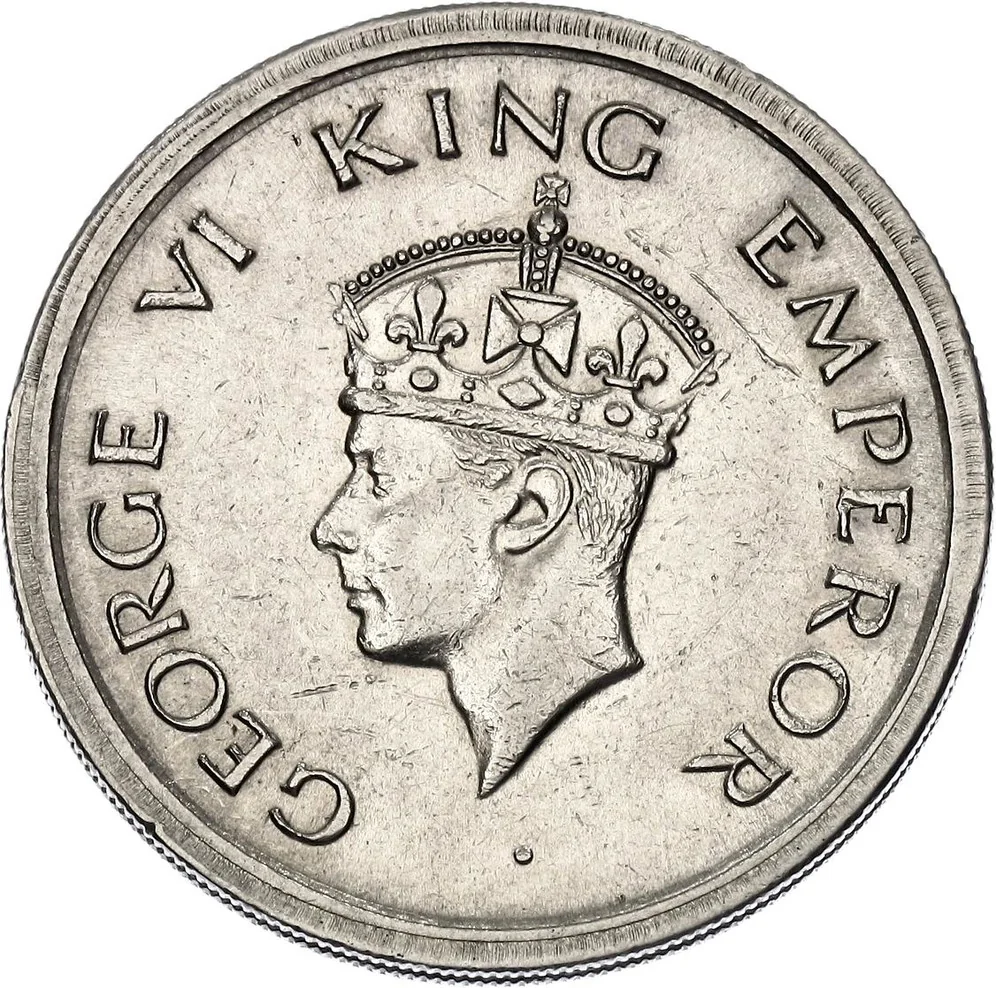
Obverse
Description:
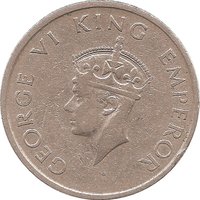
King George VI left-facing portrait.
Inscription:
GEORGE VI KING EMPEROR
Translation:
GEORGE VI KING EMPEROR
Language: English
Engraver: Percy Metcalfe
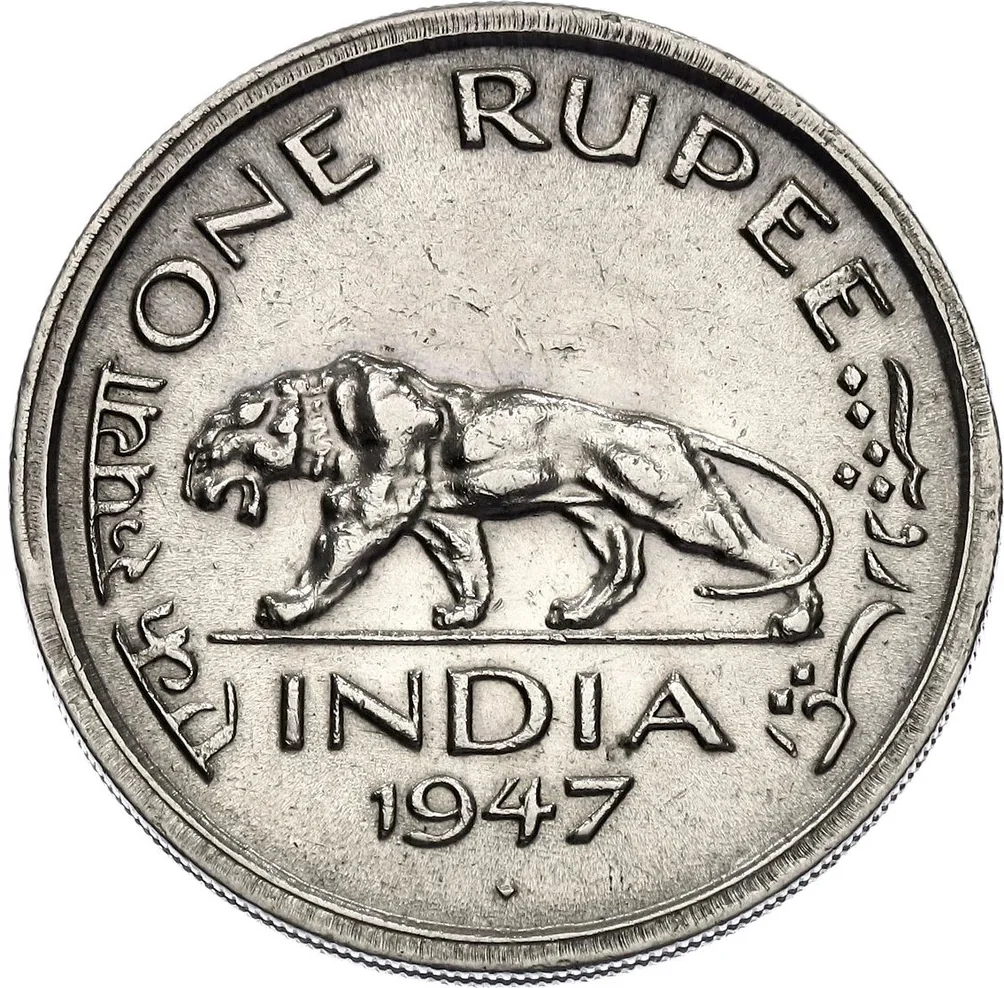
Reverse
Description:
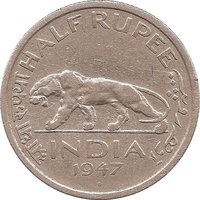
Indian tiger (panthera tigris) One rupee in Nagari, English, and Urdu.
Inscription:
एक रूपया ONE RUPEE یک روپیہ
INDIA
1947
INDIA
1947
Translation:
One Rupee One Rupee One Rupee
INDIA
1947
INDIA
1947
Engraver: P. W. M. Brindley
Edge
Security
Mints
| Name | Mark |
|---|---|
| Lahore | — |
| Mumbai / Bombay | ♦ |
| Mumbai / Bombay | B |
Historical background
In 1947, as India approached independence, its currency system was a complex and strained legacy of British colonial rule. The monetary framework was governed by the Reserve Bank of India (established in 1935), which operated a "Sterling Exchange Standard." The Indian rupee was not backed by gold but by pound sterling reserves held in London, making the Indian economy financially subordinate to Britain. The currency in circulation consisted of notes issued by the RBI and coins bearing the image of the British monarch, symbolizing the political authority that was about to end.
The immediate post-Partition period created severe monetary chaos. The new governments of India and Pakistan had to hastily arrange for separate currencies, as the existing notes remained legally valid in both dominions until September 1948. This led to a massive cross-border flow of money as people moved, causing inflationary pressures and logistical nightmares. Furthermore, the division of the sterling balance reserves—a substantial credit accumulated in London from India's wartime contributions—became a contentious issue between the two new nations and Britain, impacting their initial financial stability.
Thus, at the dawn of independence, India's currency situation was one of transition and crisis. The urgent tasks were to introduce a sovereign currency free from colonial imagery, manage the inflationary fallout of Partition, and negotiate a fair settlement of the sterling balances to fund national development. This precarious financial backdrop set the stage for the eventual introduction of India's own distinct coinage and notes in the coming years, marking a concrete step in its economic sovereignty.
The immediate post-Partition period created severe monetary chaos. The new governments of India and Pakistan had to hastily arrange for separate currencies, as the existing notes remained legally valid in both dominions until September 1948. This led to a massive cross-border flow of money as people moved, causing inflationary pressures and logistical nightmares. Furthermore, the division of the sterling balance reserves—a substantial credit accumulated in London from India's wartime contributions—became a contentious issue between the two new nations and Britain, impacting their initial financial stability.
Thus, at the dawn of independence, India's currency situation was one of transition and crisis. The urgent tasks were to introduce a sovereign currency free from colonial imagery, manage the inflationary fallout of Partition, and negotiate a fair settlement of the sterling balances to fund national development. This precarious financial backdrop set the stage for the eventual introduction of India's own distinct coinage and notes in the coming years, marking a concrete step in its economic sovereignty.
🌱 Very Common