

3 rubles (Red Square Parade) – Transnistria
Add to wishlist
Non-circulating coins
Commemoration: 80th Anniversary of the Red Square Parade
Moldova
Context
Year: 2025
Country: Moldova
Issuer: Transnistria
Issuing organization: Transnistrian Republican Bank
Period:
(since 1990)
Currency:
(since 2000)
Total mintage: 5,000
Material
References
Numista: #521984
Value
Exchange value: 3 PRB
Obverse
Description:
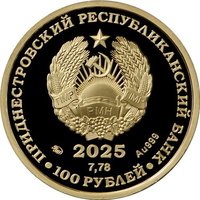
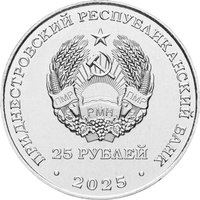
The State Emblem of the Pridnestrovian Moldavian Republic is centered, with "3 RUBLES" below it. Around the top circle is "PRIDNESTROVIAN REPUBLICAN BANK" and at the bottom is the year "2025".
Inscription:
ПРИДНЕСТРОВСКИЙ РЕСПУБЛИКАНСКИЙ БАНК
3 РУБЛЯ
· 2025 ·
3 РУБЛЯ
· 2025 ·
Script: Cyrillic
Engraver: Rudyaga V.I.
Reverse
Description:
Marshal Zhukov on horseback at the 1945 Victory Parade in Red Square, with the Kremlin's Spasskaya Tower behind him. Above, a circular inscription reads "VICTORY PARADE 1945."
Inscription:
ПАРАД ПОБЕДЫ 1945 ГОДА
Script: Cyrillic
Edge
Plain
Categories
| Building> Governmental building |
| Animal> Horse |
| Person> Military leader |
| History> Peace |
| Symbols> Coat of Arms |
Mintings
| Year | Mint Mark | Mintage | Quality | Collection |
|---|---|---|---|---|
| 2025 | — | 5,000 |
Historical background
In 2025, the currency situation in the breakaway region of Transnistria remains a complex and unstable hybrid system, fundamentally defined by its unresolved political status. The region continues to operate with a de facto multi-currency economy, but with increasing strain. The official Transnistrian ruble (PRB), a non-convertible currency used for all domestic transactions, salaries, and payments to the state, faces persistent hyperinflation and low public trust. Its value is artificially pegged and managed by the Transnistrian Republican Bank, but it remains isolated from the global financial system, leading to a significant disparity between official and black-market exchange rates.
Daily commerce and savings are dominated by the use of foreign currencies, primarily the US dollar and the euro, which serve as a hedge against the volatile ruble. The Moldovan leu is also widely circulated, especially in areas closer to the border. This dollarization provides crucial stability for larger transactions, real estate, and business contracts, but it also exacerbates internal inequality, as those with access to foreign currency fare significantly better. The region's financial system is further pressured by its reliance on cash, as most Transnistrian banks remain cut off from international SWIFT networks due to its unrecognized status, complicating all cross-border trade and remittances.
The situation is acutely influenced by external geopolitical tensions. Russia's continued provision of direct budgetary aid, often in dollars, and subsidized natural gas remains a critical lifeline, indirectly propping up the currency system. However, increased pressure from Moldova, which seeks greater economic integration with the EU, and ongoing international sanctions regimes targeting entities in the region, have further restricted financial flows. In 2025, the currency landscape reflects a fragile equilibrium: an unsustainable local currency coexists with entrenched foreign currencies, all underpinned by a geopolitical standoff that offers no clear path to monetary or political resolution.
Daily commerce and savings are dominated by the use of foreign currencies, primarily the US dollar and the euro, which serve as a hedge against the volatile ruble. The Moldovan leu is also widely circulated, especially in areas closer to the border. This dollarization provides crucial stability for larger transactions, real estate, and business contracts, but it also exacerbates internal inequality, as those with access to foreign currency fare significantly better. The region's financial system is further pressured by its reliance on cash, as most Transnistrian banks remain cut off from international SWIFT networks due to its unrecognized status, complicating all cross-border trade and remittances.
The situation is acutely influenced by external geopolitical tensions. Russia's continued provision of direct budgetary aid, often in dollars, and subsidized natural gas remains a critical lifeline, indirectly propping up the currency system. However, increased pressure from Moldova, which seeks greater economic integration with the EU, and ongoing international sanctions regimes targeting entities in the region, have further restricted financial flows. In 2025, the currency landscape reflects a fragile equilibrium: an unsustainable local currency coexists with entrenched foreign currencies, all underpinned by a geopolitical standoff that offers no clear path to monetary or political resolution.

💎 Extremely Rare