


Obverse
Description:
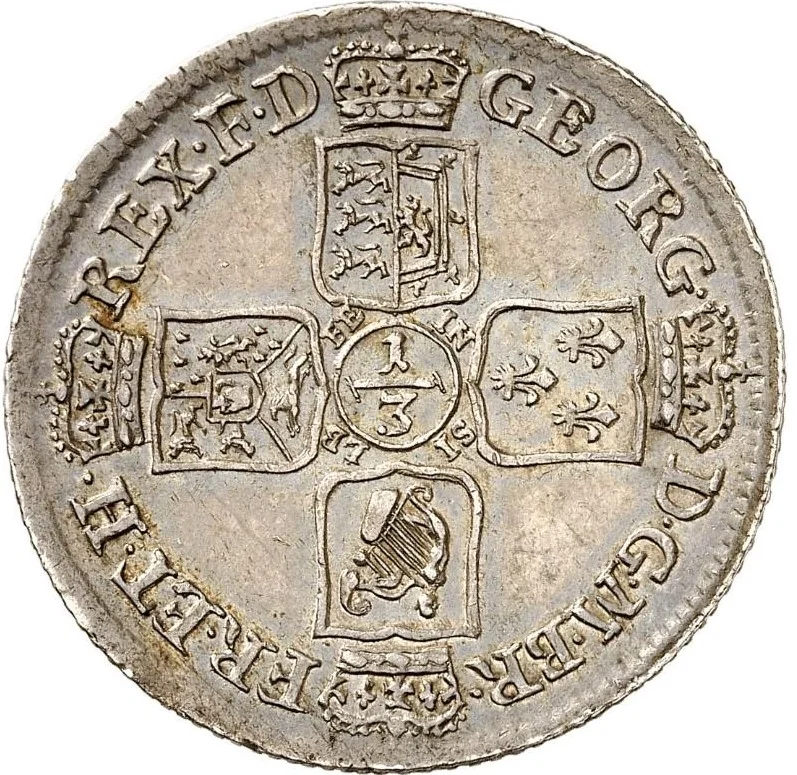
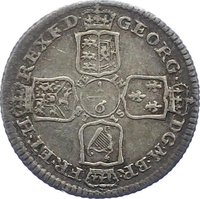
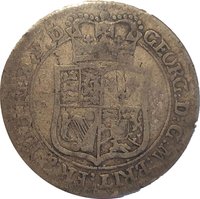
Shields crossed, crowned.
Inscription:
GEORG D G M BR FR ET H REX F D
FE
IN
SI
LB
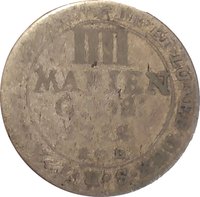
1/3
FE
IN
SI
LB
1/3
Script: Latin
Reverse
Description:
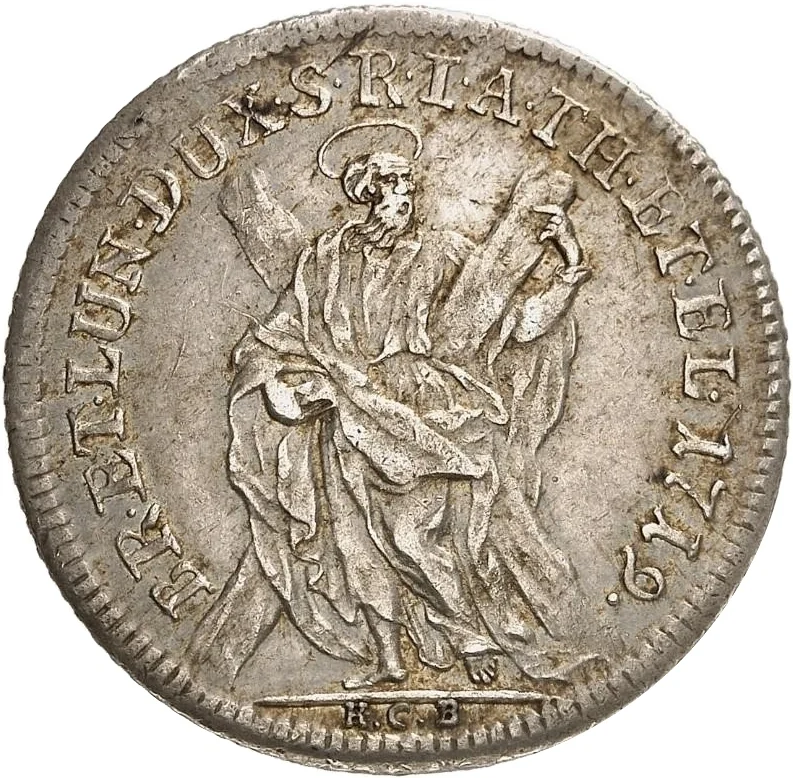
St. Andrew with a cross.
Inscription:
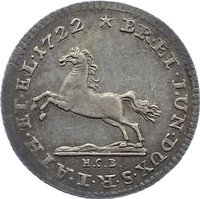
BR ET LUN DUX S R I A TH ET EL 1719
HCB
HCB
Script: Latin
Edge
Mints
| Name | Mark |
|---|---|
| Clausthal | — |
| Zellerfeld | — |
Mintings
| Year | Mint Mark | Mintage | Quality | Collection |
|---|---|---|---|---|
| 1719 | — | — | ||
| 1721 | — | — | ||
| 1722 | — | — | ||
| 1724 | — | — | ||
| 1727 | — | — |
Historical background
In 1719, the currency situation in the Principality of Calenberg-Göttingen, part of the wider Welf territories of Brunswick-Lüneburg, was characterized by profound instability and complexity. The region was a mosaic of different monetary systems, with multiple coinage authorities—including the princely mint in Hanover, the city of Brunswick, and the Bishopric of Hildesheim—issuing their own coins. This proliferation led to a chaotic circulation of Reichsthalers, Gute Groschen, Mariengroschen, and Pfennigs, each with varying intrinsic values and exchange rates, severely hindering trade and economic predictability.
The core of the problem was chronic debasement. To finance state expenditures, particularly the costly ambitions of Elector George Louis (who had become King George I of Great Britain in 1714), the Hanoverian mint frequently reduced the silver content in its coins. This practice, while providing short-term revenue, triggered inflation, eroded public trust, and drove older, full-value coins out of circulation (Gresham’s Law). The resulting disparity between the nominal and actual value of currency created a speculative market in money exchange and crippled credit markets.
Consequently, 1719 fell within a period of active but struggling reform. Authorities recognized the need for standardization and stability, especially to facilitate Hanover's growing political ties with Britain. Efforts were underway to align the local Thaler more reliably with the Reichsthaler standard set by the Holy Roman Empire, but these were met with resistance from vested interests and the sheer difficulty of recalling and reminting the debased coinage in circulation. Thus, the monetary landscape remained fragmented and unstable, posing a significant challenge to administrative consolidation and economic development in the electorate.
The core of the problem was chronic debasement. To finance state expenditures, particularly the costly ambitions of Elector George Louis (who had become King George I of Great Britain in 1714), the Hanoverian mint frequently reduced the silver content in its coins. This practice, while providing short-term revenue, triggered inflation, eroded public trust, and drove older, full-value coins out of circulation (Gresham’s Law). The resulting disparity between the nominal and actual value of currency created a speculative market in money exchange and crippled credit markets.
Consequently, 1719 fell within a period of active but struggling reform. Authorities recognized the need for standardization and stability, especially to facilitate Hanover's growing political ties with Britain. Efforts were underway to align the local Thaler more reliably with the Reichsthaler standard set by the Holy Roman Empire, but these were met with resistance from vested interests and the sheer difficulty of recalling and reminting the debased coinage in circulation. Thus, the monetary landscape remained fragmented and unstable, posing a significant challenge to administrative consolidation and economic development in the electorate.
✨ Legendary