


Obverse
Description:
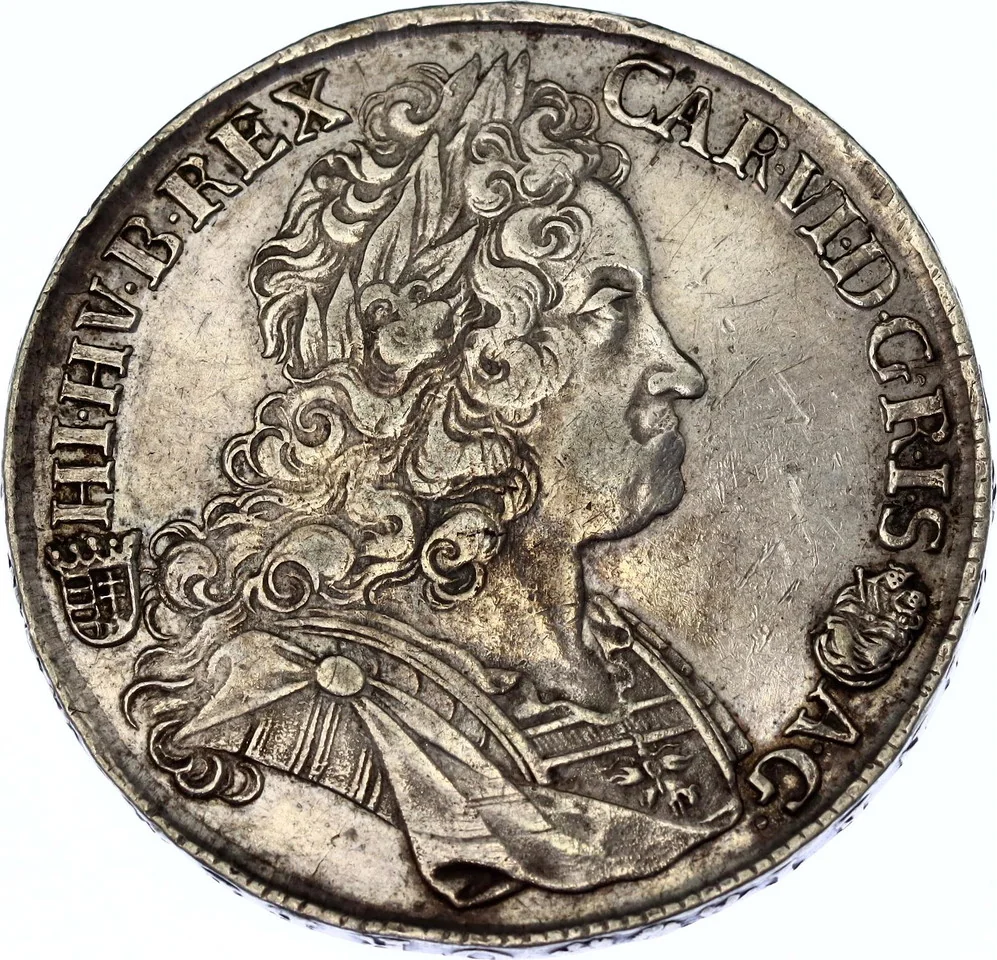
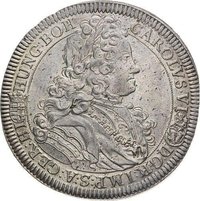
Laureate bust in a dress breaks the top and bottom inscriptions. The surrounding inscription, without an inner circle, is interrupted by a crowned Hungarian shield and a Madonna-and-child stamp.
Inscription:
CAR · VI · D · G · R · I · S · A · G · HI · HV · BO · REX ·
Script: Latin
Reverse
Description:
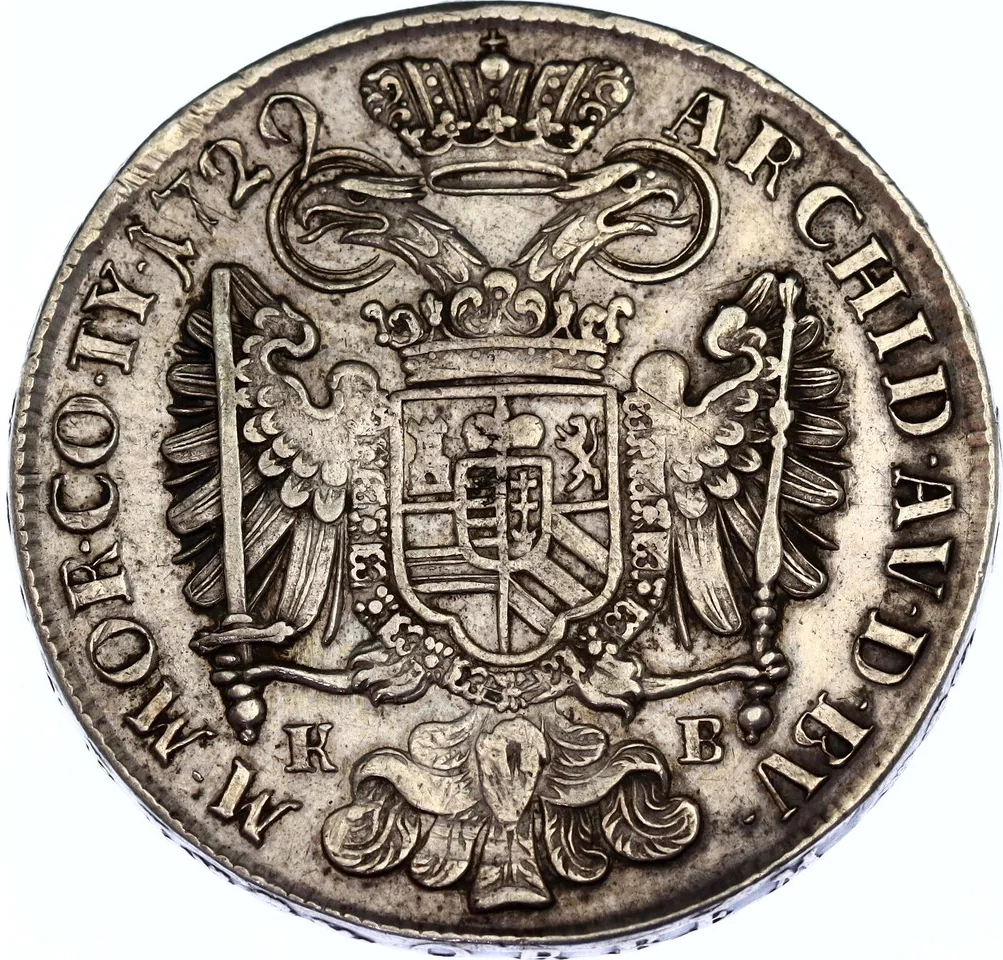
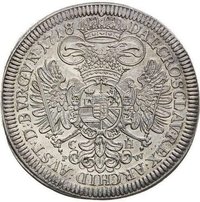
Imperial eagle with KB mintmark split by tail, no orb between heads. On chest, U-shaped cartouche with crowned fourfold imperial arms. Central crowned Hungarian shield. Inscription without pearls, date at end.
Inscription:
ARCHID · AV · D · BV · M · MOR · COM · TY · 1712 ·
K B
K B
Script: Latin
Edge
Inscripted
Legend:
CONSTATER CONTINET ORBEM
Mints
| Name | Mark |
|---|---|
| Kremnica | KB |
Mintings
Historical background
In 1717, Hungary’s currency situation was deeply unstable and complex, a direct legacy of its integration into the Habsburg Monarchy following the Ottoman defeat. The official currency was the silver Thaler (or Tallér), but the everyday monetary system was dominated by a chronically depreciating silver coin called the krajcár (kreuzer). Decades of expensive warfare, notably the Rákóczi War of Independence (1703-1711) and the ongoing Austro-Turkish War (1716-1718), had forced the Vienna court to repeatedly debase the silver content of these smaller coins to fund military campaigns. This resulted in severe inflation, a loss of public trust in the coinage, and a confusing multiplicity of coins in circulation, including older Hungarian issues, Austrian coins, and even Turkish asper from the recently liberated territories.
The monetary chaos was exacerbated by a stark divide between high-value and low-value transactions. Large-scale trade and state finances were conducted in stable silver Thalers or gold Ducats, while the peasantry and local markets suffered with the ever-worsening krajcár. This created a "bad money drives out good" (Gresham's Law) scenario, where people hoarded full-weight silver coins and passed on the debased ones, further distorting the economy. The Habsburg government's attempts at reform, including the Ratio Monetaria of 1715, aimed to standardize the coinage across the monarchy but had limited immediate success in Hungary due to ongoing wartime financial pressures and the sheer scale of the problem.
Consequently, the year 1717 fell within a period of painful transition and monetary uncertainty. While the Habsburg military victories were consolidating political control, the financial system remained in disarray. The persistent currency debasement acted as a hidden tax, fueling economic hardship and social discontent among the Hungarian population, who bore the brunt of the inflation. True stabilization would only begin later, with the more comprehensive monetary reforms initiated under the Conventio Monetaria of 1723, which established a new, standardized silver guilder (forint) as the stable cornerstone of the Hungarian monetary system for over a century.
The monetary chaos was exacerbated by a stark divide between high-value and low-value transactions. Large-scale trade and state finances were conducted in stable silver Thalers or gold Ducats, while the peasantry and local markets suffered with the ever-worsening krajcár. This created a "bad money drives out good" (Gresham's Law) scenario, where people hoarded full-weight silver coins and passed on the debased ones, further distorting the economy. The Habsburg government's attempts at reform, including the Ratio Monetaria of 1715, aimed to standardize the coinage across the monarchy but had limited immediate success in Hungary due to ongoing wartime financial pressures and the sheer scale of the problem.
Consequently, the year 1717 fell within a period of painful transition and monetary uncertainty. While the Habsburg military victories were consolidating political control, the financial system remained in disarray. The persistent currency debasement acted as a hidden tax, fueling economic hardship and social discontent among the Hungarian population, who bore the brunt of the inflation. True stabilization would only begin later, with the more comprehensive monetary reforms initiated under the Conventio Monetaria of 1723, which established a new, standardized silver guilder (forint) as the stable cornerstone of the Hungarian monetary system for over a century.
✨ Legendary