

4 Hellers – Landgraviate of Hesse-Cassel
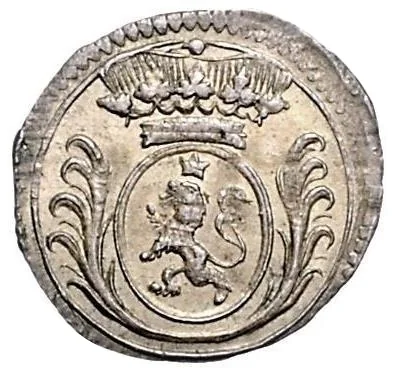
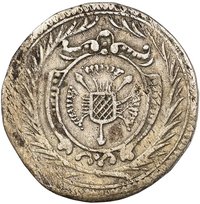
Obverse
Description:
Palm branches flank a crowned oval coat of arms.
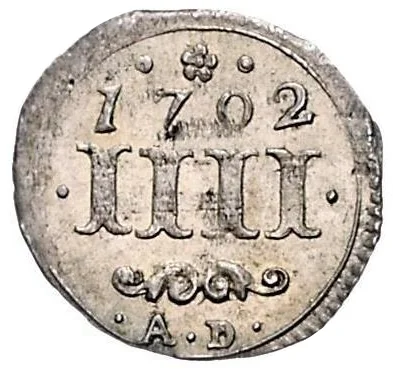
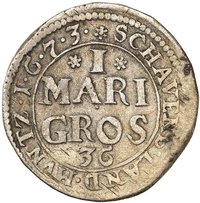
Reverse
Description:
Date above, denomination centered, mint mark below.
Inscription:
1702
IIII
A · D
IIII
A · D
Script: Latin
Edge
Mints
| Name | Mark |
|---|---|
| Kassel | — |
Mintings
| Year | Mint Mark | Mintage | Quality | Collection |
|---|---|---|---|---|
| 1671 | — | — | ||
| 1673 | — | — | ||
| 1674 | — | — | ||
| 1675 | — | — | ||
| 1676 | — | — | ||
| 1677 | — | — | ||
| 1678 | — | — | ||
| 1679 | — | — | ||
| 1680 | — | — | ||
| 1681 | — | — | ||
| 1682 | — | — | ||
| 1685 | — | — | ||
| 1687 | — | — | ||
| 1690 | — | — | ||
| 1691 | — | — | ||
| 1692 | — | — | ||
| 1694 | — | — | ||
| 1697 | — | — | ||
| 1699 | — | — | ||
| 1702 | — | — |
Historical background
In 1671, the currency situation in the Landgraviate of Hesse-Cassel was complex and challenging, typical of the fragmented Holy Roman Empire. The landgraviate did not have a monopoly on coinage; its monetary system was a chaotic mix of domestic and foreign coins circulating simultaneously. Alongside coins minted by Landgrave William VI (and later his widow, the regent Hedwig Sophie), numerous currencies from neighboring German states and trade partners like the Reichsthaler, Gulden, and smaller Kreuzer and Heller were in use, leading to constant problems of valuation and exchange.
This monetary fragmentation was exacerbated by the Thirty Years' War (1618-1648), which had left a legacy of debased coinage and economic instability. While William VI (d. 1663) had initiated post-war recovery, the regency government for the young Landgrave Charles faced persistent fiscal pressures. The need to fund administration and maintain the state's military posture encouraged practices like Kipper- und Wipperzeit tactics—the deliberate debasement of small coinage to generate seigniorage profit, which eroded public trust and disrupted local commerce.
Consequently, the primary focus in 1671 was on stabilization and control. The authorities sought to manage the currency by issuing periodic minting ordinances (Münzordnungen) that tried to fix the value and metal content of coins relative to the stable Reichsthaler. However, enforcement was difficult, and the situation remained one of fragile order amidst inherent complexity, setting the stage for more centralized monetary policies under Landgrave Charles, who would later leverage Hesse-Cassel's financial strength to become a renowned military entrepreneur.
This monetary fragmentation was exacerbated by the Thirty Years' War (1618-1648), which had left a legacy of debased coinage and economic instability. While William VI (d. 1663) had initiated post-war recovery, the regency government for the young Landgrave Charles faced persistent fiscal pressures. The need to fund administration and maintain the state's military posture encouraged practices like Kipper- und Wipperzeit tactics—the deliberate debasement of small coinage to generate seigniorage profit, which eroded public trust and disrupted local commerce.
Consequently, the primary focus in 1671 was on stabilization and control. The authorities sought to manage the currency by issuing periodic minting ordinances (Münzordnungen) that tried to fix the value and metal content of coins relative to the stable Reichsthaler. However, enforcement was difficult, and the situation remained one of fragile order amidst inherent complexity, setting the stage for more centralized monetary policies under Landgrave Charles, who would later leverage Hesse-Cassel's financial strength to become a renowned military entrepreneur.
✨ Legendary