

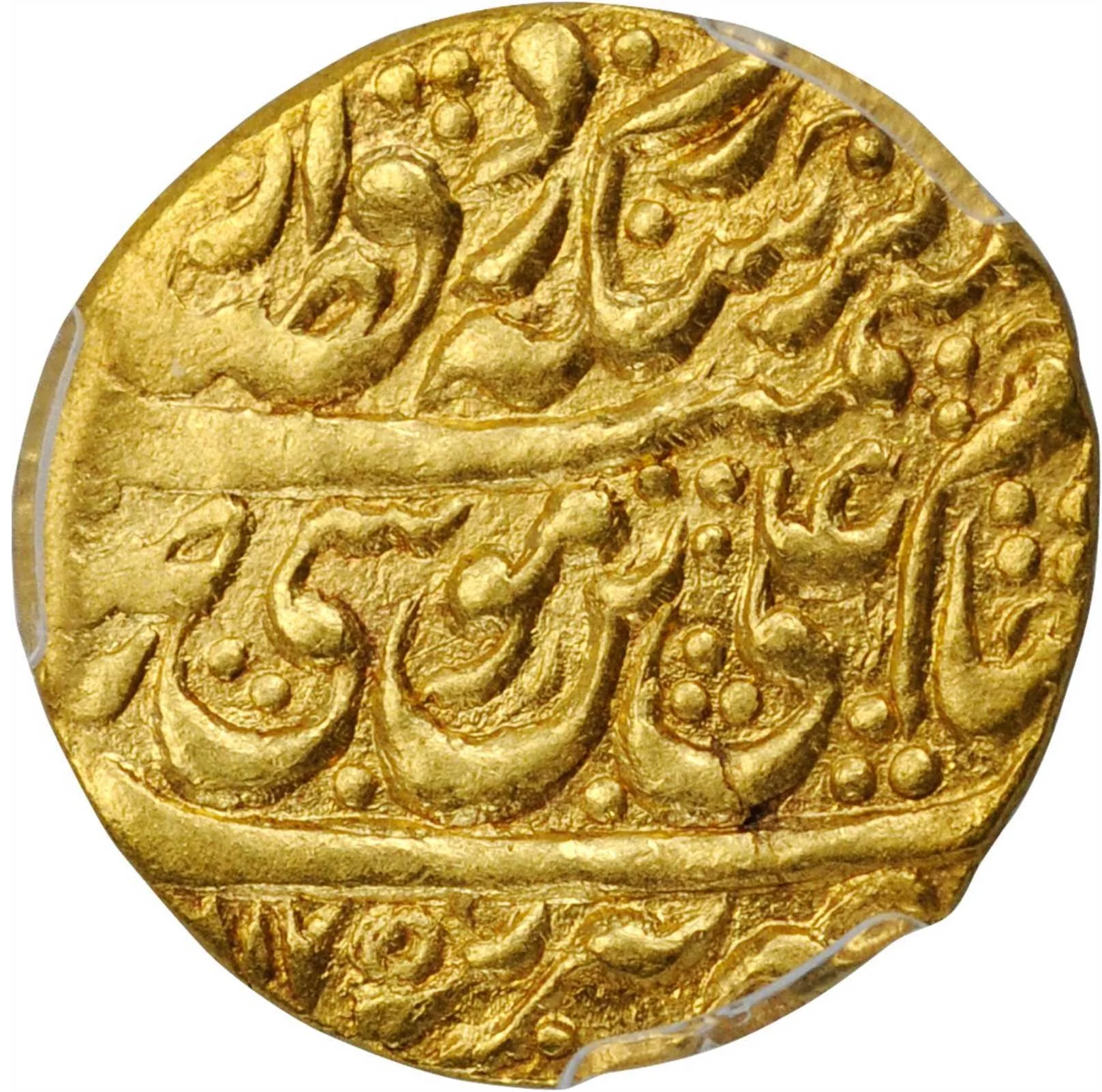
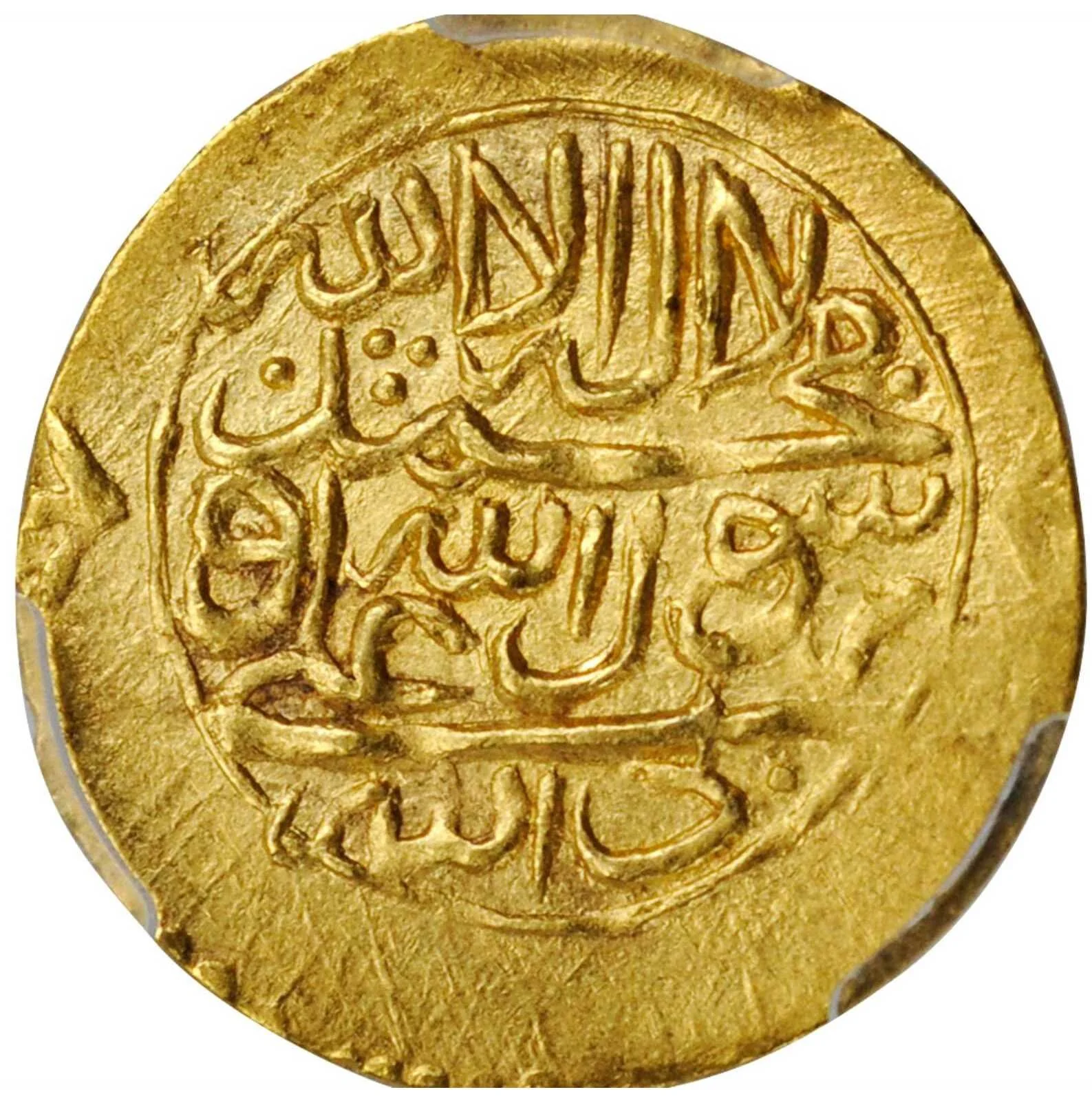
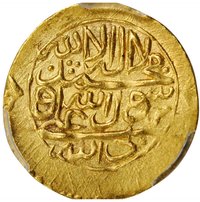
¼ Mohur – Iranian Azerbaijan
Iran
Context
Year: 1762
Islamic (Hijri) Year: 1175
Country: Iran 
Issuer: Iranian Azerbaijan
Ruler: Fath 'Ali Khan Afshar
Currency:
(1501—1798)
Demonetized: Yes
Material
Weight: 2.72 g
Gold weight: 2.72 g
Shape: Irregular round
Composition: Gold
Magnetic: No
Alignment: Coin alignment
flip
References
KM: #Click to copy to clipboard505
Numista: #258820
Value
Bullion value: $452.82
Obverse
Inscription:
به زر سکه از میمنت زد قضا
بنام علی بن موسی الرضا
ضرب تبریز ۱۱۷٥
بنام علی بن موسی الرضا
ضرب تبریز ۱۱۷٥
Reverse
Inscription:
لا اله الا الله
محمد رسول الله
علی ولی الله
محمد رسول الله
علی ولی الله
Edge
Plain
Mints
| Name | Mark |
|---|---|
| Tebriz | تبریز |
Mintings
| Year | Mint Mark | Mintage | Quality | Collection |
|---|---|---|---|---|
| 1762 | — | — |
Historical background
In 1762, the currency situation in Iranian Azerbaijan was characterized by instability and fragmentation, a direct reflection of the broader political turmoil within the Zand dynasty's sphere of influence. Following the collapse of Nader Shah's empire in 1747, Iran entered a period of decentralized conflict, with regional khans and tribal leaders vying for power. Iranian Azerbaijan, a strategically vital and economically productive region, was a contested zone between the Qajar lords of the north, the centralizing efforts of Karim Khan Zand (who was consolidating power in southern Iran), and local Kurdish and Azeri khans. This political fragmentation led to a fractured monetary system, where the authority to mint coins was exercised by multiple competing powers.
The circulating currency primarily consisted of silver abbasi coins and copper pul, but their weight, purity, and value were highly inconsistent. Various local rulers, including Mohammad Hasan Khan Qajar and his rivals, minted their own coins in mints at cities like Tabriz and Urmia to pay troops and assert sovereignty. This resulted in a proliferation of coinages of varying reliability, severely disrupting trade and devaluing currency. Furthermore, the region's economy suffered from the cumulative devastation of earlier wars and the ongoing military campaigns, which disrupted agricultural and artisanal production—the tax base needed to support a sound currency.
Consequently, the year 1762 falls within a prolonged period of monetary crisis for Iranian Azerbaijan. The lack of a unified imperial currency or a single political authority to guarantee value led to hyperinflation of copper coinage and a hoarding of older, more reliable silver. Long-distance and regional commerce faced significant hurdles due to the need for constant money-changing and uncertainty over acceptance. This chaotic currency environment mirrored the region's political state: a fractured, contested territory awaiting the forceful reunification that would eventually come with the rise of the Qajar dynasty at the end of the century.
The circulating currency primarily consisted of silver abbasi coins and copper pul, but their weight, purity, and value were highly inconsistent. Various local rulers, including Mohammad Hasan Khan Qajar and his rivals, minted their own coins in mints at cities like Tabriz and Urmia to pay troops and assert sovereignty. This resulted in a proliferation of coinages of varying reliability, severely disrupting trade and devaluing currency. Furthermore, the region's economy suffered from the cumulative devastation of earlier wars and the ongoing military campaigns, which disrupted agricultural and artisanal production—the tax base needed to support a sound currency.
Consequently, the year 1762 falls within a prolonged period of monetary crisis for Iranian Azerbaijan. The lack of a unified imperial currency or a single political authority to guarantee value led to hyperinflation of copper coinage and a hoarding of older, more reliable silver. Long-distance and regional commerce faced significant hurdles due to the need for constant money-changing and uncertainty over acceptance. This chaotic currency environment mirrored the region's political state: a fractured, contested territory awaiting the forceful reunification that would eventually come with the rise of the Qajar dynasty at the end of the century.
✨ Legendary