Logo Title
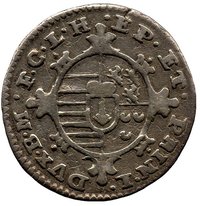
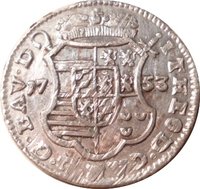
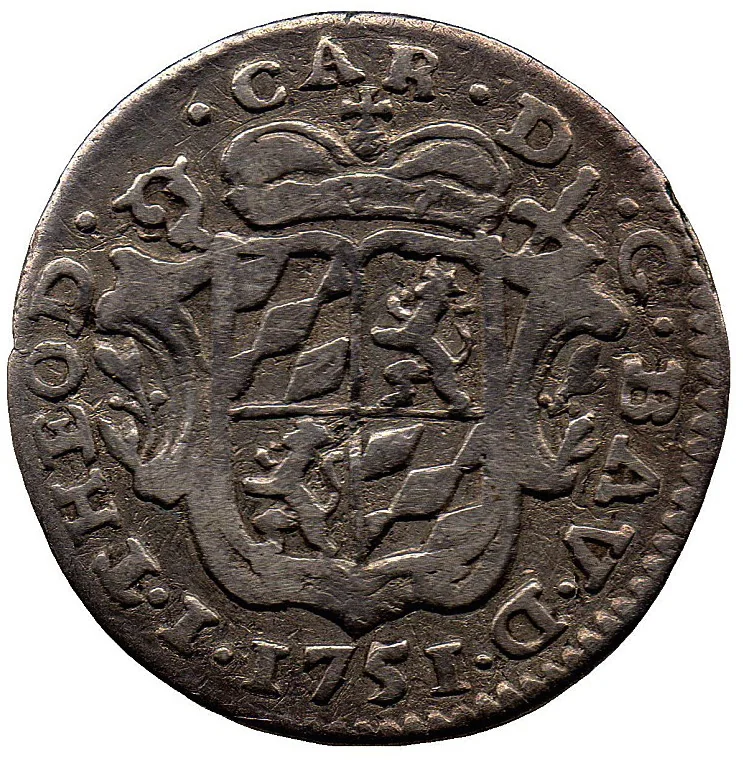
obverse
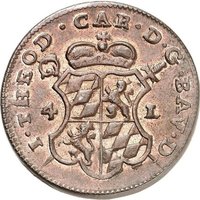
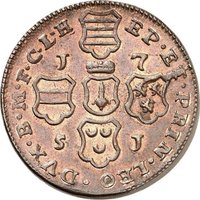
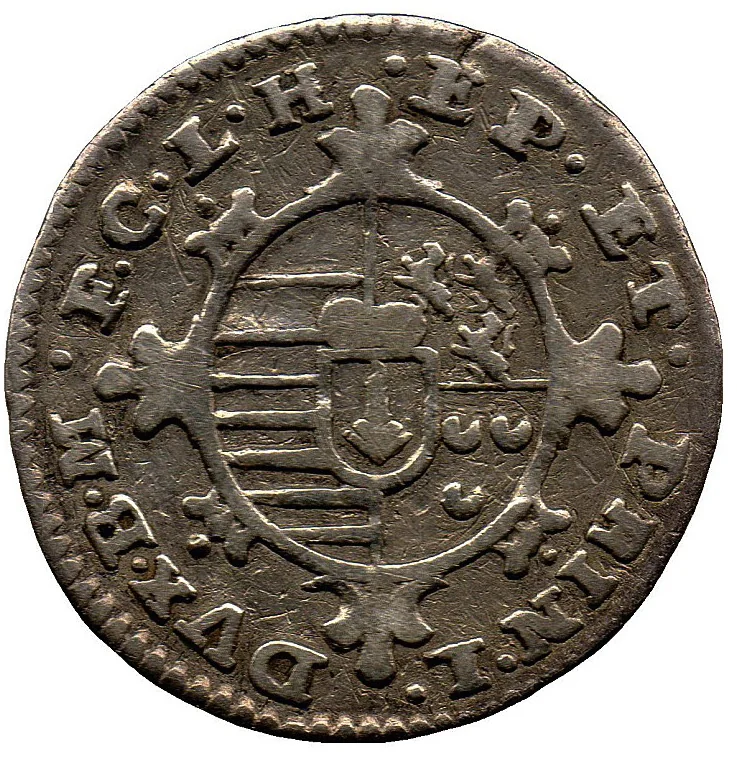
reverse

1 Plaquette – Prince-bishopric of Liege

Belgium
Context
Years: 1751–1752
Country: Belgium Country flag
Currency:
(1650—1795)
Demonetization: 17 February 1840
Material
Diameter: 21 mm
Weight: 2.26 g
Silver weight: 1.29 g
Thickness: 1 mm
Shape: Round
Composition: 56.9% Silver
Magnetic: No
Alignment: Coin alignment
Obverse
OBVERSE ↑
flip
Reverse
REVERSE ↓
References
KM: #Click to copy to clipboard152
Numista: #25787
Value
Bullion value: $3.56

Obverse

Description:
Bavaria-Palatinate arms with elector's cap in ornate frame.
Inscription:
·I·THEOD··CAR·D·G·BAV·D·
Script: Latin

Reverse

Description:
Quartered oval arms in ornate frame, centered with the Liege escutcheon.
Inscription:
·EP·ET·PRIN·L·DVX·B·M·F·C·L·H·
Script: Latin

Edge

Plain

Mintings

YearMint MarkMintageQualityCollection
1751
1752

Historical background

In 1751, the Prince-Bishopric of Liège, a sovereign ecclesiastical state within the Holy Roman Empire, grappled with a complex and debased monetary system. The circulating medium was a chaotic mix of domestic and foreign coins, including Liège's own patards and florins, alongside Dutch guilders, French livres, and Austrian kronenthalers. The intrinsic value of these coins, particularly the local issues, had been steadily eroded over decades as successive prince-bishops and the ruling oligarchy engaged in inflationary practices, reducing the silver content to fund state expenditures and personal luxury.

This monetary instability created significant economic friction. Merchants and the burgeoning industrial class in the metalworking centers of Liège and Huy struggled with uncertain exchange rates and the constant need to assay coins, hindering trade and credit. The situation bred social tension, as wages paid in debased coinage failed to keep pace with real prices, effectively reducing the purchasing power of the common people. While not in a state of acute crisis in 1751, the system was widely recognized as flawed and a brake on the principality's economic potential.

The responsibility for monetary policy lay with the prince-bishop, Jean-Théodore of Bavaria (r. 1744-1763). However, his power was constrained by the influential and conservative estates (the clergy, nobility, and burghers), who often resisted comprehensive reform that might threaten their privileges or require fiscal austerity. Thus, in 1751, the situation was one of managed deterioration rather than reform. Any attempts at correction were likely piecemeal, focusing on regulating the exchange rates of foreign coins rather than the politically difficult task of a full recoinage to restore confidence in the domestic currency.
Somewhat Rare