


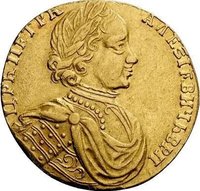
Obverse
Description:
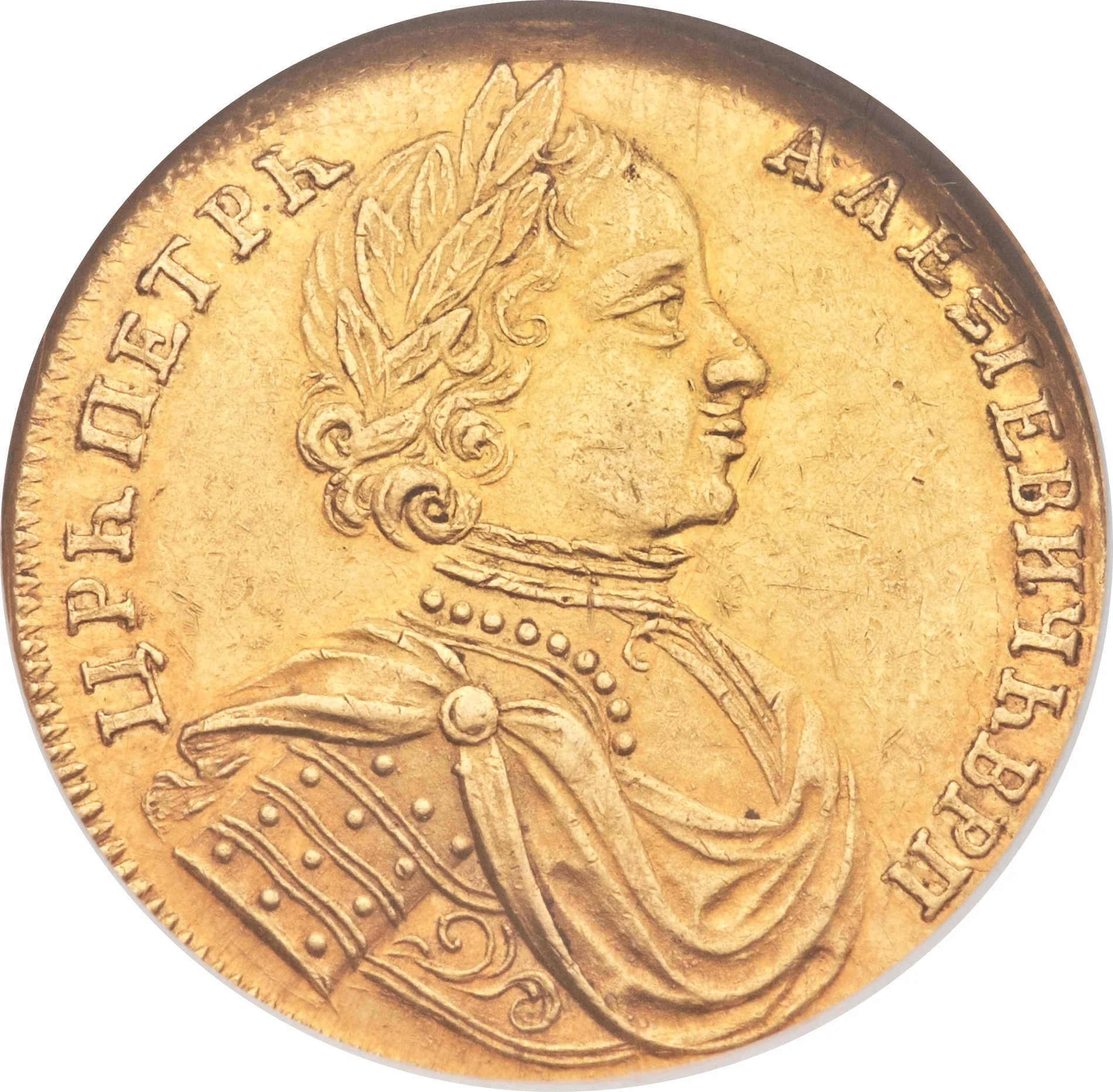
Peter I laureate bust right, in uniform.
Inscription:
ЦРЬ ПЕТРЬ АЛЕѮИЕВIЧЬВРП
Script: Cyrillic
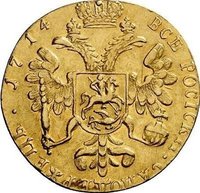
Reverse
Description:
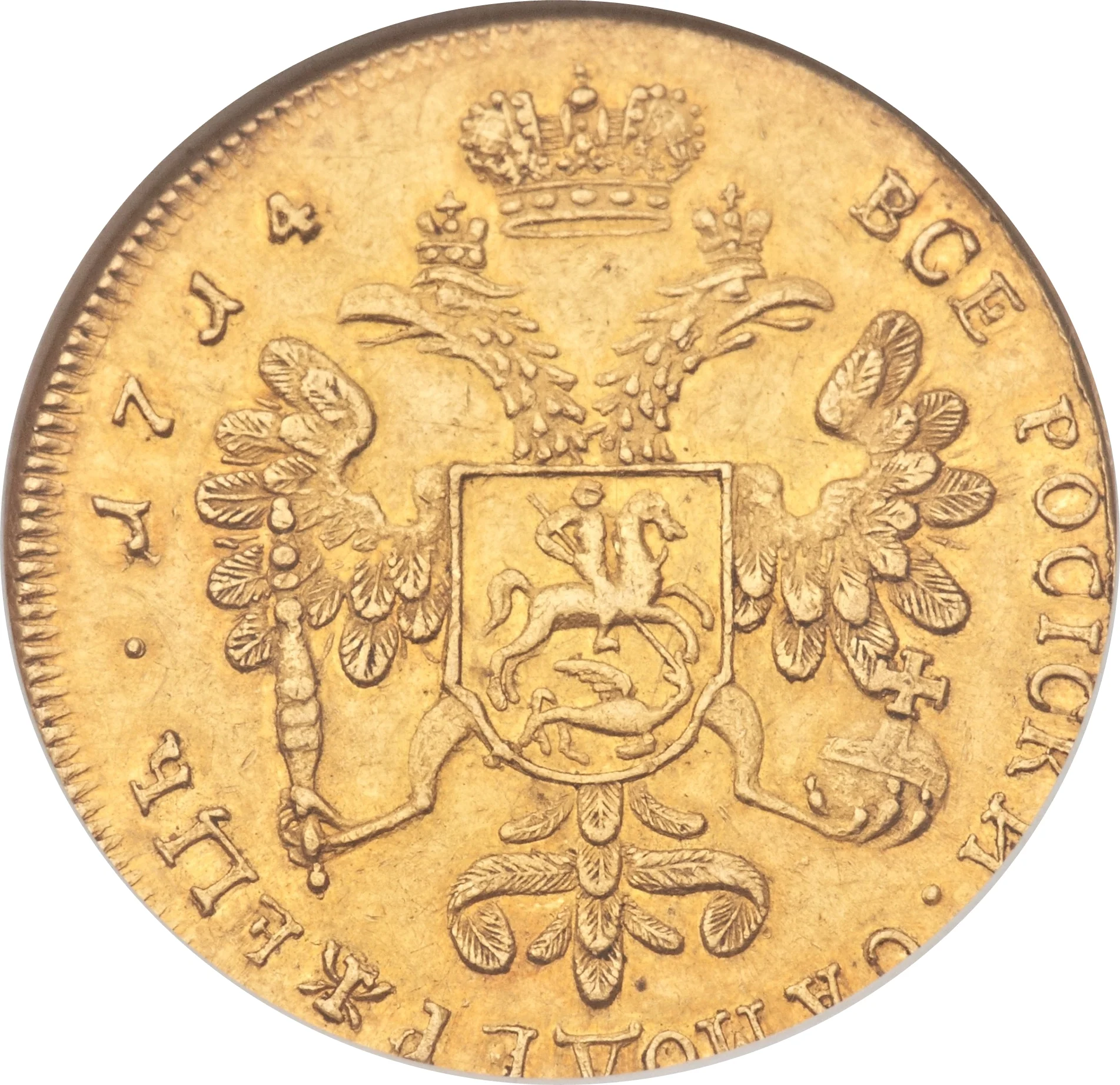
Crowned double-headed eagle with breast shield and dated legend.
Inscription:
ВСЕ РОСIСКИ ∙ САМОДЕРЖЕЦЬ ∙ 1714
Script: Cyrillic
Edge
Plain
Mintings
| Year | Mint Mark | Mintage | Quality | Collection |
|---|---|---|---|---|
| 1714 | — | — |
Historical background
In 1714, the currency system of the Russian Empire was in a state of profound strain and transition, largely due to the immense financial demands of the Great Northern War (1700-1721). Tsar Peter the Great’s ambitious military reforms and the protracted conflict against Sweden had drained the state treasury. To fund his armies and the construction of a new navy and capital at St. Petersburg, the government resorted to heavy taxation, monopolies, and, most consequentially for the currency, the systematic debasement of the silver coinage. The primary circulating coins—silver kopecks and dengas—were repeatedly minted with less precious metal content, leading to inflation and a loss of public trust in the money.
The monetary landscape was also complex and archaic. The basic unit was the ruble, but it existed primarily as a unit of account; there was no large silver ruble coin in circulation. Instead, the actual coinage consisted of small, irregularly shaped dengas (½ kopeck) and kopecks struck from flattened silver wire, a technology long abandoned in Western Europe. Alongside these, copper polushkas (¼ kopeck) circulated for small transactions. A critical and growing problem was the severe shortage of small-denomination coins for daily trade, which hampered commerce and led to widespread counterfeiting and the physical cutting of coins into pieces to make change.
Peter I was aware of these systemic failures and was already planning a comprehensive monetary reform, which would culminate in the decree of 1718. However, in 1714, the empire was still years away from introducing a modern, decimal-based system with machine-struck coins. Thus, the currency situation of that year was defined by the tension between the pressing fiscal needs of a modernizing, warring state and an outdated, deteriorating coinage system, setting the stage for the radical transformations that would follow later in the decade.
The monetary landscape was also complex and archaic. The basic unit was the ruble, but it existed primarily as a unit of account; there was no large silver ruble coin in circulation. Instead, the actual coinage consisted of small, irregularly shaped dengas (½ kopeck) and kopecks struck from flattened silver wire, a technology long abandoned in Western Europe. Alongside these, copper polushkas (¼ kopeck) circulated for small transactions. A critical and growing problem was the severe shortage of small-denomination coins for daily trade, which hampered commerce and led to widespread counterfeiting and the physical cutting of coins into pieces to make change.
Peter I was aware of these systemic failures and was already planning a comprehensive monetary reform, which would culminate in the decree of 1718. However, in 1714, the empire was still years away from introducing a modern, decimal-based system with machine-struck coins. Thus, the currency situation of that year was defined by the tension between the pressing fiscal needs of a modernizing, warring state and an outdated, deteriorating coinage system, setting the stage for the radical transformations that would follow later in the decade.
✨ Legendary