

2 Pfennigs – Austrian Empire
Austria
Context
Years: 1622–1632
Country: Austria 
Issuer: Austrian Empire
Ruler: Ferdinand II
Currency:
(1520—1754)
Demonetized: Yes
References
KM: #Click to copy to clipboard377
Numista: #24675
Obverse
Description:
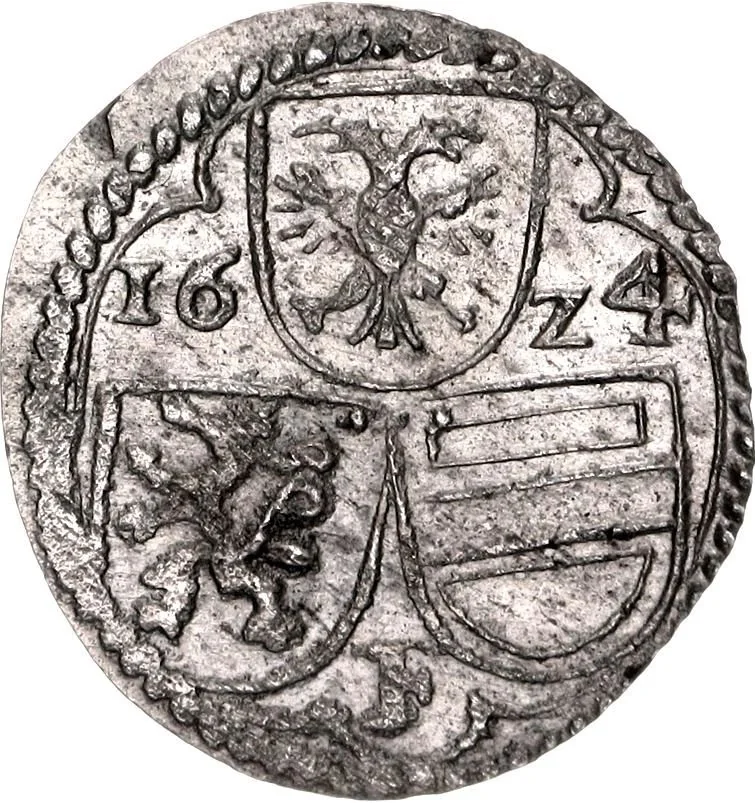
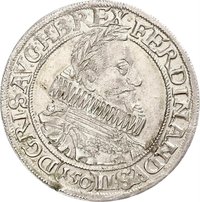
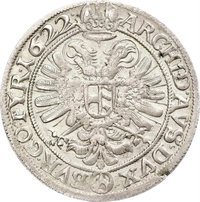
Three shields: top with double-headed eagle, left Styria (fire-breathing panther), right Austria; date divided by top shield.
Inscription:
16 24
F
F
Script: Latin
Reverse
Description:
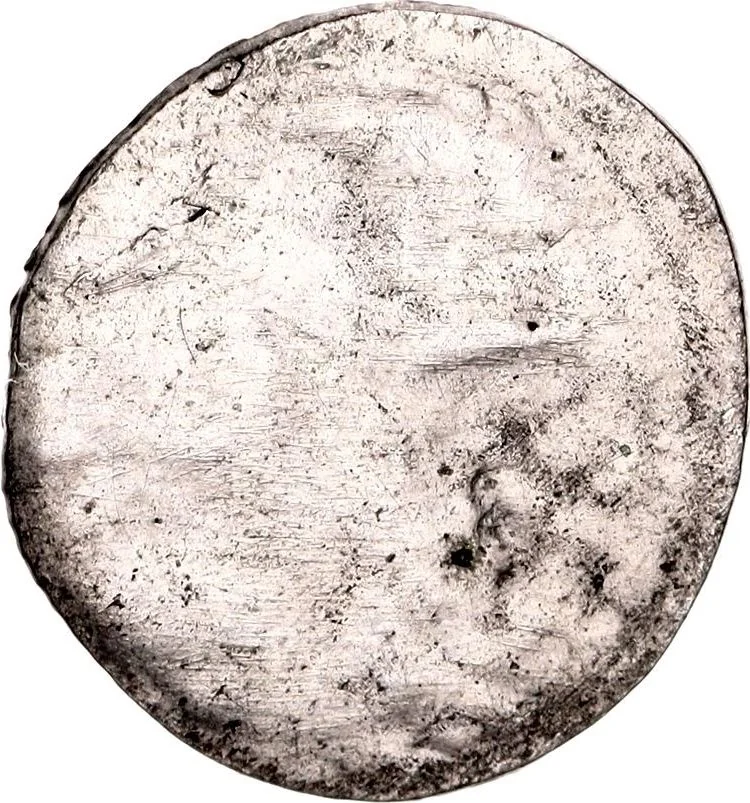
Polished finish
Edge
Plain
Categories
| Symbols> Coat of Arms |
| Symbol> Double-headed eagle |
Mints
| Name | Mark |
|---|---|
| Graz | — |
Mintings
| Year | Mint Mark | Mintage | Quality | Collection |
|---|---|---|---|---|
| 1622 | — | — | ||
| 1623 | — | — | ||
| 1624 | — | — | ||
| 1625 | — | — | ||
| 1626 | — | — | ||
| 1627 | — | — | ||
| 1628 | — | — | ||
| 1629 | — | — | ||
| 1630 | — | — | ||
| 1631 | — | — | ||
| 1632 | — | — |
Historical background
In the early 1620s, the Austrian Habsburg monarchy, under Emperor Ferdinand II, faced immense financial strain due to the escalating costs of the Thirty Years' War. To fund his armies and the Catholic League's campaigns, the state treasury was exhausted, and traditional sources of revenue like taxes and loans were insufficient. In response, the government resorted to a drastic measure: the deliberate debasement of the coinage. In 1619, authorities began issuing lightweight silver coins, but the situation reached a crisis point in 1622 when the Emperor farmed out the right to mint coins to a consortium of financiers, most notably the Bohemian nobleman Karl von Liechtenstein and the banker Jacob Bassevi.
This consortium, known as the Münzverein or "coinage consortium," was granted a license to mint an enormous quantity of debased coinage, primarily Kipper and Wiener groschen. They melted down high-value, pre-existing coins and re-minted them with a much lower silver content, extracting the precious metal for profit while flooding the Habsburg lands with poor-quality money. The result was catastrophic inflation, as the sheer volume of nearly worthless currency in circulation caused prices for basic goods like grain and salt to skyrocket. This period became infamous as the Kipper- und Wipperzeit ("Clipping and Swinging Time"), named for the practices of clipping silver from coins or using tipping scales to swindle people.
The social and economic consequences were severe. The inflation acted as a brutal hidden tax, devastating the savings of ordinary people, soldiers, and creditors, while enriching the consortium and temporarily funding the imperial war effort. Public trust in the currency collapsed, leading to economic paralysis and widespread hardship. By late 1622, the experiment had become untenable, and the consortium was dissolved. The following year, Ferdinand II attempted to stabilize the situation with a currency reform that recalled the debased coins, but this came too late for many who had been ruined, leaving a legacy of bitterness and financial disruption throughout the Empire.
This consortium, known as the Münzverein or "coinage consortium," was granted a license to mint an enormous quantity of debased coinage, primarily Kipper and Wiener groschen. They melted down high-value, pre-existing coins and re-minted them with a much lower silver content, extracting the precious metal for profit while flooding the Habsburg lands with poor-quality money. The result was catastrophic inflation, as the sheer volume of nearly worthless currency in circulation caused prices for basic goods like grain and salt to skyrocket. This period became infamous as the Kipper- und Wipperzeit ("Clipping and Swinging Time"), named for the practices of clipping silver from coins or using tipping scales to swindle people.
The social and economic consequences were severe. The inflation acted as a brutal hidden tax, devastating the savings of ordinary people, soldiers, and creditors, while enriching the consortium and temporarily funding the imperial war effort. Public trust in the currency collapsed, leading to economic paralysis and widespread hardship. By late 1622, the experiment had become untenable, and the consortium was dissolved. The following year, Ferdinand II attempted to stabilize the situation with a currency reform that recalled the debased coins, but this came too late for many who had been ruined, leaving a legacy of bitterness and financial disruption throughout the Empire.
💎 Extremely Rare