

1 Penny – Isle of Man
Context
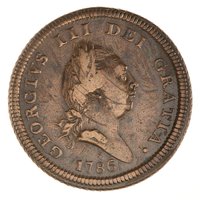
Year: 1786
Country: British Crown dependencies
Issuer: Isle of Man 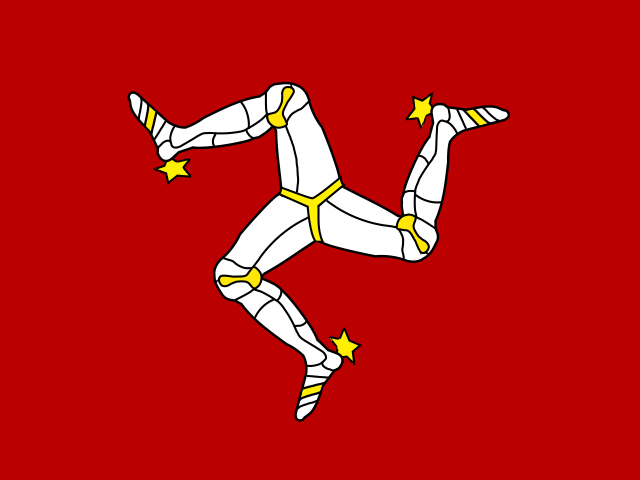
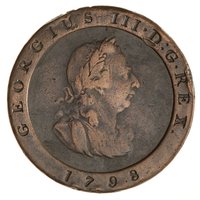
Ruler: George III
Currency:
(1709—1839)
Demonetized: Yes
Material
Diameter: 33.6 mm
Weight: 15.5 g
Shape: Round
Composition: Copper
Standard: Silver half ounce
Magnetic: No
Technique: Milled
Alignment: Coin alignment
flip
References
KM: #Click to copy to clipboard9
Numista: #24251
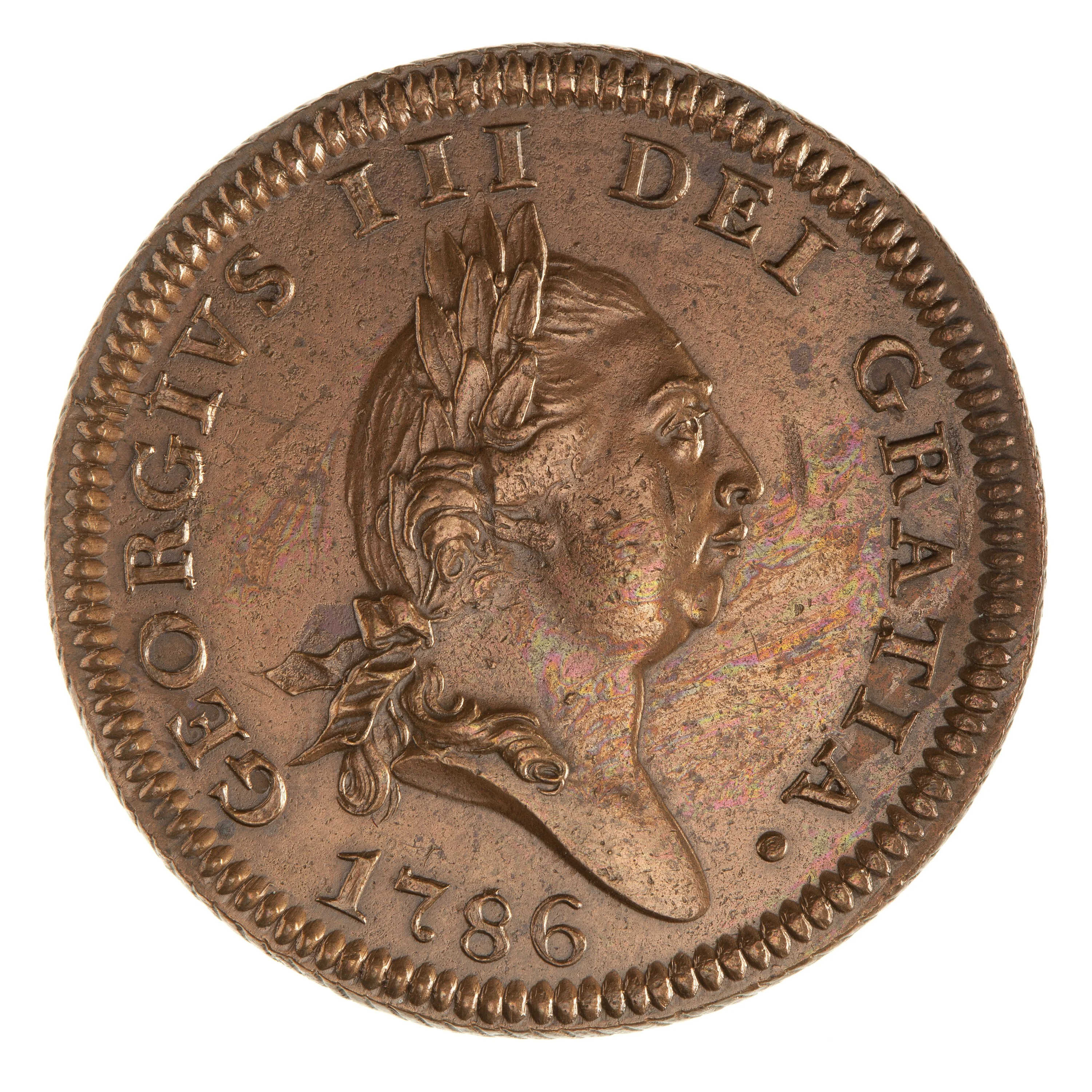
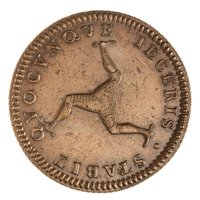
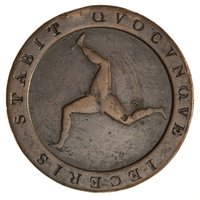
Obverse
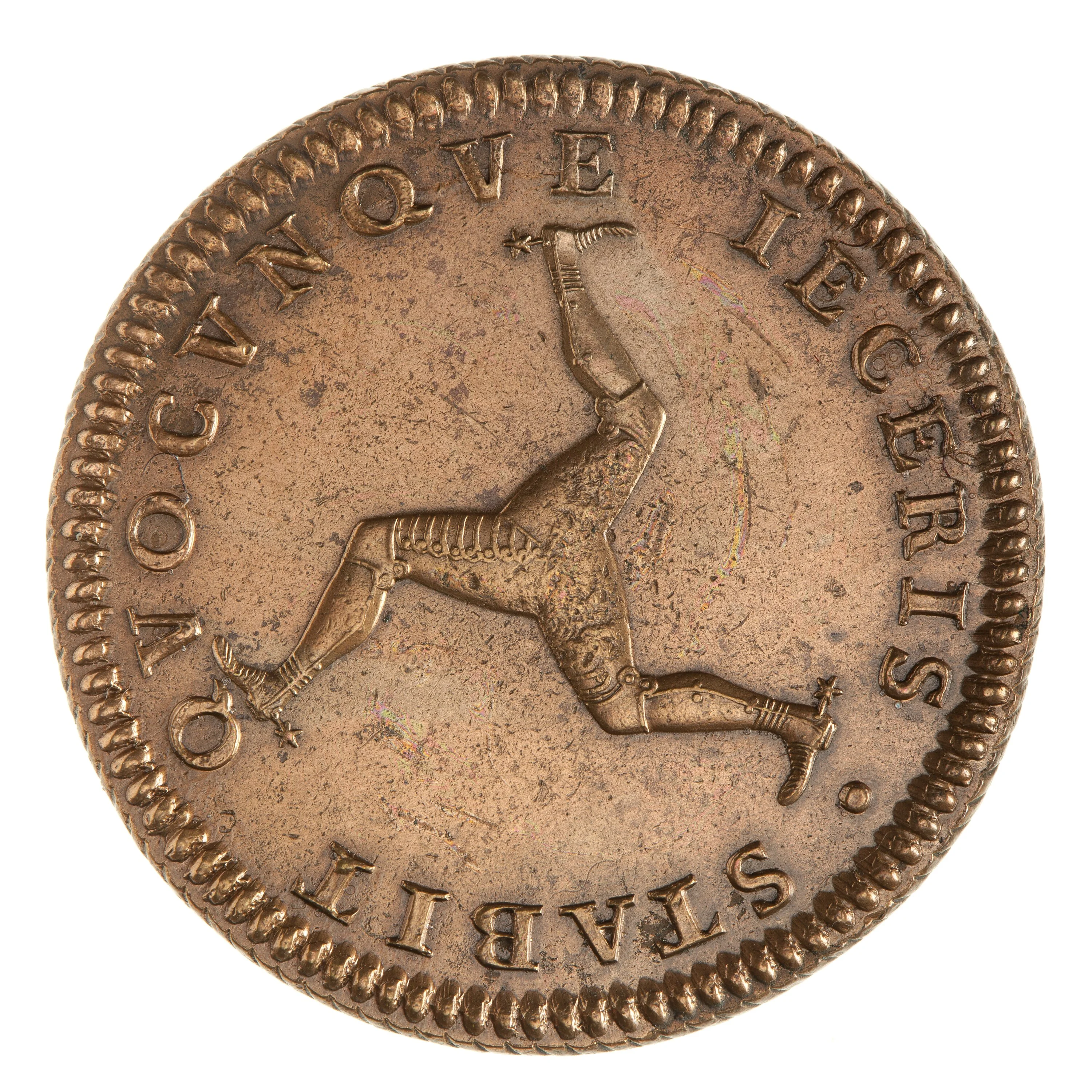
Reverse
Edge
Categories
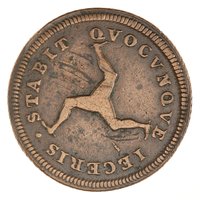
| Symbol> Triskelion |
Mintings
| Year | Mint Mark | Mintage | Quality | Collection |
|---|---|---|---|---|
| 1786 | — | — | ||
| 1786 | — | — | Proof |
Historical background
In 1786, the Isle of Man faced a complex and challenging currency situation, common to many small jurisdictions of the era. The island, a semi-autonomous possession of the British Crown (held by the Dukes of Atholl until 1765), lacked a unified, official coinage of its own. Consequently, the economy operated on a confusing mixture of foreign currencies, primarily English, Irish, and Scottish coins, alongside Spanish silver dollars (pieces of eight) and Portuguese gold coins from wider Atlantic trade. This created significant problems for daily commerce, as the values of these coins relative to each other were unstable and often disputed, leading to confusion and facilitating fraud.
The issue was exacerbated by a chronic shortage of small change, which crippled local trade and wages. To fill this void, a proliferation of low-value private tokens, issued by local merchants, innkeepers, and even the town of Douglas, circulated unofficially. While these tokens provided a necessary medium for everyday transactions, their value was only as good as the reputation of the issuer, and they were not legal tender. This fragmented system was inefficient and hindered economic development, creating an environment ripe for uncertainty and petty financial disputes among the island's residents and businesses.
Recognizing the need for stability, 1786 fell within a period of active reform following the British Crown's acquisition of the island's sovereignty. While a definitive solution was still a few years away, the groundwork was being laid. The pressing monetary chaos of 1786 directly contributed to the push for an official resolution, which culminated in the establishment of the Isle of Man's first dedicated coinage in 1786, with the authorization of the "Manx Penny" and other copper denominations bearing the emblem of the Three Legs of Man. These coins, struck by the British Soho Mint, began to address the shortage of small change and represented a crucial step toward a standardized and reliable monetary system for the island.
The issue was exacerbated by a chronic shortage of small change, which crippled local trade and wages. To fill this void, a proliferation of low-value private tokens, issued by local merchants, innkeepers, and even the town of Douglas, circulated unofficially. While these tokens provided a necessary medium for everyday transactions, their value was only as good as the reputation of the issuer, and they were not legal tender. This fragmented system was inefficient and hindered economic development, creating an environment ripe for uncertainty and petty financial disputes among the island's residents and businesses.
Recognizing the need for stability, 1786 fell within a period of active reform following the British Crown's acquisition of the island's sovereignty. While a definitive solution was still a few years away, the groundwork was being laid. The pressing monetary chaos of 1786 directly contributed to the push for an official resolution, which culminated in the establishment of the Isle of Man's first dedicated coinage in 1786, with the authorization of the "Manx Penny" and other copper denominations bearing the emblem of the Three Legs of Man. These coins, struck by the British Soho Mint, began to address the shortage of small change and represented a crucial step toward a standardized and reliable monetary system for the island.
⭐ Somewhat Rare