

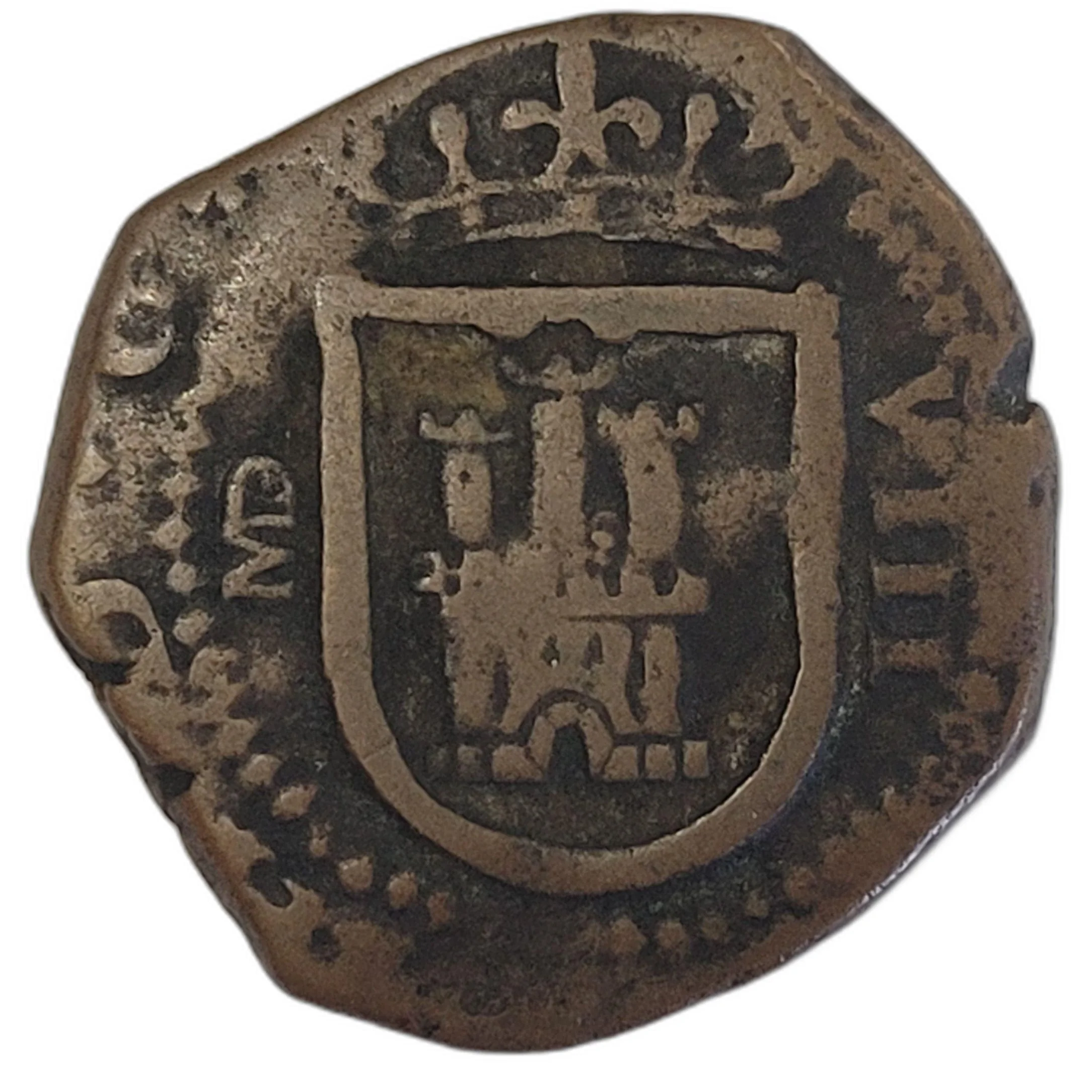
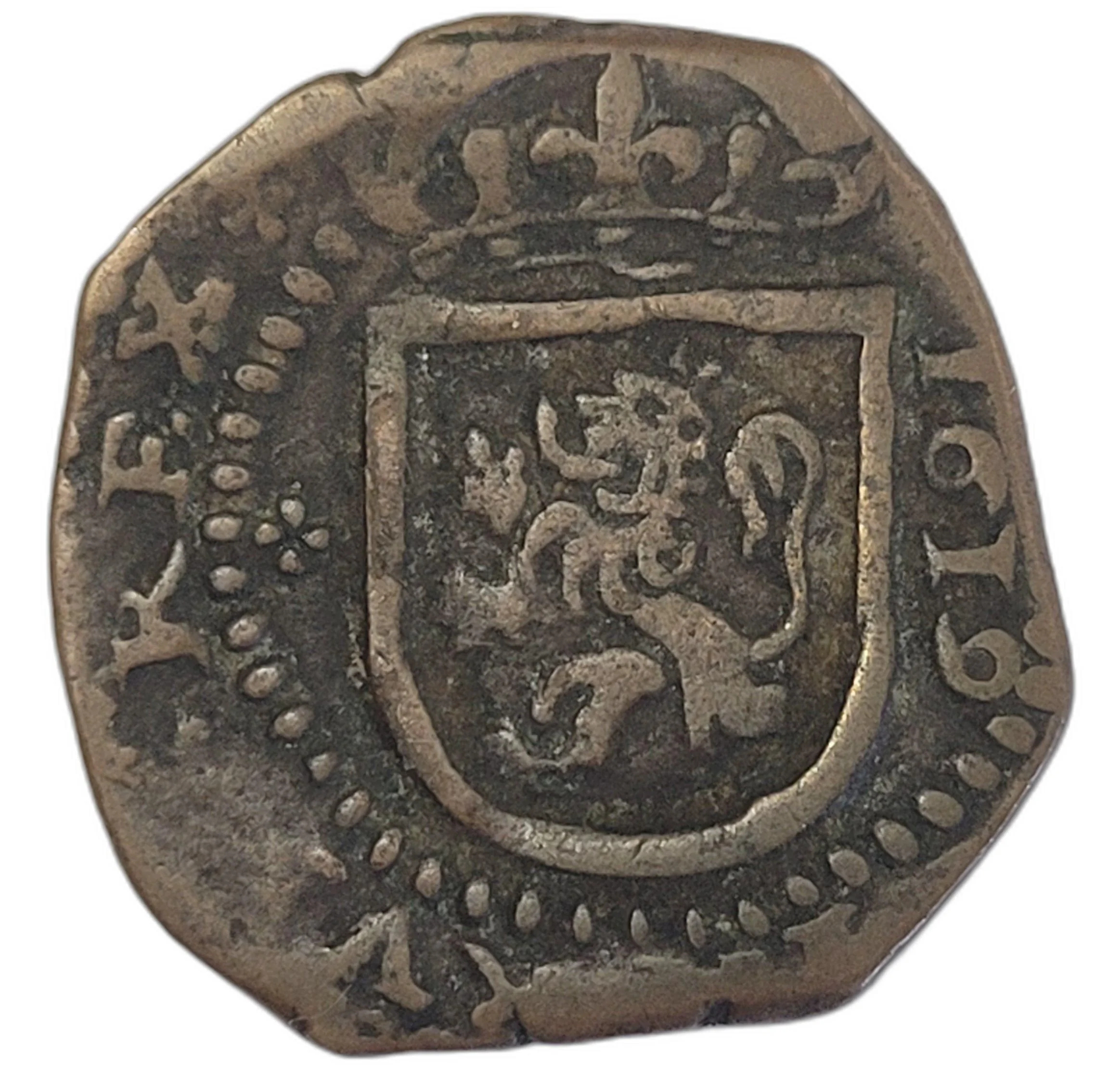
8 maravedis – Spain
Add to wishlist
Spain
Context
Material
Diameter: 24 mm
Weight: 6.6 g
Thickness: 2 mm
Shape: Irregular round
Composition: Copper
Magnetic: No
Technique: Hammered
References
KM: #
Numista: #24099
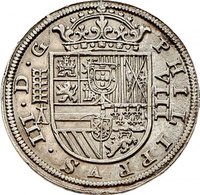
Obverse
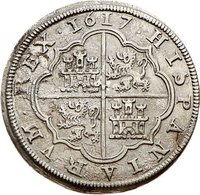
Reverse
Edge
Mints
| Name | Mark |
|---|---|
| Casa vieja de Segovia | — |
| Cuenca | — |
| Royal Mint of Burgos | — |
| Royal Mint of Granada | — |
| Royal Mint of Madrid | — |
| Toledo | — |
| Valladolid | — |
Mintings
| Year | Mint Mark | Mintage | Quality | Collection |
|---|---|---|---|---|
| 1602 | — | — | ||
| 1602 | B | — | BU | |
| 1602 | C | — | ||
| 1603 | — | — | ||
| 1603 | B | — | ||
| 1603 | C | — | ||
| 1604 | — | — | ||
| 1604 | B | — | BU | |
| 1604 | C | — | ||
| 1605 | — | — | ||
| 1605 | B | — | BU | |
| 1605 | C | — | ||
| 1606 | C | — | ||
| 1606 | — | — | ||
| 1606 | B | — | ||
| 1607 | — | — | ||
| 1607 | B | — | BU | |
| 1607 | C | — | ||
| 1608 | — | — | ||
| 1608 | B | — | BU | |
| 1609 | C | — | ||
| 1609 | — | — | ||
| 1609 | B | — | BU | |
| 1616 | G | — | ||
| 1618 | — | — | ||
| 1618 | B | — | BU | |
| 1618 | MD | — | ||
| 1619 | — | — | ||
| 1619 | B | — | ||
| 1619 | C | — | ||
| 1619 | MD | — | ||
| 1620 | — | — | ||
| 1620 | C | — | ||
| 1620 | MD | — | ||
| 1621 | MD | — |
Historical background
In 1602, Spain was grappling with a severe and protracted monetary crisis, a direct consequence of its Habsburg imperial policies. Decades of financing endless warfare in Flanders, against the Ottomans, and across Europe had drained the royal treasury, leading to repeated state bankruptcies (in 1557, 1575, and 1596). To meet its obligations, the Crown resorted to massive borrowing and, most destructively, the systematic debasement of its coinage. The government repeatedly reduced the silver content in coins like the real and the legendary piece of eight, while officially maintaining their face value. This created a stark divergence between the intrinsic value of the coins and their nominal worth, destabilizing the entire economy.
The situation was exacerbated by the phenomenon of "bad money driving out good," known as Gresham's Law. High-quality, full-weight Spanish coins were either hoarded domestically or exported to pay foreign debts, while the debased, poorer-quality currency flooded the domestic market. This led to rampant price inflation, a loss of public confidence in the currency, and severe difficulties in both everyday trade and large-scale commerce. The influx of silver from the American colonies, particularly from Potosí, paradoxically worsened the problem by increasing the money supply without corresponding economic growth, further fueling inflation in what became known as the "Price Revolution."
By 1602, the crisis had reached a critical point, prompting serious but contentious discussions about a comprehensive currency reform. The government of Philip III, advised by the Duke of Lerma, recognized the need to restore confidence but feared the short-term social and economic shock. The debate centered on whether to officially devalue the currency to match its real silver content or to attempt a painful recoinage. This monetary instability was a key symptom of Spain's deeper imperial overreach, marking the beginning of a century of relative economic decline despite its vast global empire.
The situation was exacerbated by the phenomenon of "bad money driving out good," known as Gresham's Law. High-quality, full-weight Spanish coins were either hoarded domestically or exported to pay foreign debts, while the debased, poorer-quality currency flooded the domestic market. This led to rampant price inflation, a loss of public confidence in the currency, and severe difficulties in both everyday trade and large-scale commerce. The influx of silver from the American colonies, particularly from Potosí, paradoxically worsened the problem by increasing the money supply without corresponding economic growth, further fueling inflation in what became known as the "Price Revolution."
By 1602, the crisis had reached a critical point, prompting serious but contentious discussions about a comprehensive currency reform. The government of Philip III, advised by the Duke of Lerma, recognized the need to restore confidence but feared the short-term social and economic shock. The debate centered on whether to officially devalue the currency to match its real silver content or to attempt a painful recoinage. This monetary instability was a key symptom of Spain's deeper imperial overreach, marking the beginning of a century of relative economic decline despite its vast global empire.
🌟 Limited