

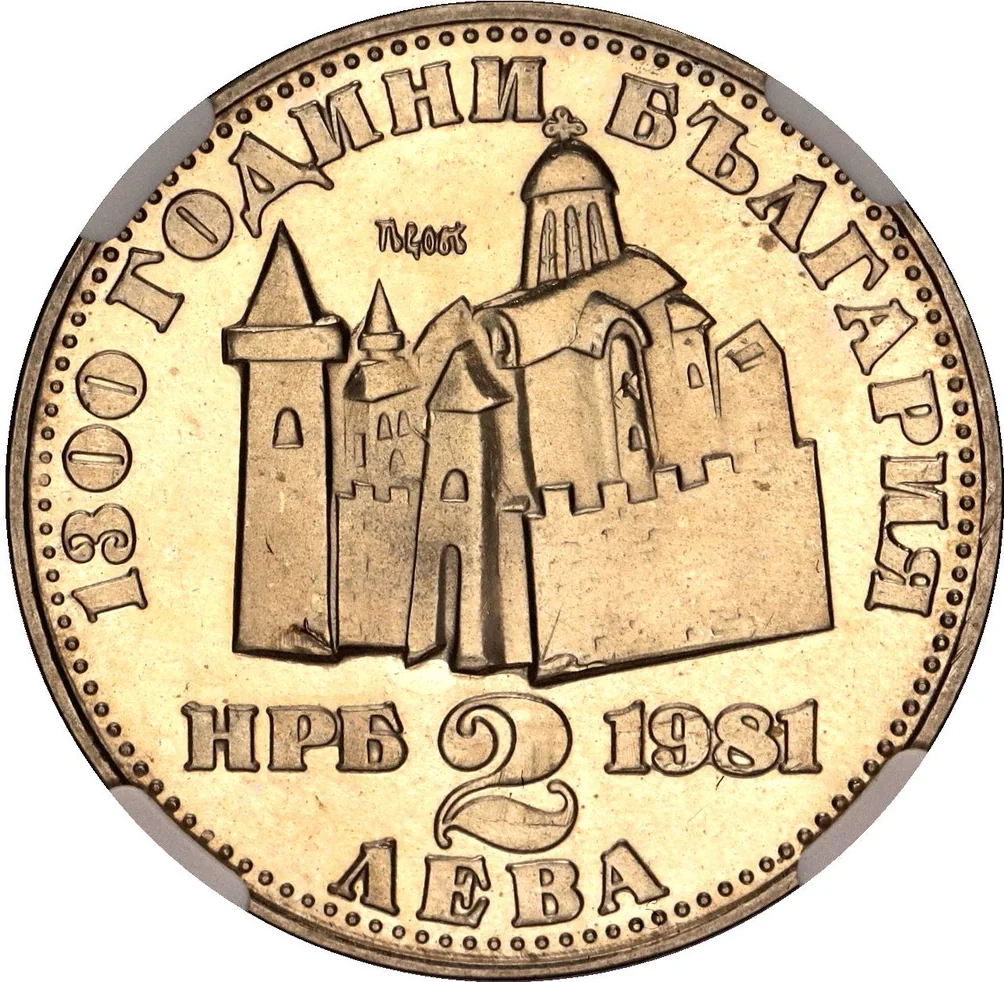
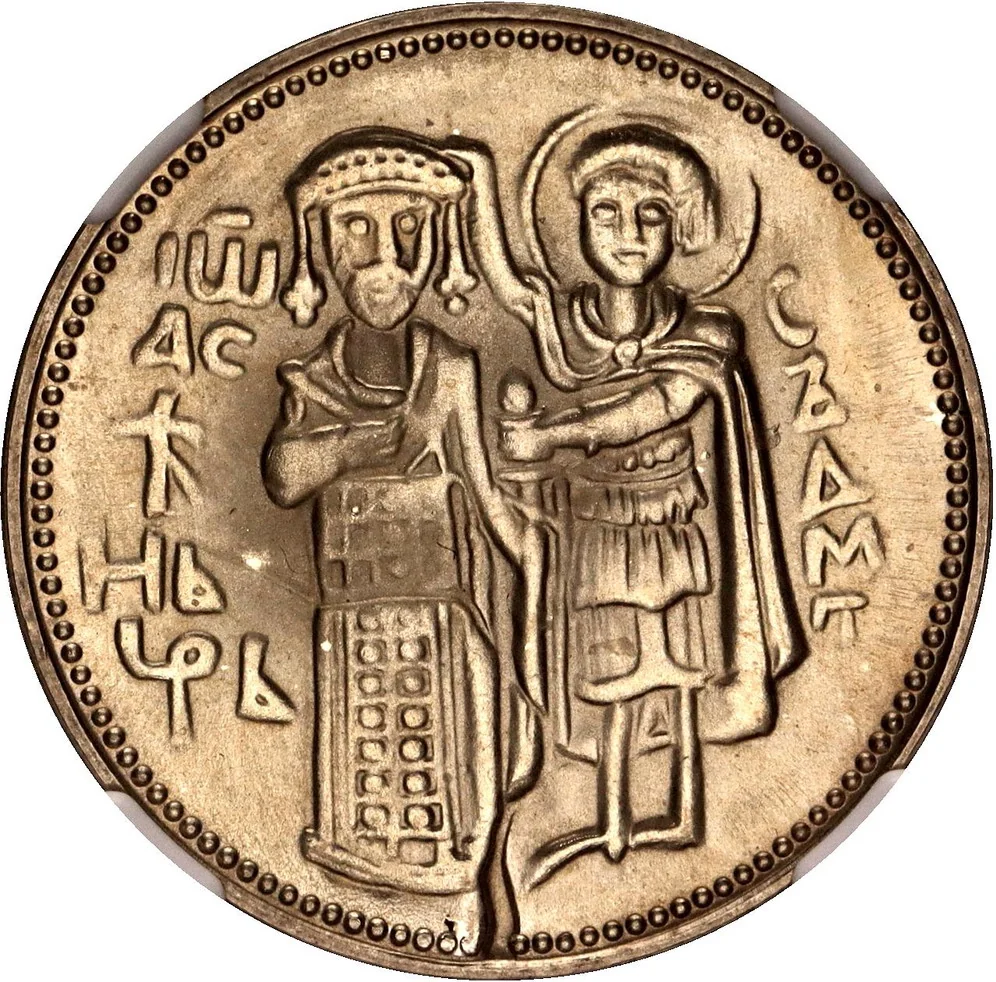
2 leva (Ivan Asen II) – Bulgaria
Add to wishlist
Non-circulating coins
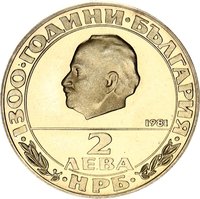
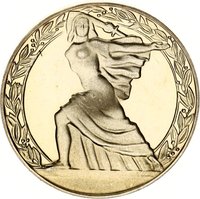
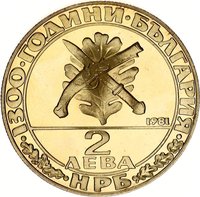
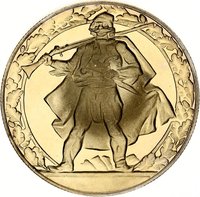
Commemoration: 1300th Anniversary of Nationhood - 2nd edition - Carevec Castle - Ivan Asen II
Bulgaria
Context
Year: 1981
Issuer: Bulgaria
Issuing organization: Bulgarian National Bank
Period:
(1946—1990)
Currency:
(1962—1999)
Demonetized: Yes
Total mintage: 300,000
Material
Diameter: 30 mm
Weight: 11 g
Thickness: 2.33 mm
Shape: Round
Composition: Copper-nickel
Technique: Milled
Alignment: Medal alignment
flip
References
KM: #
Numista: #12371
Value
Exchange value: 2 BGL
Categories
| Building> Castle or fortification |
| Currency> Coin depiction |
Mints
| Name | Mark |
|---|---|
| Bulgarian Mint | — |
Mintings
| Year | Mint Mark | Mintage | Quality | Collection |
|---|---|---|---|---|
| 1981 | — | — | ||
| 1981 | — | 300,000 | Proof |
Historical background
In 1981, Bulgaria’s currency situation was entirely defined by its status as a centrally planned economy within the Soviet-led Council for Mutual Economic Assistance (COMECON). The official national currency, the Lev, was a non-convertible "soft currency." Its exchange rate against hard currencies like the US Dollar was set by the state at an artificially high and fixed rate (approximately 0.84 Leva to $1 USD), bearing no relation to its real purchasing power or market forces. This official rate was used primarily for state accounting in foreign trade, while domestic economic planning operated independently of global financial markets.
Internally, the Lev functioned within a system of chronic shortages and suppressed inflation. While prices for basic goods and services were heavily subsidized and stable on the surface, this masked an economy of scarcity where quality goods were often unavailable. This led to the growth of a pervasive black market and a "second economy" where Leva could be exchanged for coveted goods at significantly higher real prices. For the average citizen, access to hard currency was virtually impossible through legal channels, creating a stark divide between the domestic economy and the outside world.
Externally, Bulgaria’s foreign trade was conducted through a complex system of bilateral agreements and clearing arrangements within COMECON, often relying on barter. Transactions with Western nations for essential imports required hard currency, which was scarce and centrally hoarded by the Bulgarian State Bank (BNB). To acquire this hard currency, the state relied heavily on exporting agricultural products, low-tech manufactured goods, and leveraging political tourism along the Black Sea coast. Thus, the currency situation in 1981 reflected a closed, state-controlled system designed to isolate the domestic economy from international financial pressures, albeit at the cost of economic efficiency and consumer choice.
Internally, the Lev functioned within a system of chronic shortages and suppressed inflation. While prices for basic goods and services were heavily subsidized and stable on the surface, this masked an economy of scarcity where quality goods were often unavailable. This led to the growth of a pervasive black market and a "second economy" where Leva could be exchanged for coveted goods at significantly higher real prices. For the average citizen, access to hard currency was virtually impossible through legal channels, creating a stark divide between the domestic economy and the outside world.
Externally, Bulgaria’s foreign trade was conducted through a complex system of bilateral agreements and clearing arrangements within COMECON, often relying on barter. Transactions with Western nations for essential imports required hard currency, which was scarce and centrally hoarded by the Bulgarian State Bank (BNB). To acquire this hard currency, the state relied heavily on exporting agricultural products, low-tech manufactured goods, and leveraging political tourism along the Black Sea coast. Thus, the currency situation in 1981 reflected a closed, state-controlled system designed to isolate the domestic economy from international financial pressures, albeit at the cost of economic efficiency and consumer choice.
🌱 Fairly Common