

8 reales – Colombia
Add to wishlist
Colombia
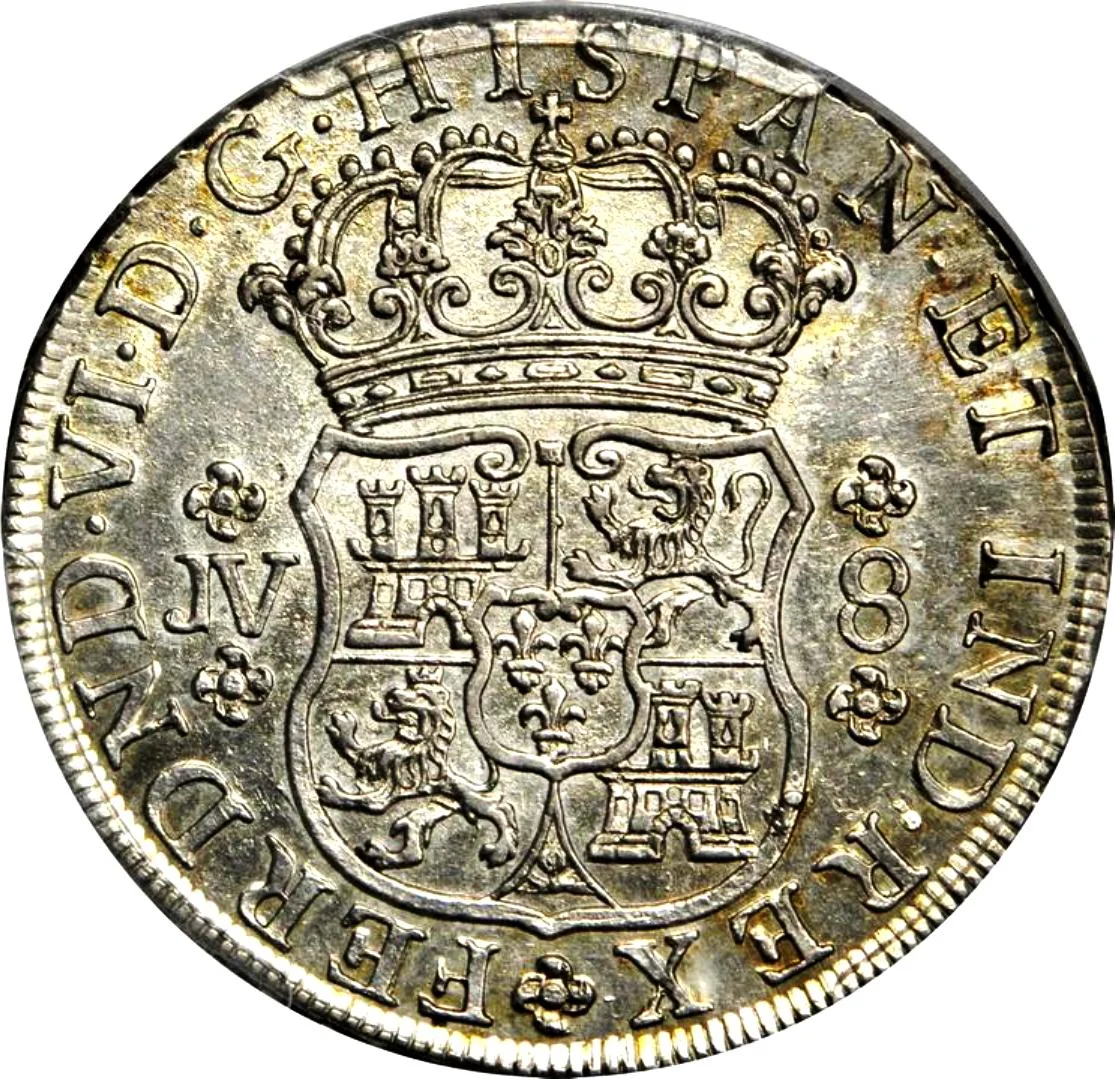
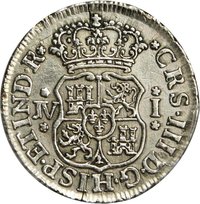
Obverse
Description:
Crowned arms of Castile and León.
Inscription:
FERDND · VI · D · G · HISPAN · ET IND · REX
JV
8
JV
8
Script: Latin
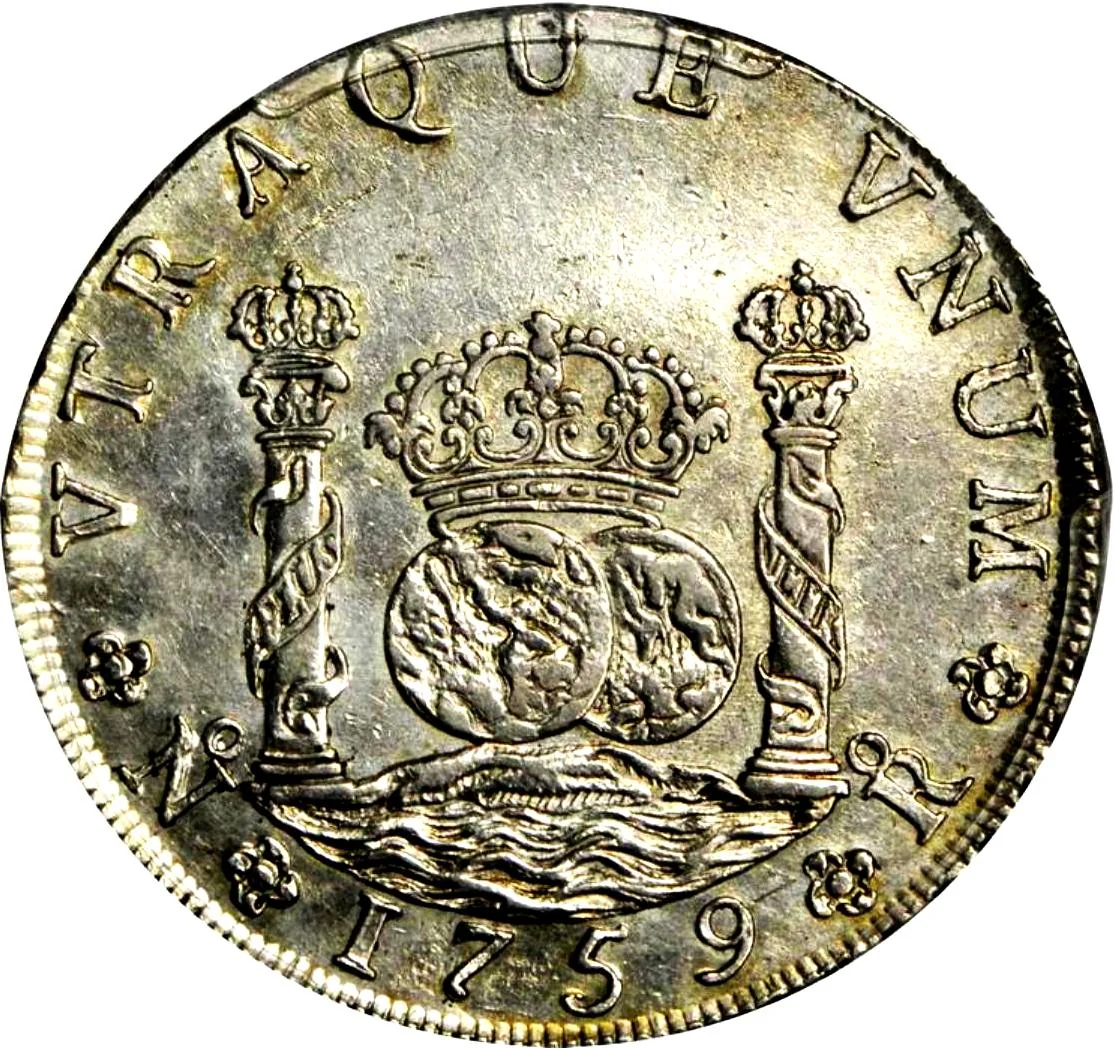
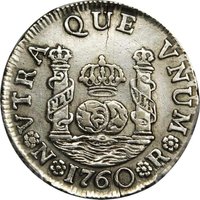
Reverse
Description:
Crowned globes and pillars above waves.
Inscription:
VTRAQUE VNUM
No 1759 Ro
No 1759 Ro
Script: Latin
Edge
Categories
| Symbols> Coat of Arms |
Mints
| Name | Mark |
|---|---|
| Bogota Mint | (NoRo) |
Mintings
| Year | Mint Mark | Mintage | Quality | Collection |
|---|---|---|---|---|
| 1759 | NoRo | — |
Historical background
In 1759, the currency situation in the Kingdom of New Granada (modern-day Colombia) was characterized by severe scarcity and administrative confusion, a legacy of Spain's rigid mercantilist policies. The Spanish Crown strictly controlled the minting of coins, with the primary source of specie being gold and silver mined in the Americas and sent to the royal mint in Bogotá (the Casa de la Moneda). However, the majority of this precious metal was legally required to be shipped to Spain, leaving the local economy chronically short of circulating currency. This scarcity forced many transactions into barter or the use of irregularly cut and weighed gold tejuelos (ingots), undermining efficient commerce and taxation.
The official coinage in circulation was a complex mix of Spanish and colonial mints. The most common unit was the silver real, with eight reales making a silver peso. Gold coins, like the escudo, were also minted but were less common in everyday trade. A significant problem was the widespread circulation of worn, clipped, and counterfeit coins, which eroded trust in the monetary system. Furthermore, foreign coins, particularly from other Spanish colonies and even illicit Portuguese and English sources, circulated out of necessity, creating a chaotic exchange environment with fluctuating values.
This monetary instability directly impacted the colonial administration and economy. The scarcity of sound coinage hindered the collection of royal taxes, such as the alcabala (sales tax) and the quinto real (the royal fifth on mined gold), which were vital to funding the colonial government and the Spanish metropolis. Local merchants and landowners struggled with the lack of a reliable medium of exchange, which stifled economic growth and market integration. Thus, in 1759, the currency system was not merely a financial issue but a fundamental constraint on the colony's governance and economic potential, setting the stage for future reforms under the Bourbon monarchs.
The official coinage in circulation was a complex mix of Spanish and colonial mints. The most common unit was the silver real, with eight reales making a silver peso. Gold coins, like the escudo, were also minted but were less common in everyday trade. A significant problem was the widespread circulation of worn, clipped, and counterfeit coins, which eroded trust in the monetary system. Furthermore, foreign coins, particularly from other Spanish colonies and even illicit Portuguese and English sources, circulated out of necessity, creating a chaotic exchange environment with fluctuating values.
This monetary instability directly impacted the colonial administration and economy. The scarcity of sound coinage hindered the collection of royal taxes, such as the alcabala (sales tax) and the quinto real (the royal fifth on mined gold), which were vital to funding the colonial government and the Spanish metropolis. Local merchants and landowners struggled with the lack of a reliable medium of exchange, which stifled economic growth and market integration. Thus, in 1759, the currency system was not merely a financial issue but a fundamental constraint on the colony's governance and economic potential, setting the stage for future reforms under the Bourbon monarchs.
✨ Legendary