

1 lev – Bulgaria
Add to wishlist
Bulgaria
Context
Years: 1979–1990
Issuer: Bulgaria
Period:
(1946—1990)
Currency:
(1962—1999)
Demonetized: Yes
Total mintage: 4,000
Material
Diameter: 25.2 mm
Weight: 4.1 g
Thickness: 1.25 mm
Shape: Round
Composition: Nickel brass
Magnetic: No
Technique: Milled
Alignment: Medal alignment
flip
References
KM: #
Numista: #12359
Value
Exchange value: 1 BGL
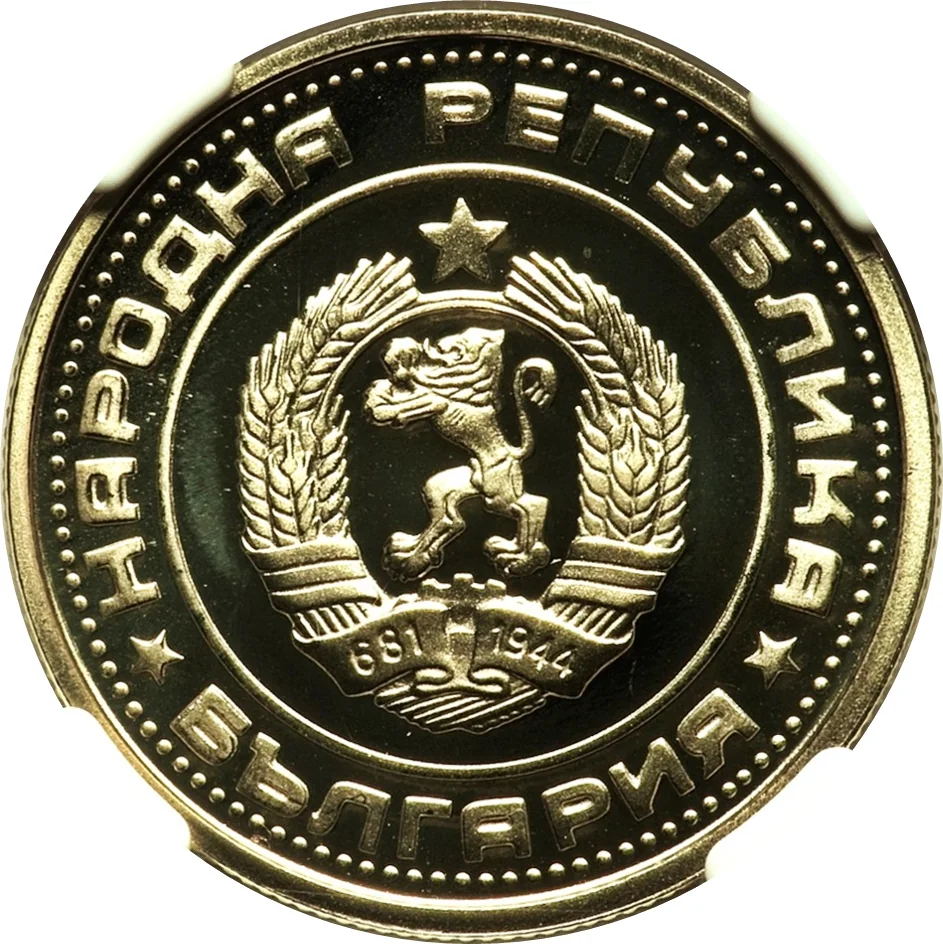
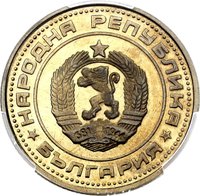
Obverse
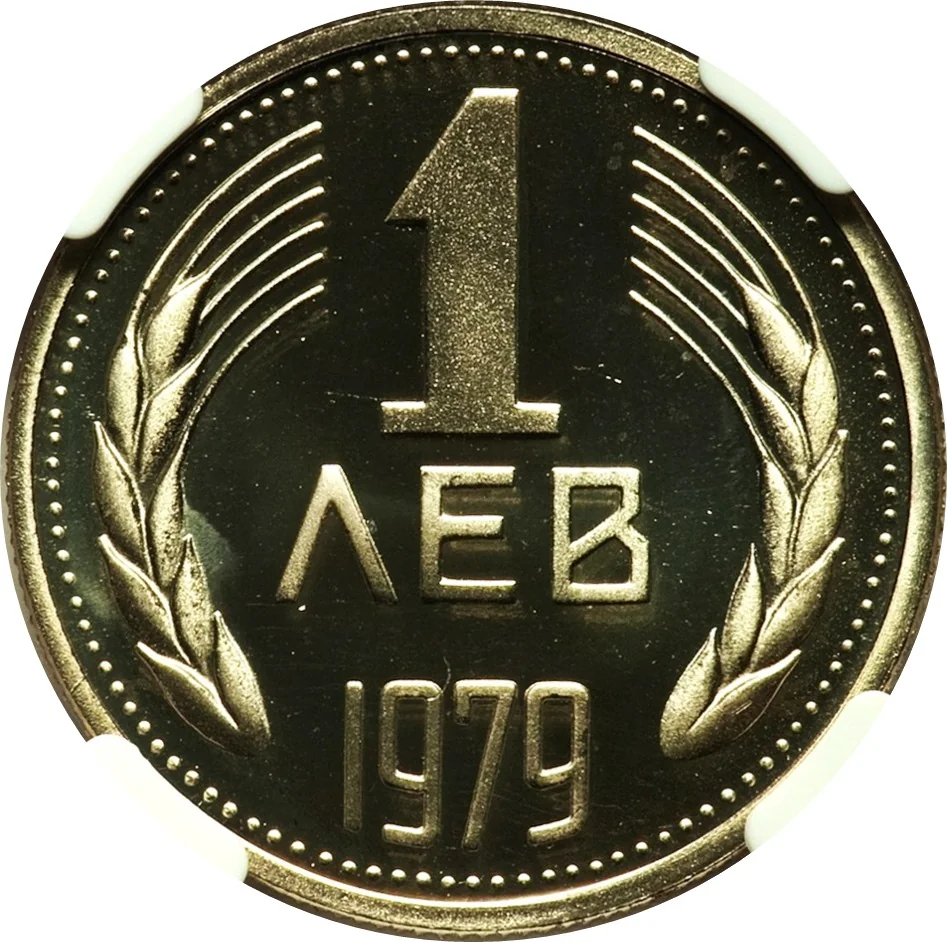
Reverse
Edge
Reeded
Mints
| Name | Mark |
|---|---|
| Bulgarian Mint | — |
Mintings
| Year | Mint Mark | Mintage | Quality | Collection |
|---|---|---|---|---|
| 1979 | — | 2,000 | Proof | |
| 1980 | — | 2,000 | Proof | |
| 1988 | — | — | ||
| 1989 | — | — | ||
| 1990 | — | — |
Historical background
In 1979, Bulgaria operated under a rigid centrally planned economy as a loyal member of the Soviet-led Council for Mutual Economic Assistance (COMECON). The official currency was the Bulgarian Lev (BGN), but its function was largely administrative within the domestic economy. State-controlled prices, production quotas, and a focus on heavy industry and agriculture defined the financial landscape, with the currency's exchange rate set by decree rather than market forces. Internationally, the Lev was a non-convertible currency, meaning it could not be freely traded for other currencies like the US Dollar or Deutsche Mark.
The real "currency situation" was characterized by a duality between the official economy and a pervasive informal sector. While the state managed all formal transactions, hard currencies (especially US Dollars, Deutsche Marks, and Soviet Rubles for COMECON trade) were highly sought after on the black market. This parallel economy existed to access scarce imported goods, facilitate foreign travel, or provide services outside the state plan. The black-market exchange rate for hard currency was significantly higher than the official rate, revealing the gap between the government's valuation of the Lev and its actual purchasing power on the global stage.
This period represented the late-stage stability of a command monetary system, showing little outward sign of the crisis that would engulf the Eastern Bloc in the 1980s. Bulgaria's currency was stable in a strictly controlled sense, but it was isolated and inefficient, masking underlying economic weaknesses. The system's inflexibility in allocating resources and its dependence on Soviet subsidies and COMECON markets would soon be severely tested as the global economic climate shifted and internal pressures for consumer goods and efficiency grew.
The real "currency situation" was characterized by a duality between the official economy and a pervasive informal sector. While the state managed all formal transactions, hard currencies (especially US Dollars, Deutsche Marks, and Soviet Rubles for COMECON trade) were highly sought after on the black market. This parallel economy existed to access scarce imported goods, facilitate foreign travel, or provide services outside the state plan. The black-market exchange rate for hard currency was significantly higher than the official rate, revealing the gap between the government's valuation of the Lev and its actual purchasing power on the global stage.
This period represented the late-stage stability of a command monetary system, showing little outward sign of the crisis that would engulf the Eastern Bloc in the 1980s. Bulgaria's currency was stable in a strictly controlled sense, but it was isolated and inefficient, masking underlying economic weaknesses. The system's inflexibility in allocating resources and its dependence on Soviet subsidies and COMECON markets would soon be severely tested as the global economic climate shifted and internal pressures for consumer goods and efficiency grew.
🌱 Common