

4 skilling – Denmark
Add to wishlist
Denmark
Context
References
KM: #
Numista: #109155
Obverse
Description:
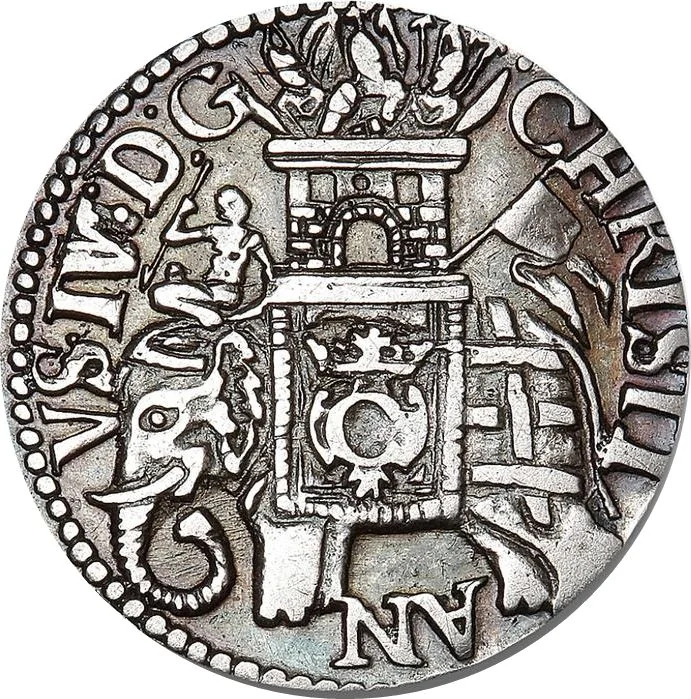
War elephant with rider and a war tower carrying three warriors. A banner with a crowned monogram hangs from the tower.
Inscription:
CHRISTI AN VS·IV·D:G·
Script: Latin
Reverse
Description:
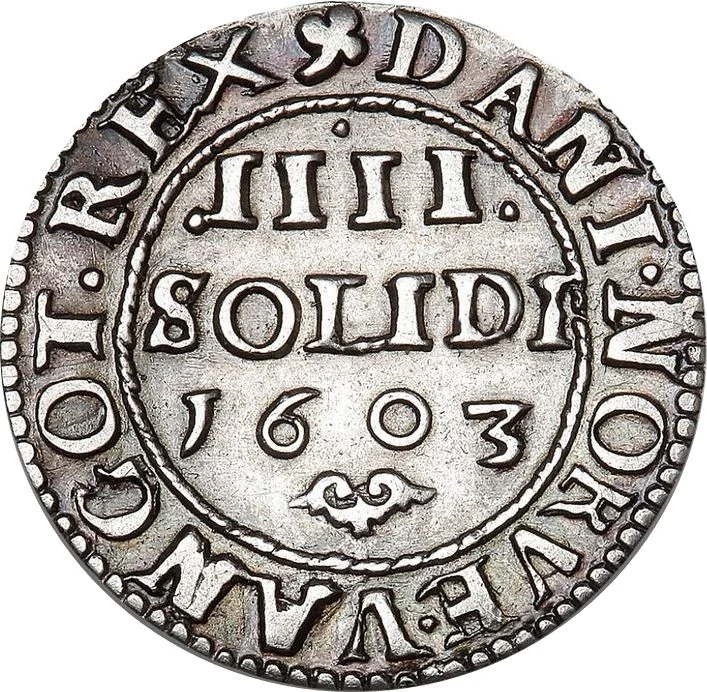
Value and date on three lines, legend around rim.
Inscription:
.
. IIII .
SOLIDI
1603
DANI · NORVE · VAN GOT · REX ·
. IIII .
SOLIDI
1603
DANI · NORVE · VAN GOT · REX ·
Script: Latin
Edge
Mints
| Name | Mark |
|---|---|
| Copenhagen | ☘ |
Mintings
| Year | Mint Mark | Mintage | Quality | Collection |
|---|---|---|---|---|
| 1603 | ☘ | — |
Historical background
In 1603, Denmark was navigating a complex and challenging monetary landscape, a legacy of the costly Northern Seven Years' War (1563-1570) and ongoing regional conflicts. The state treasury was depleted, and the kingdom operated on a bi-metallic system of silver skilling and larger gold coins like the gylden. However, the real value of these coins was frequently undermined by royal debasements, where the government reduced the silver or gold content to create more currency from the same precious metal reserves. This practice, while a short-term fiscal fix, eroded public trust and caused significant inflation, as people hoarded older, purer coins.
The situation was further complicated by the circulation of a vast array of foreign currencies. In the bustling trade hubs like Copenhagen and Elsinore (where the Sound Dues were collected), German Reichstalers, Dutch leeuwendaalders, and various North German shillings were common. These foreign coins, often of more reliable weight and fineness, competed with the debased domestic issues, leading to a confusing exchange market where the intrinsic metal value of a coin was more important than its face value. This monetary fragmentation hindered commerce and state accounting.
Recognizing the destabilizing effects, King Christian IV had initiated a major currency reform just a few years prior, in 1596, aiming to standardize the system. The 1603 context was thus one of uneasy transition, where these new royal coins—particularly the silver krone and ort—were in circulation alongside older, debased issues and foreign money. The reform had not yet fully restored confidence, and the government's continued financial pressures meant the temptation for further debasement remained, keeping the monetary system in a fragile state as Denmark sought to finance its ambitions as a leading Baltic power.
The situation was further complicated by the circulation of a vast array of foreign currencies. In the bustling trade hubs like Copenhagen and Elsinore (where the Sound Dues were collected), German Reichstalers, Dutch leeuwendaalders, and various North German shillings were common. These foreign coins, often of more reliable weight and fineness, competed with the debased domestic issues, leading to a confusing exchange market where the intrinsic metal value of a coin was more important than its face value. This monetary fragmentation hindered commerce and state accounting.
Recognizing the destabilizing effects, King Christian IV had initiated a major currency reform just a few years prior, in 1596, aiming to standardize the system. The 1603 context was thus one of uneasy transition, where these new royal coins—particularly the silver krone and ort—were in circulation alongside older, debased issues and foreign money. The reform had not yet fully restored confidence, and the government's continued financial pressures meant the temptation for further debasement remained, keeping the monetary system in a fragile state as Denmark sought to finance its ambitions as a leading Baltic power.
✨ Legendary