

1 Liard – Prince-bishopric of Liege
Belgium
Context
Year: 1660
Country: Belgium 
Issuer: Prince-bishopric of Liege
Ruler: Maximilian Henry of Bavaria
Currency:
(1650—1795)
Demonetized: Yes
Material
References
KM: #Click to copy to clipboard73
Numista: #22449
Obverse
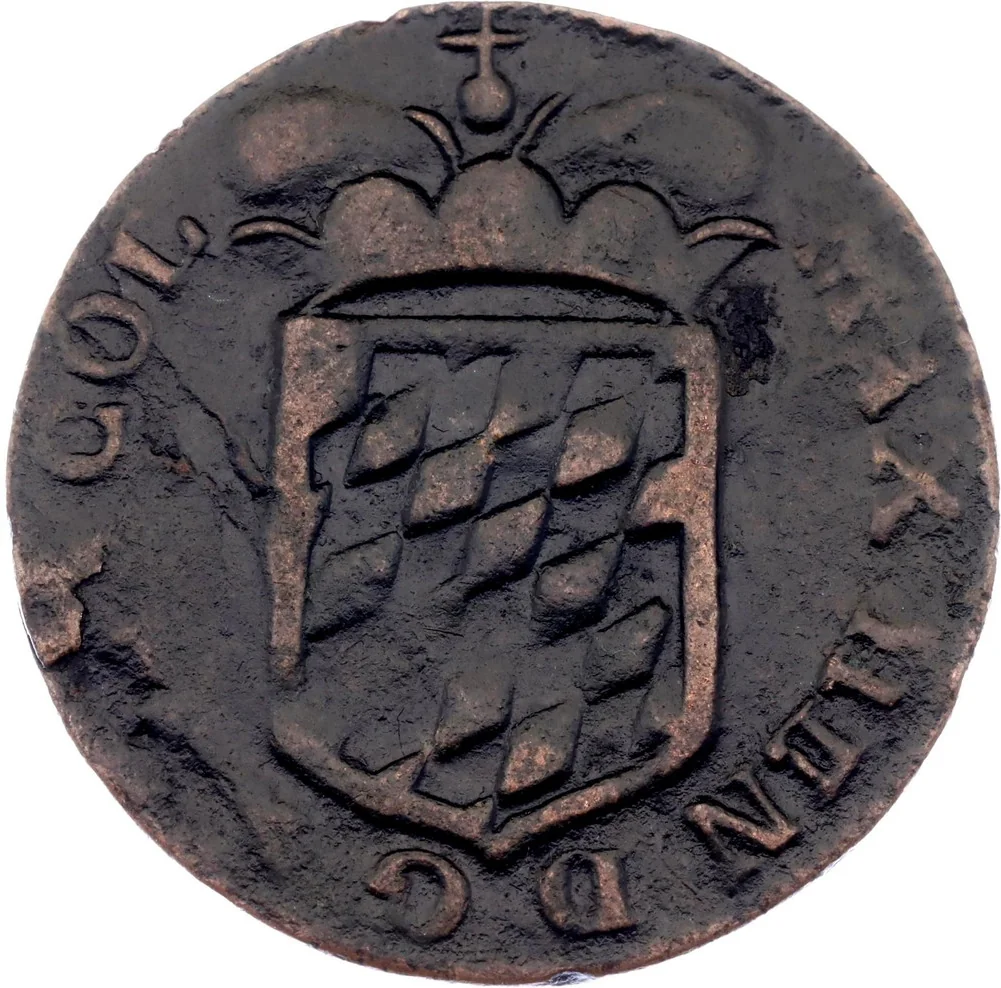
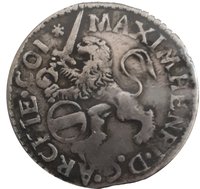
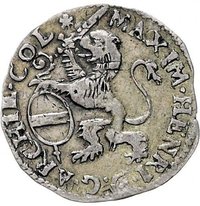
Description:
Shield of Bavaria under a ducal crown.
Inscription:
MAX · HEN · D · G · ARC · COL
Script: Latin
Reverse
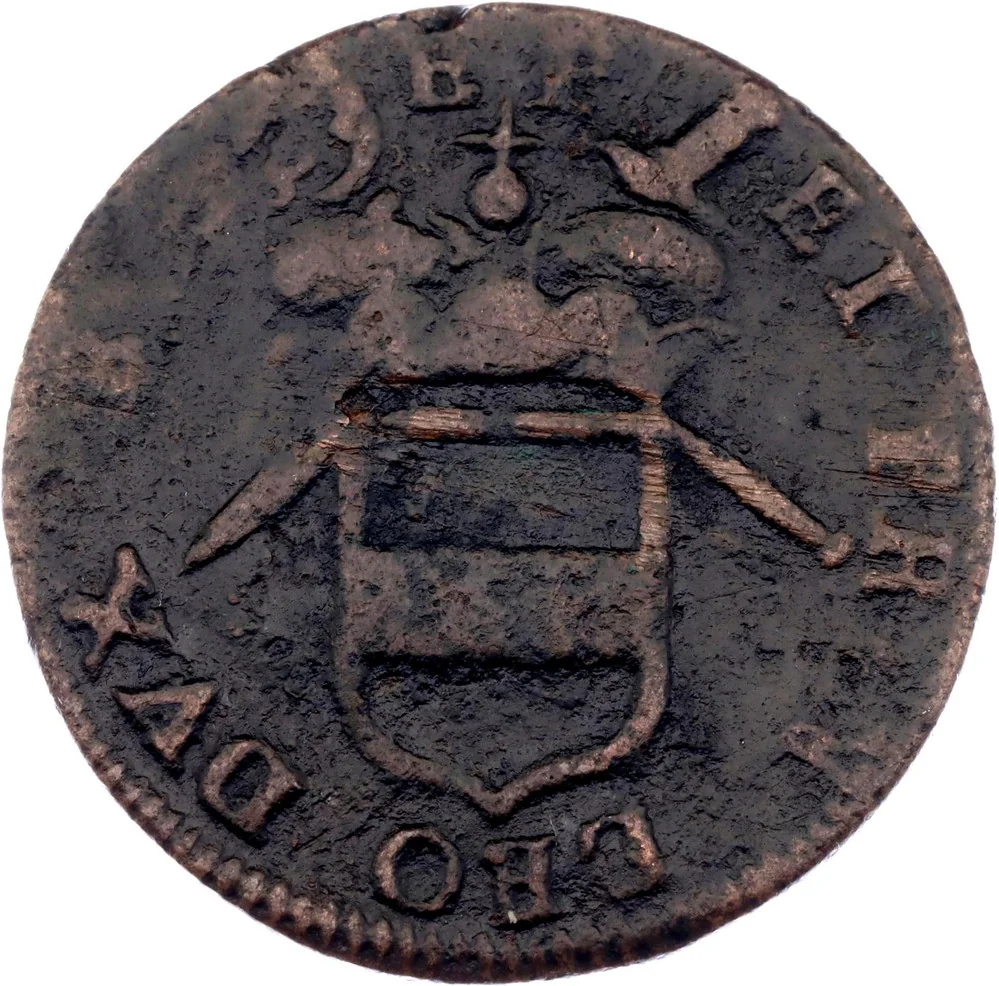
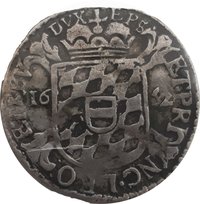
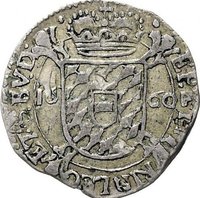
Description:
Shield of Bouillon under a ducal cap, crossed by crozier and sword.
Inscription:
EP ET · PRIN · LEO · DVX · BVL
Script: Latin
Edge
Plain
Mints
| Name | Mark |
|---|---|
| Hasselt | — |
Mintings
| Year | Mint Mark | Mintage | Quality | Collection |
|---|---|---|---|---|
| 1660 | — | — |
Historical background
In 1660, the Prince-Bishopric of Liège operated as a distinct monetary space within the politically fragmented Holy Roman Empire. Its currency system was complex and challenging, characterized by the simultaneous circulation of numerous foreign coins alongside local issues. The most important local unit was the patard or liard, but the economy was heavily influenced by the silver écu of the Spanish Netherlands and the gold patagon, reflecting the bishopric's economic ties with its powerful Habsburg neighbors. This proliferation of coins of varying weight, purity, and origin created chronic confusion and facilitated widespread fraud.
The monetary policy was under the authority of the Prince-Bishop, at that time Maximilian Henry of Bavaria. However, his control was not absolute, as the powerful Estates of the bishopric also exerted influence. The primary challenge was maintaining a stable and trustworthy coinage in the face of competitive debasement by neighboring states and the constant inflow of clipped and worn foreign currency. While the Liège mint was active, its output was often insufficient to establish a dominant, stable standard, leading to frequent official re-evaluations and tariff lists that attempted to fix exchange rates between the myriad of coins in use.
Consequently, the daily reality for merchants and citizens was one of uncertainty and transactional friction. Exchange rates fluctuated, and the intrinsic metal value of a coin could differ significantly from its nominal face value, a problem known as "bad money driving out good." This unstable environment hindered commerce and credit, creating a persistent background of economic inefficiency. The situation in 1660 was thus typical of the era—a fragile system struggling to balance sovereign monetary authority with the practical realities of cross-border trade and currency competition.
The monetary policy was under the authority of the Prince-Bishop, at that time Maximilian Henry of Bavaria. However, his control was not absolute, as the powerful Estates of the bishopric also exerted influence. The primary challenge was maintaining a stable and trustworthy coinage in the face of competitive debasement by neighboring states and the constant inflow of clipped and worn foreign currency. While the Liège mint was active, its output was often insufficient to establish a dominant, stable standard, leading to frequent official re-evaluations and tariff lists that attempted to fix exchange rates between the myriad of coins in use.
Consequently, the daily reality for merchants and citizens was one of uncertainty and transactional friction. Exchange rates fluctuated, and the intrinsic metal value of a coin could differ significantly from its nominal face value, a problem known as "bad money driving out good." This unstable environment hindered commerce and credit, creating a persistent background of economic inefficiency. The situation in 1660 was thus typical of the era—a fragile system struggling to balance sovereign monetary authority with the practical realities of cross-border trade and currency competition.
🌟 Limited