

1 duit – Netherlands East Indies
Add to wishlist
Indonesia
Context
Years: 1731–1733
Country: Indonesia
Issuer: Netherlands East Indies
Period:
(1602—1800)
Currency:
(1726—1854)
Demonetized: Yes
References
KM: #
Numista: #221957
Obverse
Description:
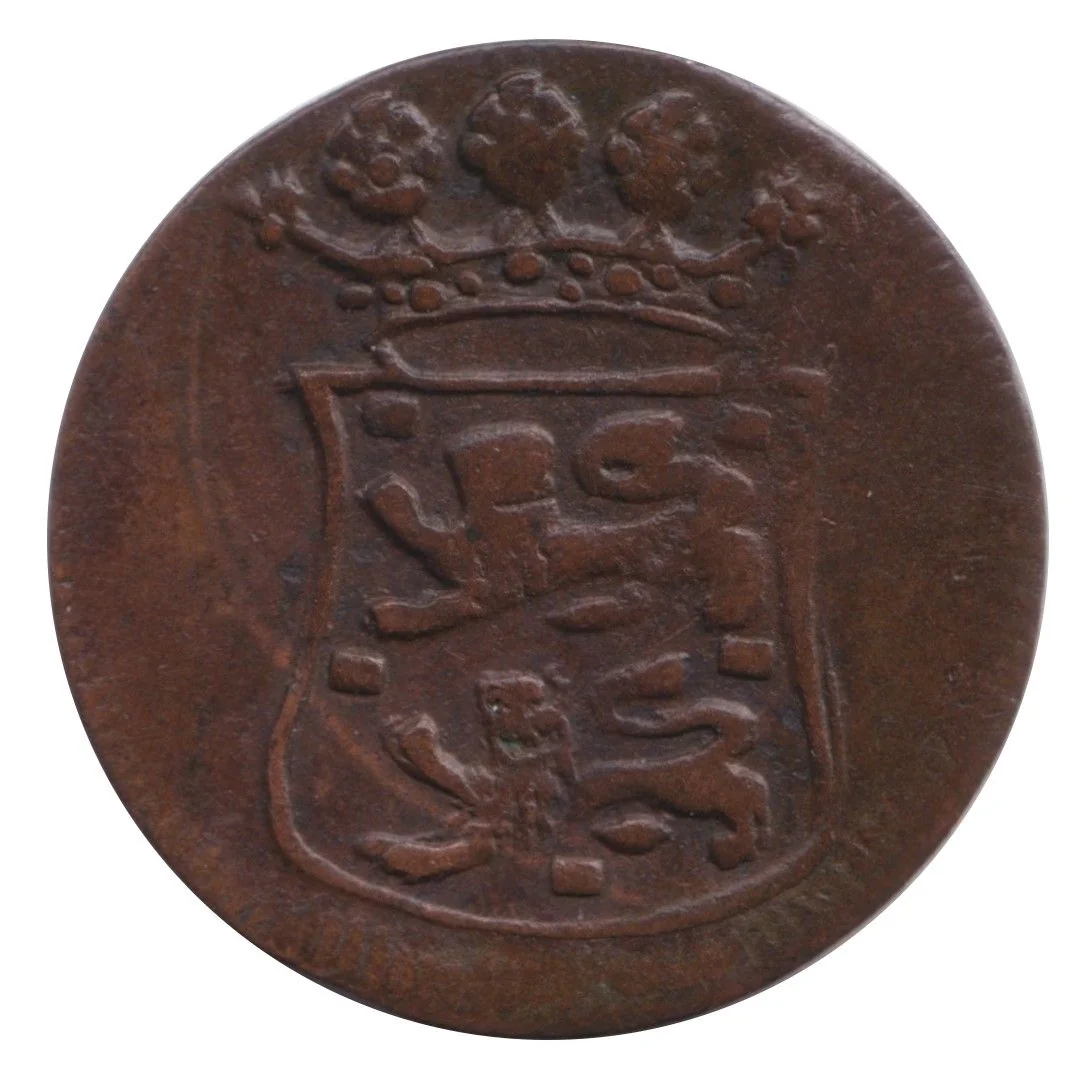
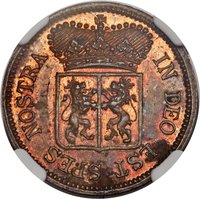
Crowned curved shield with two lions, representing West Friesland.
Reverse
Description:
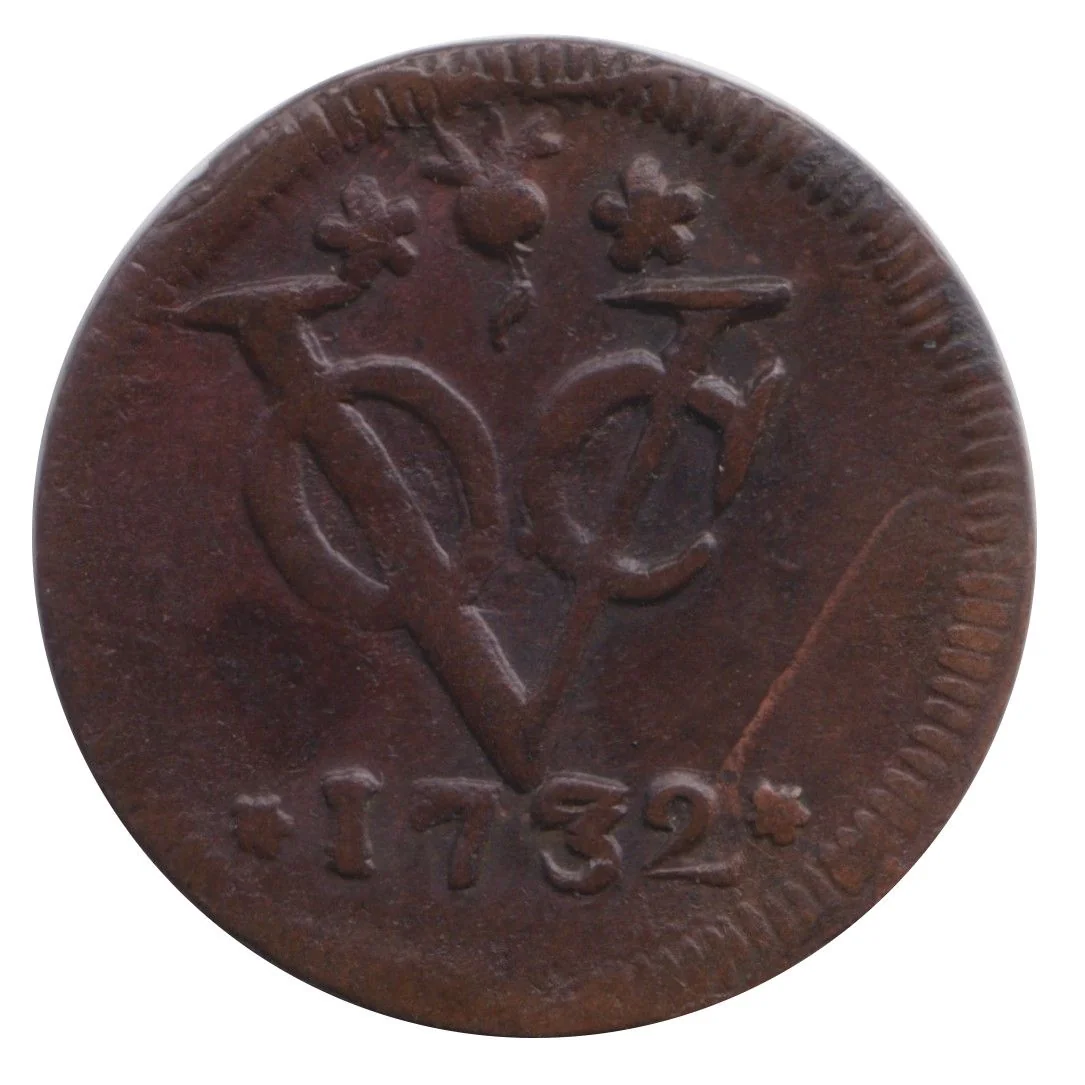
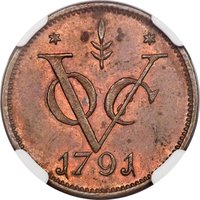
VOC monogram centered, turnip mintmark above between stars, date below.
Inscription:
VOC
1732
1732
Script: Latin
Edge
Plain
Mints
| Name | Mark |
|---|---|
| Enkhuizen | — |
Mintings
| Year | Mint Mark | Mintage | Quality | Collection |
|---|---|---|---|---|
| 1731 | — | — | ||
| 1732 | — | — | ||
| 1733 | — | — |
Historical background
In 1731, the currency situation in the Netherlands East Indies (NEI) was fundamentally shaped by the Dutch East India Company (VOC), which held a monopoly on trade and coinage. The primary unit of account was the rijksdaalder, valued at 48 stuivers, but the actual circulating medium was a chaotic mix of physical coins. This included VOC-minted silver ducatons and stuiver coins, but also a vast array of foreign silver, most notably Spanish-American reales (pieces of eight) and Mexican pesos, which were essential for the Company's intra-Asian trade. The system was further complicated by the widespread use of low-value copper doits, essential for everyday transactions but prone to counterfeiting and volatility.
A persistent and critical problem was the chronic shortage of reliable small-change coinage. The VOC, prioritizing the export of bullion to Asia for procuring spices and textiles, often neglected to mint sufficient quantities of local coinage for the colony's internal economy. This scarcity led to the circulation of heavily worn, clipped, and counterfeit coins, as well as the continued use of older, demonetized coins. Consequently, the effective value of a coin in daily trade often deviated significantly from its official face value, creating confusion and inefficiency.
To manage this disorder, the VOC authorities regularly issued plakkaten (decrees) that set official exchange rates for the myriad of foreign and domestic coins. The 1731 period would have been governed by such a proclamation, attempting to fix, for example, how many stuivers a Spanish real was worth. However, these mandated rates frequently conflicted with market realities, leading to a dual system of official and market valuations. This unstable monetary environment created significant challenges for both the VOC's own accounting and the daily commercial life of settlers, indigenous populations, and other foreign traders in the archipelago.
A persistent and critical problem was the chronic shortage of reliable small-change coinage. The VOC, prioritizing the export of bullion to Asia for procuring spices and textiles, often neglected to mint sufficient quantities of local coinage for the colony's internal economy. This scarcity led to the circulation of heavily worn, clipped, and counterfeit coins, as well as the continued use of older, demonetized coins. Consequently, the effective value of a coin in daily trade often deviated significantly from its official face value, creating confusion and inefficiency.
To manage this disorder, the VOC authorities regularly issued plakkaten (decrees) that set official exchange rates for the myriad of foreign and domestic coins. The 1731 period would have been governed by such a proclamation, attempting to fix, for example, how many stuivers a Spanish real was worth. However, these mandated rates frequently conflicted with market realities, leading to a dual system of official and market valuations. This unstable monetary environment created significant challenges for both the VOC's own accounting and the daily commercial life of settlers, indigenous populations, and other foreign traders in the archipelago.
💎 Extremely Rare