

8 reales – Netherlands East Indies
Add to wishlist
Indonesia
Context
Year: 1601
Country: Indonesia
Issuer: Netherlands East Indies
Period:
(1596—1601)
Currency:
(1601—1694)
Demonetized: Yes
Material
References
KM: #
Numista: #21736
Value
Bullion value: $63.99
Obverse
Description:
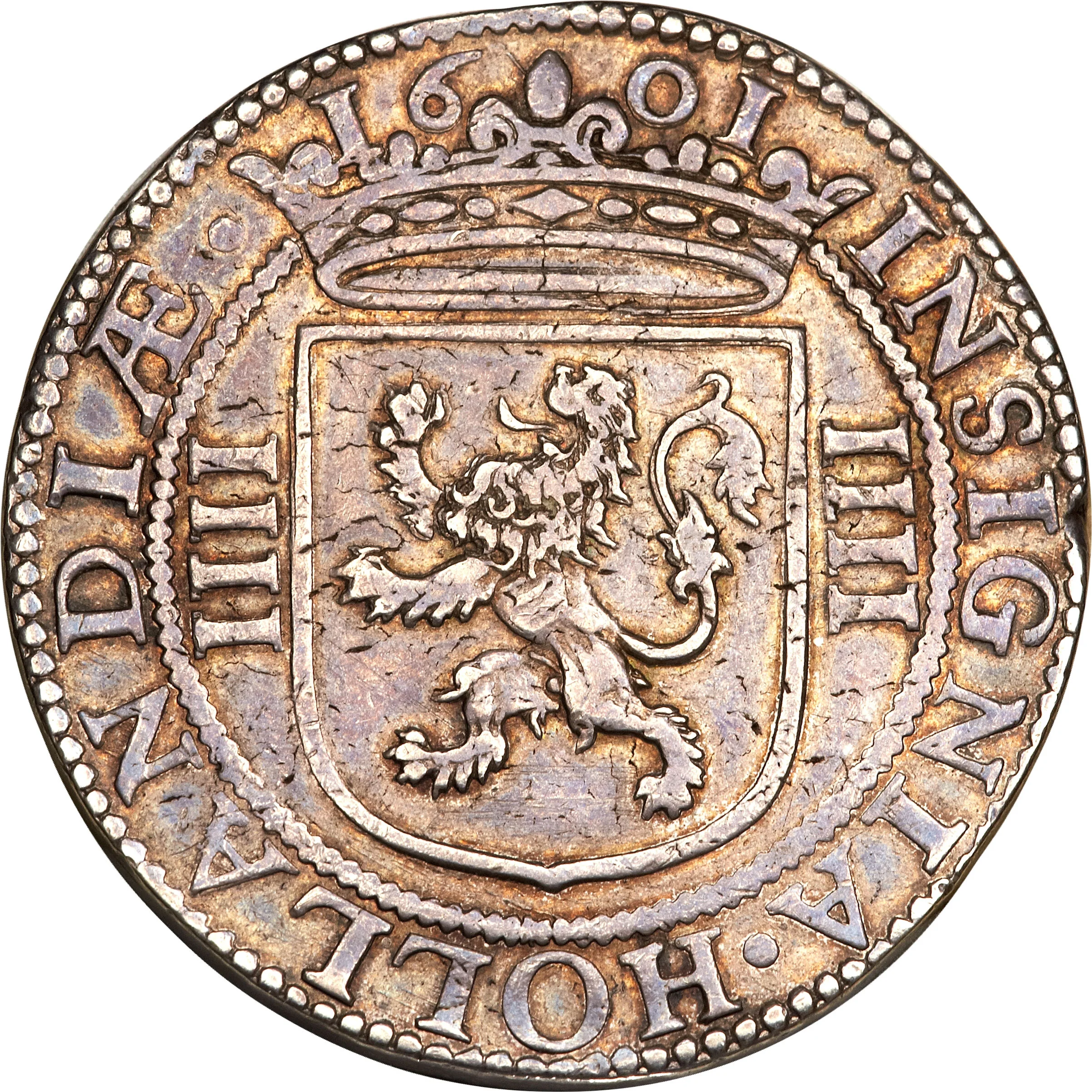
Crowned Dutch arms flanked by "IIII."
Script: Latin
Reverse
Description:
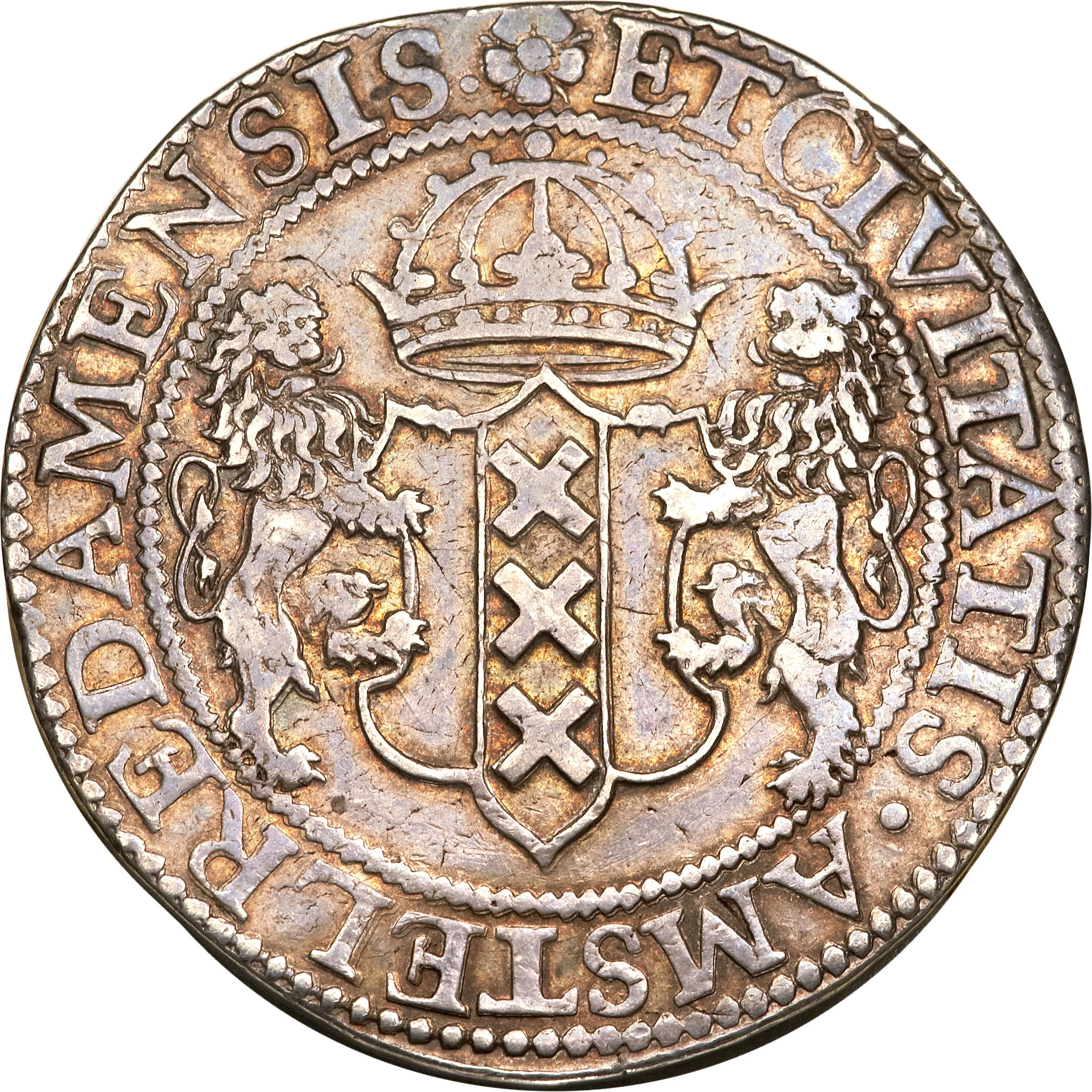
Amsterdam coat of arms with lions.
Script: Latin
Edge
Mintings
| Year | Mint Mark | Mintage | Quality | Collection |
|---|---|---|---|---|
| 1601 | — | — |
Historical background
In 1601, the currency situation in the Netherlands East Indies (present-day Indonesia) was one of profound complexity and transition, dominated by the pre-existing monetary systems of the archipelago rather than European control. The primary circulating media were silver Spanish reales (often called "pieces of eight") and a multitude of local gold, silver, and copper coins from various Indonesian kingdoms, Portuguese Malacca, and other Asian trading powers. The most important local unit was the Javanese mas, a gold coin, alongside silver tahil bars and copper picis (cash coins) imported from China. Trade operated on a bullion-based system where coins were valued by their intrinsic metal content and constantly weighed and assayed.
The newly arrived Dutch, represented by the Vereenigde Oostindische Compagnie (VOC) which was founded just a year earlier in 1602, had not yet imposed any monetary order. Their early trading posts, like the one established at Banten, were compelled to engage with this established multi-currency environment to procure spices. The VOC faced immediate challenges: a dire shortage of European coin for operations and the need to understand fluctuating exchange rates between gold, silver, and copper across different ports. Their initial strategy involved importing Spanish reals and Japanese silver to fuel commerce, but they remained a minor player in a vast and sophisticated Asian monetary network.
Thus, the background of 1601 is not one of a unified currency but of a fragmented and competitive monetary marketplace. The Dutch were in a position of adaptation, not authority, navigating a system where the value of money was intrinsically linked to the weight and purity of precious metals. This chaotic but functional pluralism would persist for decades until the VOC, gaining political and military power, began to systematically regulate and eventually monopolize the coinage system in the 18th century to stabilize its trade and consolidate control.
The newly arrived Dutch, represented by the Vereenigde Oostindische Compagnie (VOC) which was founded just a year earlier in 1602, had not yet imposed any monetary order. Their early trading posts, like the one established at Banten, were compelled to engage with this established multi-currency environment to procure spices. The VOC faced immediate challenges: a dire shortage of European coin for operations and the need to understand fluctuating exchange rates between gold, silver, and copper across different ports. Their initial strategy involved importing Spanish reals and Japanese silver to fuel commerce, but they remained a minor player in a vast and sophisticated Asian monetary network.
Thus, the background of 1601 is not one of a unified currency but of a fragmented and competitive monetary marketplace. The Dutch were in a position of adaptation, not authority, navigating a system where the value of money was intrinsically linked to the weight and purity of precious metals. This chaotic but functional pluralism would persist for decades until the VOC, gaining political and military power, began to systematically regulate and eventually monopolize the coinage system in the 18th century to stabilize its trade and consolidate control.
✨ Legendary