

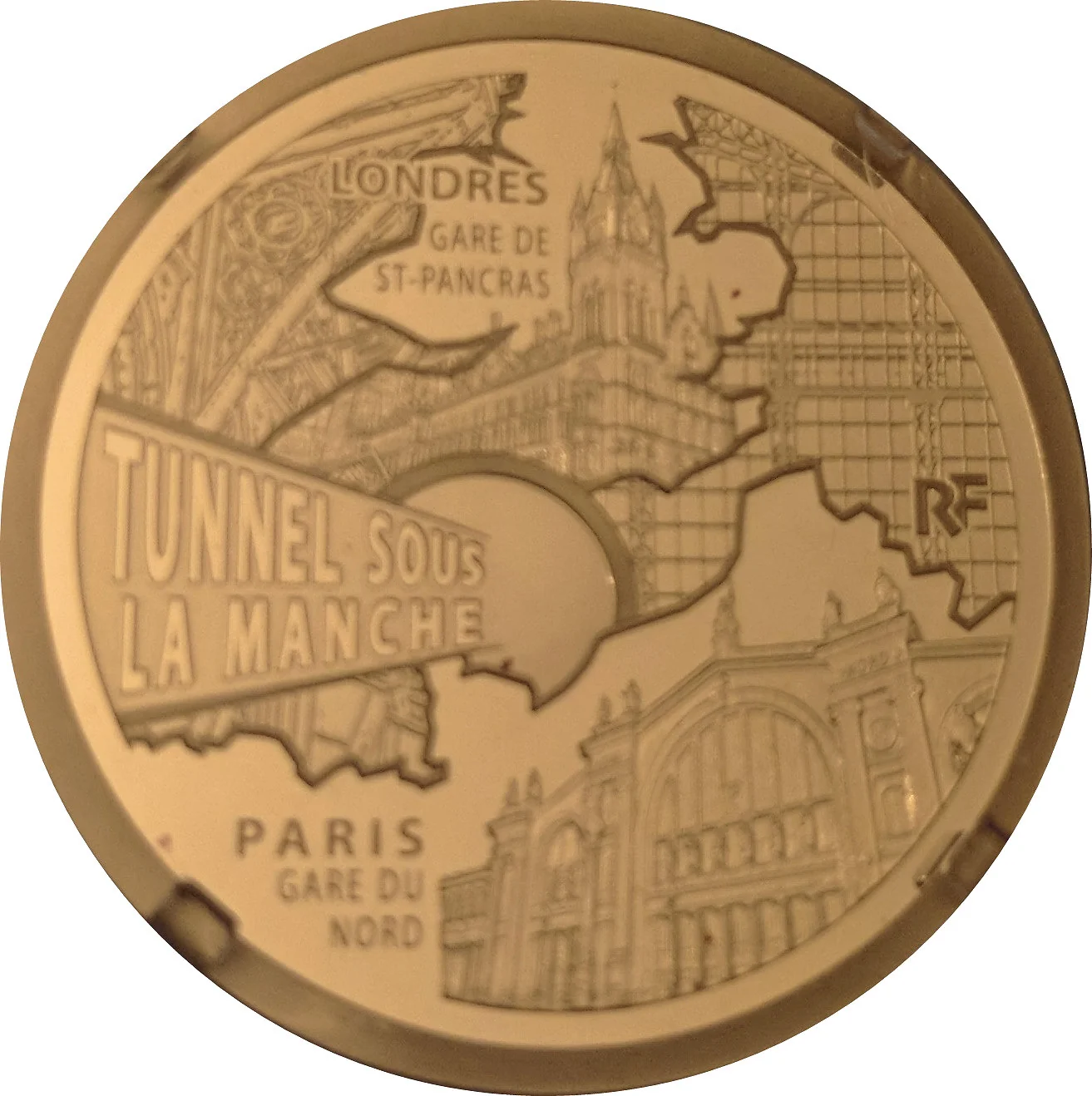

50 Euro – France
Non-circulating coins
Commemoration: TVG and ICE Trains : Gare du Nord and St Pancras Station.
France

Obverse
Reverse
Inscription:
TRAINS A GRANDE VITESSE
50 EURO
le shuttle - eurostar
2013
50 EURO
le shuttle - eurostar
2013
Script: Latin
Edge
Plain.
Categories
| Map |
| Transportation> Train |
Mints
| Name | Mark |
|---|---|
| Monnaie de Paris | — |
Mintings
| Year | Mint Mark | Mintage | Quality | Collection |
|---|---|---|---|---|
| 2013 | — | 196 | Proof |
Historical background
In 2013, France remained a core member of the Eurozone, using the euro (€) as its official currency, a status it had held since the currency's physical introduction in 2002. The broader context, however, was defined by the lingering aftermath of the European sovereign debt crisis. While France avoided the severe bailout conditions imposed on countries like Greece and Portugal, it faced significant market pressure and scrutiny. The government of President François Hollande, elected in 2012, grappled with high public debt, stagnant growth, and rising unemployment, all within the constraints of the Eurozone's common monetary policy set by the European Central Bank (ECB), which limited national tools for economic stimulus.
A key domestic debate centered on France's loss of monetary sovereignty and the perceived rigidity of the euro's governance, particularly the EU's strict deficit rules. Critics, including some economists and political figures, argued that the strong euro hurt French export competitiveness. However, there was no serious political movement to leave the euro, as the currency was widely seen as providing stability and a cornerstone of European integration. The primary policy focus was therefore on fiscal consolidation and structural reforms—labeled "competitiveness shocks"—to align with German-led Eurozone austerity norms, rather than on currency policy itself.
Internationally, the euro remained a major global reserve currency. For French citizens and businesses in 2013, the currency situation was one of stable everyday use but underlying economic anxiety. The discussion was less about the franc's return and more about how to prosper within the Eurozone's rules. The period was characterized by tension between the need for budgetary discipline to maintain euro credibility and the social demand for growth and job creation, setting the stage for ongoing debates about the future of European economic governance.
A key domestic debate centered on France's loss of monetary sovereignty and the perceived rigidity of the euro's governance, particularly the EU's strict deficit rules. Critics, including some economists and political figures, argued that the strong euro hurt French export competitiveness. However, there was no serious political movement to leave the euro, as the currency was widely seen as providing stability and a cornerstone of European integration. The primary policy focus was therefore on fiscal consolidation and structural reforms—labeled "competitiveness shocks"—to align with German-led Eurozone austerity norms, rather than on currency policy itself.
Internationally, the euro remained a major global reserve currency. For French citizens and businesses in 2013, the currency situation was one of stable everyday use but underlying economic anxiety. The discussion was less about the franc's return and more about how to prosper within the Eurozone's rules. The period was characterized by tension between the need for budgetary discipline to maintain euro credibility and the social demand for growth and job creation, setting the stage for ongoing debates about the future of European economic governance.

✨ Legendary