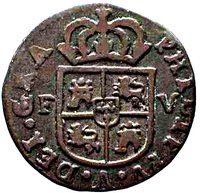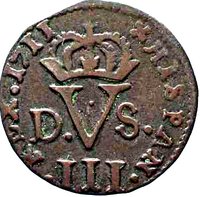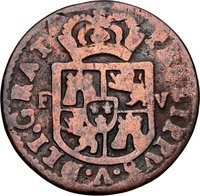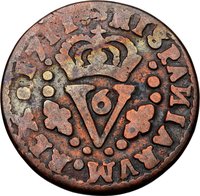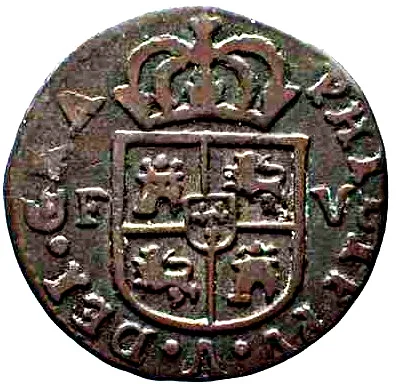
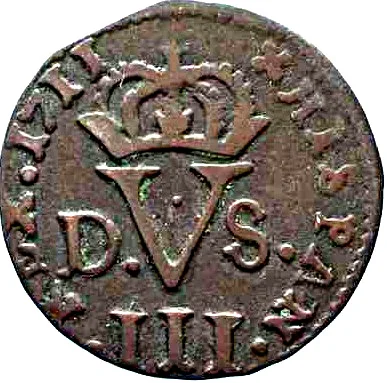
In 1710, the Kingdom of Valencia was embroiled in the final, chaotic phase of the War of the Spanish Succession. Having declared support for the Habsburg Archduke Charles against the Bourbon Philip V, the kingdom was a warzone, with control of its territory and capital city violently contested. This military and political instability directly caused a severe monetary crisis. The regular systems of taxation and royal finance had collapsed, and the competing authorities—both Bourbon and Austracist—resorted to emergency measures to fund their armies, leading to a fractured and unreliable currency environment.
The currency in circulation became a chaotic mix of old and new issues. The Austracist government in control of Valencia city, desperate for funds, engaged in the drastic debasement of coinage. They lowered the silver content in coins like the
real and struck vast quantities of low-value billon (copper-silver alloy) and pure copper currency, effectively flooding the economy with inflationary money. Simultaneously, older, full-value coins from the previous Habsburg era and even foreign currencies circulated, but they were often hoarded or taken out of the region by soldiers and merchants, following Gresham's Law where "bad money drives out good."
Consequently, prices soared, and public trust in the currency evaporated. The local economy, already devastated by requisitions and battle, suffered from rampant inflation and a breakdown in commercial transactions. This monetary collapse was a direct symptom of the kingdom's precarious state, culminating later that year in the Bourbon victory at the Battle of Almansa and the subsequent abolition of the Kingdom of Valencia's
fueros (autonomous laws) in 1707, though the financial ruin would persist long after the political fate was sealed.