

1 Ducat – Denmark
Non-circulating coins
Commemoration: Coronation of King Frederik III in november 1648
Denmark
Context

Material
References
KM: #Click to copy to clipboard163
Numista: #200161
Value
Bullion value: $569.31
Obverse
Description:
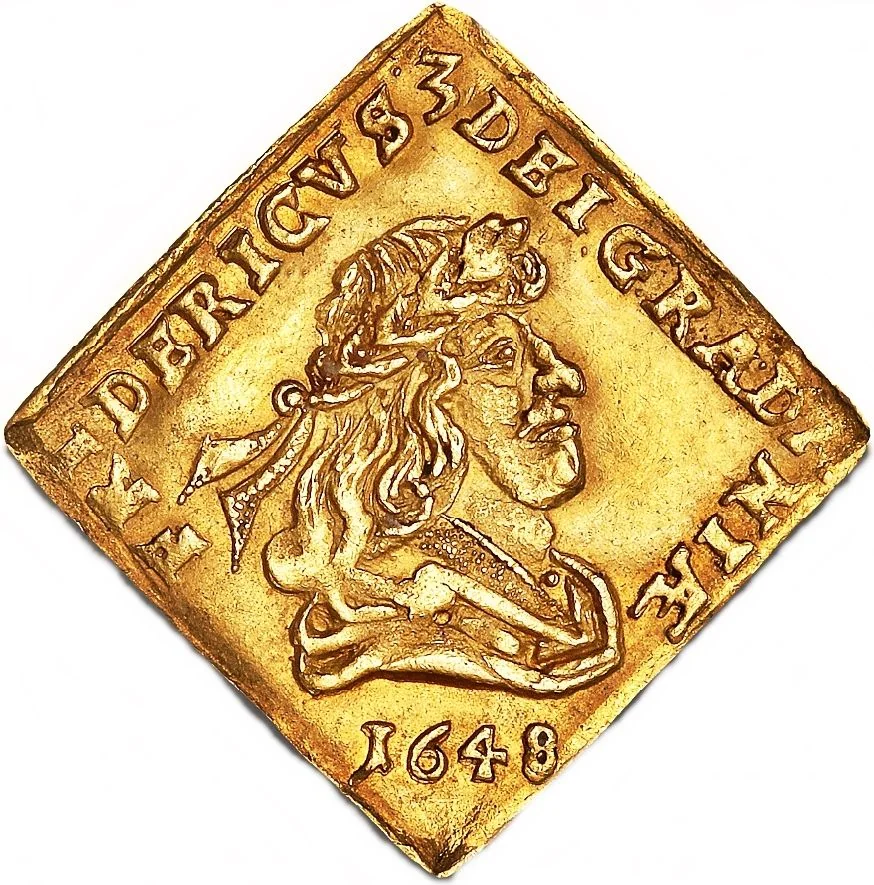
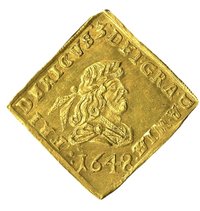
Laureate bust right, date below, legend around.
Inscription:
FRI | DERICVS | 3 | DEI · GRA · DA | NIÆ
1648
1648
Script: Latin
Reverse
Description:
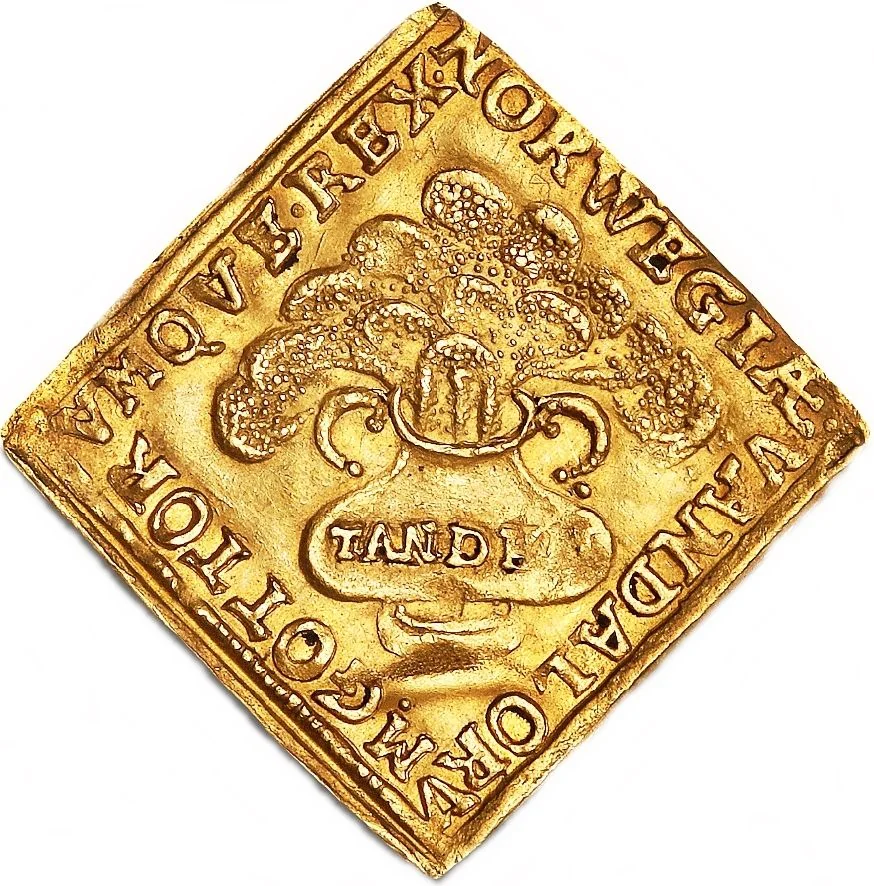
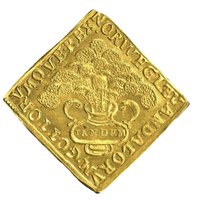
Vase with smoking incense, "TANDEM" lettering.
Inscription:
NORWEGIE · | VANDALORV | M · GOTTOR | VMQVE · REX ·
TANDEM
TANDEM
Script: Latin
Edge
Categories
| Event> Coronation |
Mints
| Name | Mark |
|---|---|
| Royal Danish Mint | — |
Mintings
| Year | Mint Mark | Mintage | Quality | Collection |
|---|---|---|---|---|
| 1648 | — | — |
Historical background
In 1648, Denmark’s currency system was in a state of profound crisis, a direct legacy of the costly intervention in the Thirty Years’ War (1618-1648) and the earlier Kalmar War against Sweden. King Christian IV had financed these conflicts largely through repeated debasements of the coinage. By reducing the silver content in coins like the skilling and mark while maintaining their face value, the crown generated short-term revenue but triggered severe inflation and a collapse in public trust. This practice created a chaotic monetary environment where older, purer coins were hoarded or melted down, and the actual value of money became detached from its nominal worth, crippling both trade and public finances.
The situation was exacerbated by the circulation of multiple coin types with varying intrinsic values, including foreign currencies and outdated domestic issues. This led to the widespread practice of "agio," where merchants and money-changers demanded a premium for accepting the debased current coinage over older, purer coins or bullion. The result was a dysfunctional multi-tiered currency system that hampered everyday commerce, discouraged investment, and placed a heavy burden on the peasantry and fixed-income groups who were paid in devalued money.
Recognizing the destabilizing effects, the state attempted reforms. The Rigsdaler was established as a large silver unit for accounting and international trade, but the smaller, everyday currency remained debased. The fundamental problem was structural: the crown’s chronic budget deficits, driven by war debts and lost territories, made a return to sound money impossible without fiscal discipline. Thus, in 1648, the currency was not merely weak but was a symptomatic reflection of a weakened Danish state, struggling under the weight of its imperial ambitions and setting the stage for the absolute monarchy that would later impose more centralized financial control.
The situation was exacerbated by the circulation of multiple coin types with varying intrinsic values, including foreign currencies and outdated domestic issues. This led to the widespread practice of "agio," where merchants and money-changers demanded a premium for accepting the debased current coinage over older, purer coins or bullion. The result was a dysfunctional multi-tiered currency system that hampered everyday commerce, discouraged investment, and placed a heavy burden on the peasantry and fixed-income groups who were paid in devalued money.
Recognizing the destabilizing effects, the state attempted reforms. The Rigsdaler was established as a large silver unit for accounting and international trade, but the smaller, everyday currency remained debased. The fundamental problem was structural: the crown’s chronic budget deficits, driven by war debts and lost territories, made a return to sound money impossible without fiscal discipline. Thus, in 1648, the currency was not merely weak but was a symptomatic reflection of a weakened Danish state, struggling under the weight of its imperial ambitions and setting the stage for the absolute monarchy that would later impose more centralized financial control.
✨ Legendary