

1 Fals – Yarkand Khanate
Context
Years: 1590–1609
Country: Mongol States
Issuer: Yarkand Khanate
Ruler: Muhammad Sultan
Currency:
Demonetized: Yes
Material
Diameter: 18 mm
Weight: 3.01 g
Shape: Irregular round
Composition: Copper
Magnetic: No
Technique: Hammered
References
KM: #Click to copy to clipboardE3009
Numista: #197699
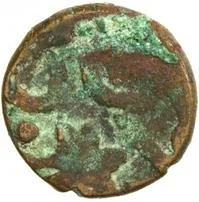
Obverse
Description:
Arabic myth.
Inscription:
وشم
محمد
خان
محمد
خان
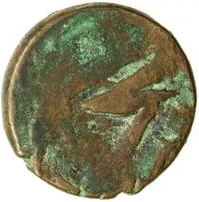
Reverse
Description:
Arabic myth.
Inscription:
فولوس
يارخان
يارخان
Edge
Plain
Mintings
| Year | Mint Mark | Mintage | Quality | Collection |
|---|---|---|---|---|
| — | — | — |
Historical background
In 1590, the Yarkand Khanate, a Central Asian state ruling over much of the Tarim Basin (modern Xinjiang), operated within a complex and multi-layered monetary system. The primary currency in circulation was the Yarkand tanga, a silver coin minted locally. However, the khanate's pivotal location on the Silk Road meant its economy was inherently transnational, leading to the concurrent circulation of foreign silver coins, particularly the Mughal rupee from the south and various Persian and Bukharan coins from the west. This created a dynamic, if sometimes unstable, exchange environment where the purity and weight of the Yarkand tanga were constantly measured against these external standards.
The monetary policy of the khanate was directly tied to its ruler, Abdul Karim Khan (r. 1560-1591), who held the traditional Mongol title of "Khan" and the Islamic title of "Sultan." In this era, coinage was a fundamental expression of sovereign authority. The Yarkand tanga typically bore his name and titles, along with the Islamic profession of faith (shahada), asserting both political legitimacy and religious orthodoxy. The state derived significant revenue from seigniorage—the profit from minting coins—and controlled the major silver mines at Kashgar, though the supply of precious metal remained a persistent concern.
Economically, this currency system supported a thriving trade-based economy. Yarkand itself was a major entrepôt where goods from China (silks, tea), India (textiles, spices), and the steppe (horses, jade) were exchanged. The coexistence of local and foreign coins facilitated this commerce but also made the khanate vulnerable to regional economic shifts. A shortage of silver bullion or a debasement of coinage in a neighboring empire could quickly cause inflation or hoarding within Yarkand. Thus, in 1590, the currency situation reflected a kingdom that was commercially vibrant and internationally connected, yet perpetually working to maintain monetary stability from its position at the crossroads of great empires.
The monetary policy of the khanate was directly tied to its ruler, Abdul Karim Khan (r. 1560-1591), who held the traditional Mongol title of "Khan" and the Islamic title of "Sultan." In this era, coinage was a fundamental expression of sovereign authority. The Yarkand tanga typically bore his name and titles, along with the Islamic profession of faith (shahada), asserting both political legitimacy and religious orthodoxy. The state derived significant revenue from seigniorage—the profit from minting coins—and controlled the major silver mines at Kashgar, though the supply of precious metal remained a persistent concern.
Economically, this currency system supported a thriving trade-based economy. Yarkand itself was a major entrepôt where goods from China (silks, tea), India (textiles, spices), and the steppe (horses, jade) were exchanged. The coexistence of local and foreign coins facilitated this commerce but also made the khanate vulnerable to regional economic shifts. A shortage of silver bullion or a debasement of coinage in a neighboring empire could quickly cause inflation or hoarding within Yarkand. Thus, in 1590, the currency situation reflected a kingdom that was commercially vibrant and internationally connected, yet perpetually working to maintain monetary stability from its position at the crossroads of great empires.
✨ Legendary