

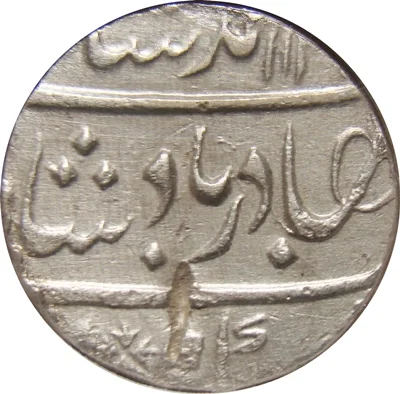
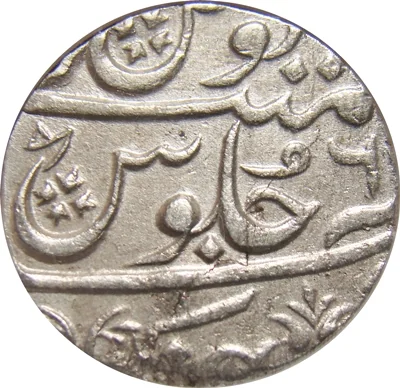
1 Rupee – Maratha Empire
India
Context
Years: 1748–1754
Islamic (Hijri) Year: 1164
Country: India 
Issuer: Maratha Empire
Currency:
(1674—1818)
Demonetized: Yes
Material
References
KM: #Click to copy to clipboard446.20
Numista: #108927
Value
Bullion value: $33.47
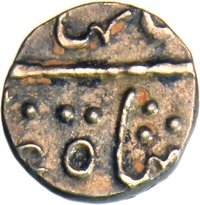
Obverse
Description:
Inscription, dated AH.
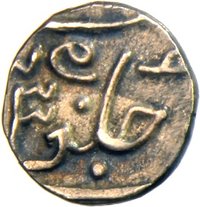
Reverse
Description:
Inscription, regnal year, mint mark below.
Edge
Mintings
| Year | Mint Mark | Mintage | Quality | Collection |
|---|---|---|---|---|
| — | — | — | ||
| 1751 | — | — |
Historical background
By 1748, the currency situation within the Maratha Empire was a complex mosaic reflecting its vast, decentralized conquests. The empire, under the nominal leadership of Chhatrapati Shahu I and the effective military command of the Peshwa Balaji Bajirao, lacked a single, unified monetary system. Instead, the Marathas largely adopted and adapted the existing currency frameworks of the regions they brought under their influence or tribute. The most widely accepted coin across their territories remained the Mughal silver rupee, particularly the Annas and Mohurs, minted in various imperial mints. This provided a degree of continuity for trade and revenue collection, as the Mughal rupee was a trusted and established standard.
However, this reliance on Mughal coinage was increasingly symbolic, as the Marathas asserted their sovereignty through sanads (charters) to local mints and the striking of their own coins. Key mints operated in cities like Satara, Pune, Nagpur, and Kolhapur, producing rupees that often bore the name of the reigning Chhatrapati alongside Marathi legends and Hindu iconography, such as the Sword of Shivaji (Bhagwa Jhenda) or the deity Ganpati. These coins, while valued by their silver content, circulated alongside a plethora of regional and fractional coins, including copper paisas and gold hon (a southern Indian coin), leading to a complex system of exchange rates and valuations that varied from province to province.
The year 1748 itself was a period of both consolidation and expansion, following major victories in the north. This constant state of military campaigning meant revenue, collected largely in silver rupees, was immediately funneled back into the war effort, limiting any systematic monetary reform. Furthermore, the Sarkar system of revenue collection, managed by powerful chieftains and bankers, meant that currency circulation and minting authority were often delegated. Consequently, while the Mughal rupee provided a broad standard, the day-to-day currency reality was one of heterogeneity, with local chieftains, the Peshwa's treasury, and bankers all playing crucial roles in managing a fluid and pragmatic monetary environment suited to an empire built on mobility and tribute.
However, this reliance on Mughal coinage was increasingly symbolic, as the Marathas asserted their sovereignty through sanads (charters) to local mints and the striking of their own coins. Key mints operated in cities like Satara, Pune, Nagpur, and Kolhapur, producing rupees that often bore the name of the reigning Chhatrapati alongside Marathi legends and Hindu iconography, such as the Sword of Shivaji (Bhagwa Jhenda) or the deity Ganpati. These coins, while valued by their silver content, circulated alongside a plethora of regional and fractional coins, including copper paisas and gold hon (a southern Indian coin), leading to a complex system of exchange rates and valuations that varied from province to province.
The year 1748 itself was a period of both consolidation and expansion, following major victories in the north. This constant state of military campaigning meant revenue, collected largely in silver rupees, was immediately funneled back into the war effort, limiting any systematic monetary reform. Furthermore, the Sarkar system of revenue collection, managed by powerful chieftains and bankers, meant that currency circulation and minting authority were often delegated. Consequently, while the Mughal rupee provided a broad standard, the day-to-day currency reality was one of heterogeneity, with local chieftains, the Peshwa's treasury, and bankers all playing crucial roles in managing a fluid and pragmatic monetary environment suited to an empire built on mobility and tribute.
✨ Legendary