Logo Title
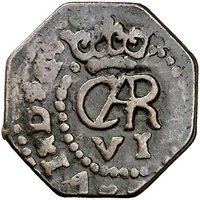
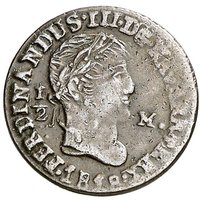
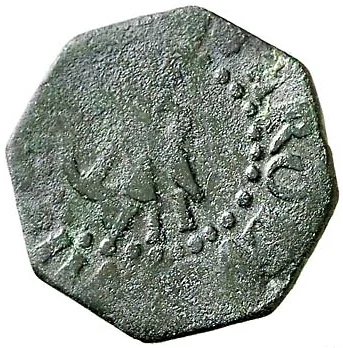
obverse
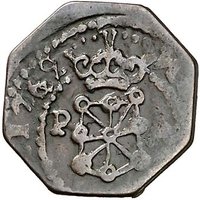
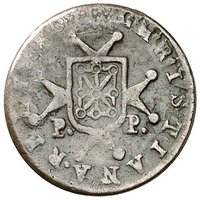
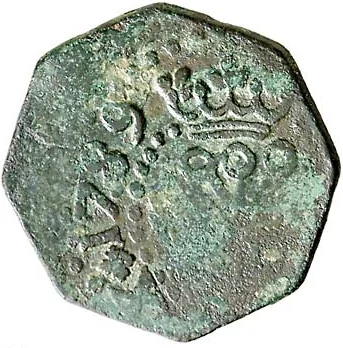
reverse
Aureo & Calicó S.L., subastas numismáticas

1 Maravedi – Kingdom of Navarre

Spain
Context
Year: 1789
Country: Spain Country flag
Currency:
Demonetized: Yes
Material
Diameter: 18 mm
Weight: 3 g
Shape: Octagonal
Composition: Copper
Magnetic: No
Technique: Milled
References
KM: #Click to copy to clipboard106
Numista: #108044

Obverse

Description:
CAR VII
Inscription:
CAROLUS VII D G

CAR VII
Script: Latin

Reverse

Description:
Arms with a crown.
Inscription:
NAVARRE REX 1789
Script: Latin

Edge

Categories

Transportation> Car

Mints

NameMark
Pamplona

Mintings

YearMint MarkMintageQualityCollection
1789PA

Historical background

In 1789, the Kingdom of Navarre found itself in a unique and complex monetary situation, a direct result of its historic fueros (charters of autonomy). Unlike most of the Spanish monarchy, Navarre maintained its own fiscal and monetary institutions, most notably the Casa de la Moneda (mint) in Pamplona. The kingdom possessed the right to issue its own coinage, a privilege fiercely guarded as a symbol of its separate sovereignty and pact-based relationship with the Spanish Crown. Consequently, while the official currency was the real and its multiples, Navarre minted its own distinct coins, such as the ducado navarro, which circulated alongside—and often in competition with—Castilian and foreign coins within its borders.

This system, however, was fraught with practical difficulties. The value and metal content of Navarrese coinage was not always perfectly aligned with that of Castile, leading to periodic exchange rate fluctuations and confusion in commerce, especially for trade beyond the kingdom's Pyrenean and Iberian frontiers. Furthermore, the monetary landscape was cluttered with a variety of older, worn, and foreign coins, particularly French louis d'or and écus, which circulated freely due to Navarre's geographic position. This heterogeneity complicated transactions and posed a constant challenge for the Diputación del Reino (the governing council) in maintaining monetary stability and preventing fraud.

The outbreak of the French Revolution in 1789 immediately intensified these pressures. Political and economic instability in France began to disrupt the cross-border flow of specie and goods, while also increasing the potential for inflationary or debased currency to spill into Navarre. Internally, the traditional monetary privileges under the fueros were increasingly viewed with suspicion by centralizing reformers in Madrid, who saw them as an obstacle to a unified national market. Thus, in 1789, Navarre's currency system stood at a precarious crossroads: it was a cherished pillar of its autonomy, but one that was operationally cumbersome and facing unprecedented external shocks and growing political threat from the Spanish state.
💎 Extremely Rare