Logo Title
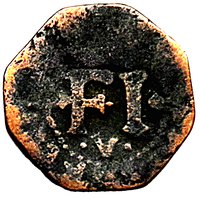
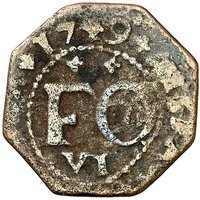
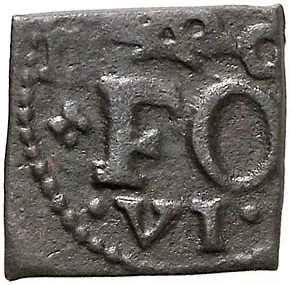
obverse
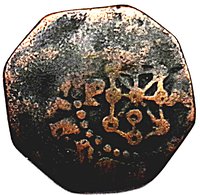
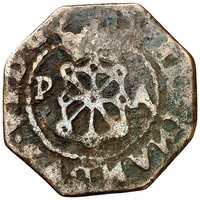
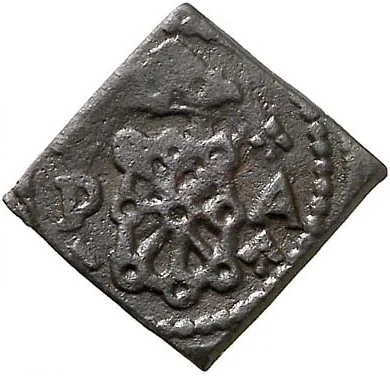
reverse
Aureo & Calicó S.L., subastas numismáticas

1 Denier – Kingdom of Navarre

Spain
Context
Years: 1746–1759
Country: Spain Country flag
Currency:
Demonetized: Yes
Material
Weight: 1.5 g
Composition: Copper
Magnetic: No
Technique: Hammered
References
KM: #Click to copy to clipboard91
Numista: #108042

Obverse

Description:
FO VI
Inscription:
FO VI
Script: Latin

Reverse

Description:
Arms between P A crowned.
Inscription:
P A
Script: Latin

Edge

Mints

NameMark
Pamplona

Mintings

YearMint MarkMintageQualityCollection
PA

Historical background

In 1746, the Kingdom of Navarre, a realm straddling the Pyrenees with its northern part under French administration and its southern core (Reino de Navarra) integrated into the Spanish Crown, faced a complex currency situation defined by duality and dependency. The Spanish region, while retaining its historic fueros (laws and privileges), operated within the broader monetary system of the Spanish Bourbon monarchy. The primary circulating coins were therefore Spanish issues: the silver real and the gold escudo, with the famous piece of eight (real de a ocho) serving as a cornerstone for both domestic and international trade. However, the legacy of older, debased coinage and the persistent circulation of foreign currencies, particularly French livres in the borderlands, created a fragmented and often chaotic everyday exchange.

This monetary landscape was further strained by the wider context of the War of the Austrian Succession (1740-1748), in which Spain was a belligerent. Wartime finances typically led to increased pressure on mints, potential debasement of coinage to fund military campaigns, and heightened economic instability. While Navarre itself was not a primary battleground, the conflict disrupted trade routes and exacerbated the perennial problems of currency shortage and the circulation of clipped, counterfeit, or excessively worn coins, which eroded public trust in the monetary system.

Consequently, the practical currency situation for a Navarrese merchant or peasant in 1746 was one of navigating multiple coinages while relying on the stability of the Spanish royal mint's output. The kingdom’s separate legal status did not translate into an independent monetary policy; instead, it experienced the inflationary pressures and inconsistencies of Spain's imperial finances. The system functioned but was inherently messy, a blend of royal Spanish currency, lingering historical coins, and pragmatic acceptance of foreign money along the frontier, all set against a backdrop of European war.
Legendary