Logo Title
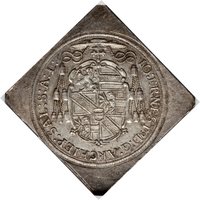
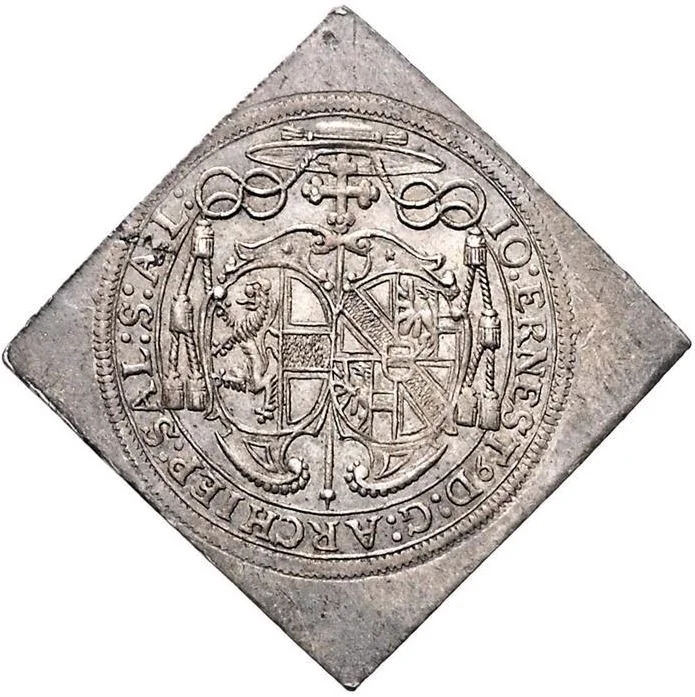
obverse
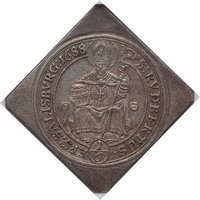
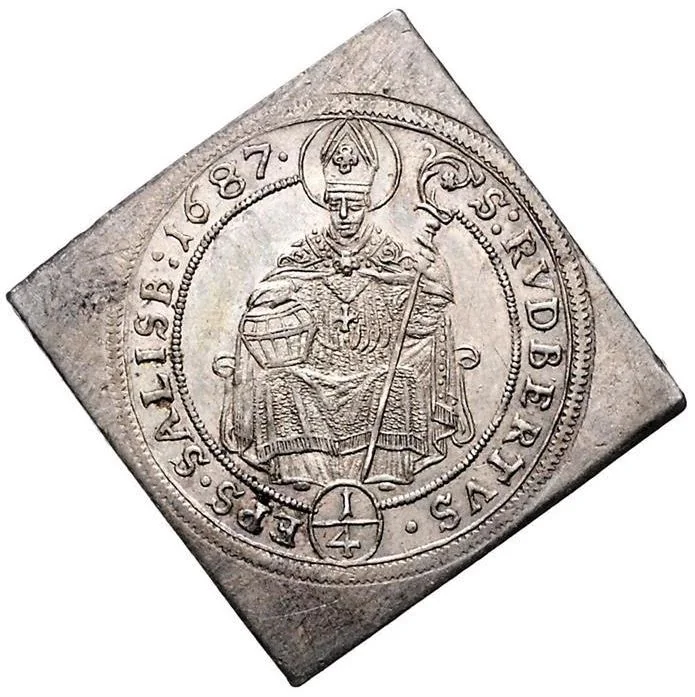
reverse
WAG Online Auktions
Context
Year: 1687
Currency:
Demonetized: Yes
Material
Weight: 6.99 g
Silver weight: 6.99 g
Shape: Klippe
Composition: Silver
Magnetic: No
Technique: Klippe
References
KM: #Click to copy to clipboard252
Numista: #193093
Value
Bullion value: $19.61

Obverse

Description:
Two oval shields: Salzburg and its archbishop.
Inscription:
IO:ERNEST9D:G:ARCHIEP:SAL:S:A:L:
Script: Latin

Reverse

Description:
St. Rupert with salt box and crozier. Denomination below.
Inscription:
S:RVDBERTVS· (1/4) EPS·SALISB:1687·
Script: Latin

Edge

Mintings

YearMint MarkMintageQualityCollection
1687

Historical background

In 1687, the Bishopric of Salzburg operated within the complex monetary landscape of the Holy Roman Empire. As an independent ecclesiastical principality, it possessed the right of coinage (Münzregal), which it exercised through its mint. The primary currency in circulation was the Salzburg Gulden (florin), which was subdivided into 60 Kreuzer. However, the monetary system was far from uniform; alongside local coinage, a plethora of foreign coins from neighboring German states, the Austrian Habsburg lands, and even Italian and Dutch trade coins circulated freely, leading to frequent confusion and valuation disputes in commerce.

The period was marked by significant monetary instability across the Empire, driven by the ongoing Great Turkish War (1683-1699). The immense costs of the war led many states, including Salzburg’s powerful neighbor, the Habsburg monarchy, to engage in currency debasement—reducing the precious metal content in coins to finance military expenditures. This practice caused inflation and eroded trust in coinage. While Prince-Archbishop Johann Ernst von Thun (ruled 1687-1709), who ascended the throne in 1687, was known as a prudent reformer, his early reign would have been preoccupied with mitigating the economic spillover of these regional destabilizations into Salzburg's economy.

Consequently, a key challenge for the bishopric’s authorities in 1687 was maintaining the integrity and acceptance of its own currency amidst this inflationary environment. The value of coins depended heavily on their actual silver content, and merchants and money-changers had to constantly assess and negotiate rates. This situation necessitated the periodic publication of official exchange rate tables (Münztafeln) to fix the value of various foreign coins against the Salzburg Gulden, a crucial but often reactive measure to bring order to the market and protect the principality's fiscal interests.
Legendary