Logo Title
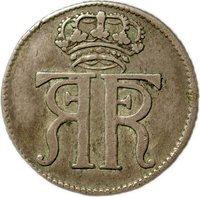
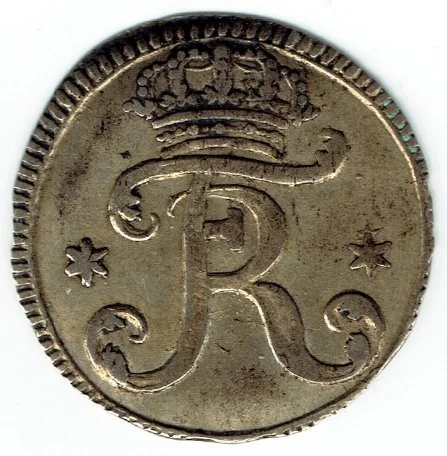
obverse
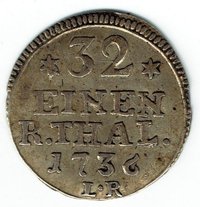
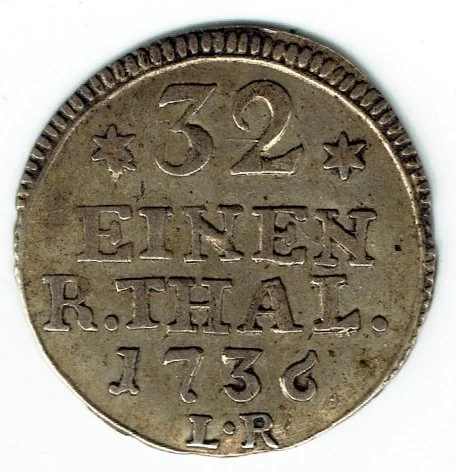
reverse
e.t.

1 Albus – Landgraviate of Hesse-Cassel

Context
Years: 1732–1736
Currency:
Demonetized: Yes
Total mintage: 24,000
Material
Diameter: 18 mm
Weight: 1.31 g
Silver weight: 1.31 g
Shape: Round
Composition: Silver
Magnetic: No
Alignment: Medal alignment
Obverse
OBVERSE ↑
flip
Reverse
REVERSE ↑
References
KM: #Click to copy to clipboard410
Numista: #192002
Value
Bullion value: $3.71

Obverse

Description:
Crowned initials.
Script: Latin

Reverse

Description:
Denomination, date, and mintmaster initials in five lines.
Inscription:
* 32 *

EINEN

R.THAL.

1736

L.R
Script: Latin

Edge

Plain
Mints

NameMark
Kassel

Mintings

YearMint MarkMintageQualityCollection
1732
173624,000

Historical background

In 1732, the currency situation in the Landgraviate of Hesse-Cassel was complex and challenging, characterized by a fragmented and debased monetary system. The landgraviate did not have a uniform coinage; instead, it circulated a multitude of domestic and foreign coins, including Reichsthalers, Groschen, and Kreuzers, alongside coins from neighboring German states. The value of these coins was not fixed by their metal content alone but also by official "currency mandates" that assigned them fluctuating exchange rates, leading to confusion and facilitating clipping and counterfeiting. This instability was a legacy of the financial strains of previous decades, including the costly maintenance of a large standing army.

Economically, the situation was exacerbated by the policies of Landgrave Karl, who ruled until 1730. His extensive spending, particularly on military ventures and the opulent Karlsaue park in Kassel, had drained state coffers and led to inflationary practices like the issuance of debased coinage. While his successor, Landgrave Friedrich I (who was also King of Sweden), was less directly involved in Hessian affairs, the treasury remained under pressure. The primary goal of monetary policy in this period was not economic stability for the populace but rather the generation of "Schlagschatz" – the profit the mint earned from creating coins with a face value higher than their intrinsic metal value, a crucial source of sovereign revenue.

Consequently, merchants and the public faced daily difficulties in trade and contracts, as the real value of money was uncertain. The constant fluctuation and debasement eroded trust in the currency, hindered commerce, and effectively taxed the population through inflation. This problematic environment set the stage for future, more systematic attempts at reform, most notably under Landgrave Friedrich II later in the century, who would work to consolidate and stabilize the Hessian monetary system to support the state's growing role as a military powerhouse and fiscal-military state.
Legendary