

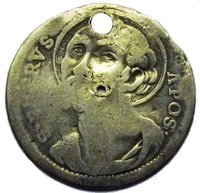
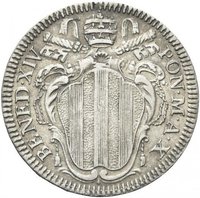
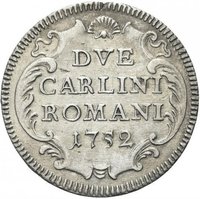
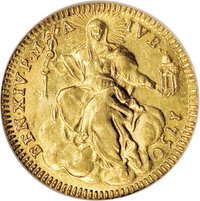
1 Grosso – Papal States
Vatican City
Context
Year: 1749
Country: Vatican City 
Issuer: Papal States
Ruler: Benedict XIV
Currency:
(1534—1835)
Demonetized: Yes
Material
References
KM: #Click to copy to clipboard940
Numista: #186185
Value
Bullion value: $3.51
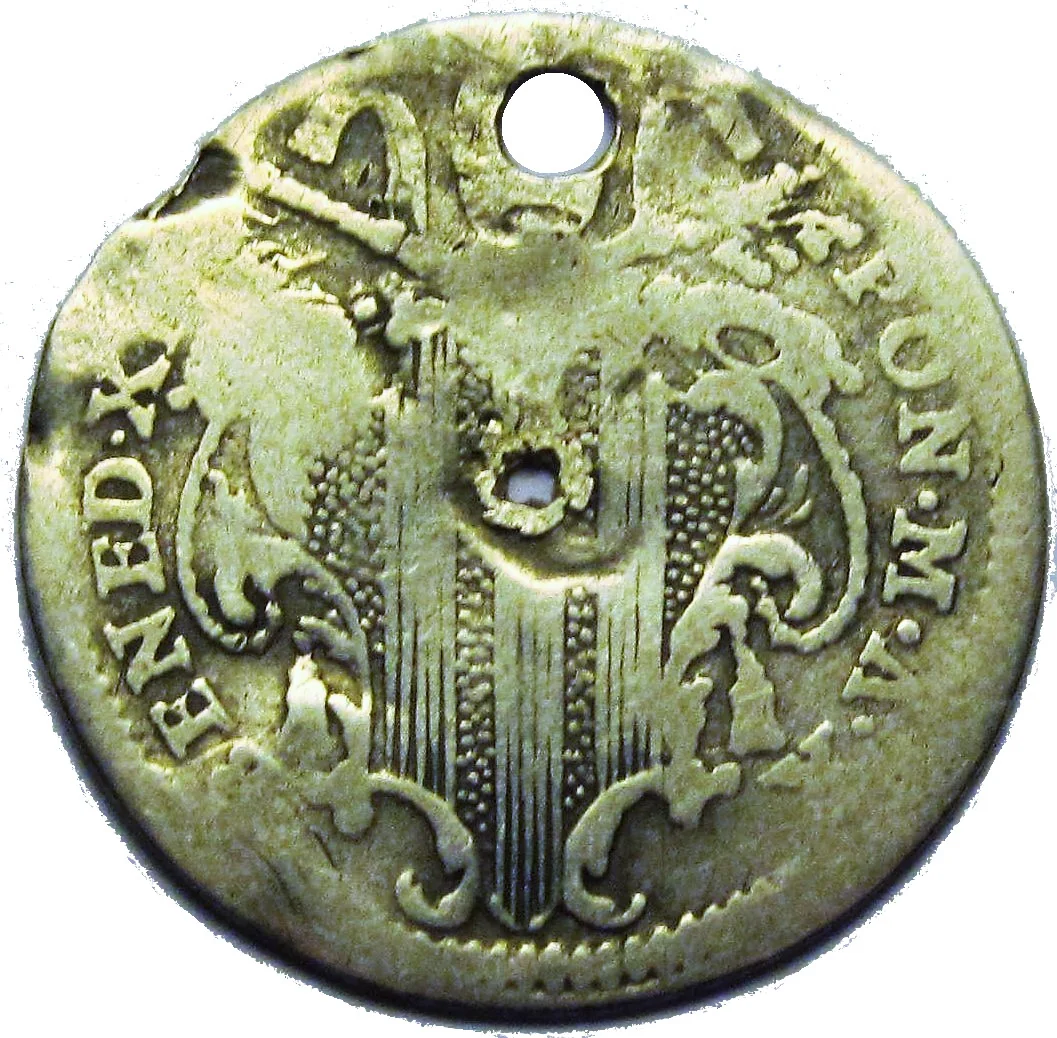
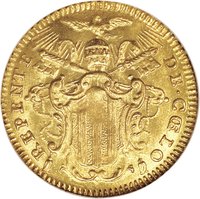
Obverse
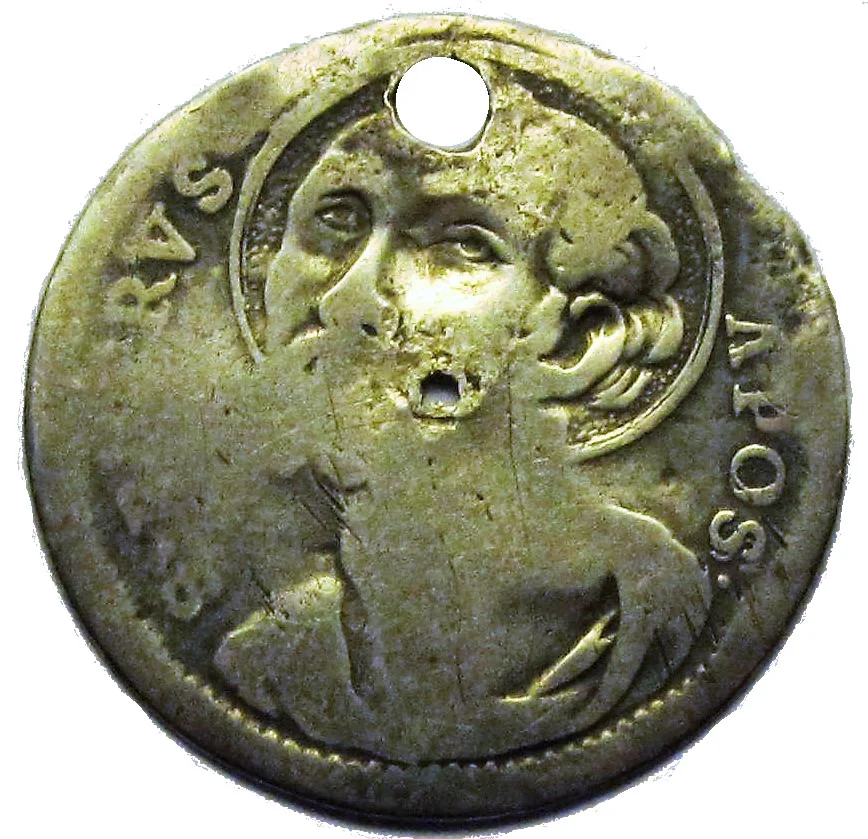
Reverse
Edge
Categories
| Person> Religious figure |
| Mustache/Beard |
| Symbol> Crown |
| Symbols> Coat of Arms |
Mintings
| Year | Mint Mark | Mintage | Quality | Collection |
|---|---|---|---|---|
| 1749 | — | — |
Historical background
In 1749, the Papal States under Pope Benedict XIV faced a complex and deteriorating monetary situation, characterized by a severe shortage of small-denomination coinage for daily transactions. This crisis stemmed from decades of earlier papal administrations debasing the copper and billon (low-grade silver) coinage to generate seigniorage revenue, eroding public trust. The value of these coins had become detached from their metallic content, leading to widespread hoarding of older, purer coins and a dysfunctional two-tiered system where "good" and "bad" coins of the same denomination circulated at different values, causing confusion and market distortion.
The core economic problem was a classic "bad money drives out good" scenario (Gresham's Law), exacerbated by the states' fragmented mint operations. Multiple mints (including those in Bologna and Rome) produced coins of inconsistent standards, while an influx of counterfeit and foreign coins, particularly from neighbouring Italian states, further flooded the already chaotic market. This environment stifled commerce, harmed the poor who relied on small change, and created a significant administrative challenge for the papal treasury, which struggled to collect taxes and pay soldiers with a stable currency.
Pope Benedict XIV, a reform-minded administrator, recognized that monetary stability was essential for both economic health and papal authority. The year 1749 fell within a period of his concerted efforts to study and address this crisis, culminating in a major monetary reform later in his pontificate. His approach, which would be implemented in the 1750s, involved a comprehensive recall and re-minting of the debased coinage, the establishment of uniform standards across the Papal States' mints, and the issuance of new, trustworthy copper coins with fixed values relative to the silver scudo. Thus, the situation in 1749 represents the critical juncture of diagnosis and planning that preceded a necessary, if challenging, surgical reform of the currency.
The core economic problem was a classic "bad money drives out good" scenario (Gresham's Law), exacerbated by the states' fragmented mint operations. Multiple mints (including those in Bologna and Rome) produced coins of inconsistent standards, while an influx of counterfeit and foreign coins, particularly from neighbouring Italian states, further flooded the already chaotic market. This environment stifled commerce, harmed the poor who relied on small change, and created a significant administrative challenge for the papal treasury, which struggled to collect taxes and pay soldiers with a stable currency.
Pope Benedict XIV, a reform-minded administrator, recognized that monetary stability was essential for both economic health and papal authority. The year 1749 fell within a period of his concerted efforts to study and address this crisis, culminating in a major monetary reform later in his pontificate. His approach, which would be implemented in the 1750s, involved a comprehensive recall and re-minting of the debased coinage, the establishment of uniform standards across the Papal States' mints, and the issuance of new, trustworthy copper coins with fixed values relative to the silver scudo. Thus, the situation in 1749 represents the critical juncture of diagnosis and planning that preceded a necessary, if challenging, surgical reform of the currency.
✨ Legendary