

⅔ Thaler – Brunswick-Lüneburg-Calenberg-Hannover
Germany
Context

Material
References
KM: #Click to copy to clipboard365
Numista: #186011
Value
Bullion value: $36.82
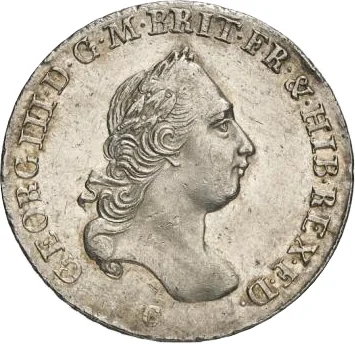
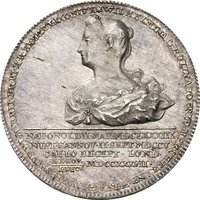
Obverse
Description:
Head left, mint mark below.
Inscription:
GEORG.III.D.G.M.BRIT.FR.&.HIB.REX.F.D.
C.
C.
Script: Latin
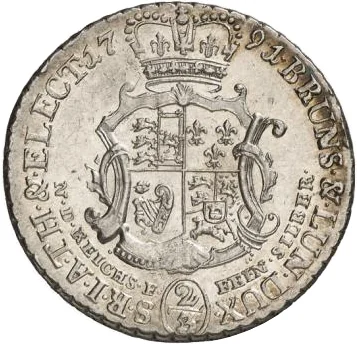
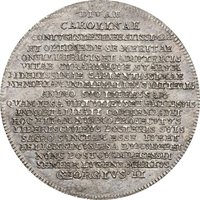
Reverse
Description:
Quartered arms on shield, value beneath.
Inscription:
S.R.I.A.TH.&.ELECT. 1791
BRUNS.&.LUN.DUX.
N.D.REICHS.F.
FEIN.SILBER
(2/3)
BRUNS.&.LUN.DUX.
N.D.REICHS.F.
FEIN.SILBER
(2/3)
Script: Latin
Edge
Mints
| Name | Mark |
|---|---|
| Clausthal | — |
Mintings
| Year | Mint Mark | Mintage | Quality | Collection |
|---|---|---|---|---|
| 1772 | — | — | ||
| 1773 | — | — | ||
| 1774 | — | — | ||
| 1775 | — | — | ||
| 1776 | — | — | ||
| 1777 | — | — | ||
| 1779 | — | — | ||
| 1780 | — | — | ||
| 1781 | — | — | ||
| 1782 | — | — | ||
| 1783 | — | — | ||
| 1784 | — | — | ||
| 1785 | — | — | ||
| 1786 | — | — | ||
| 1787 | — | — | ||
| 1788 | — | — | ||
| 1789 | — | — | ||
| 1790 | .C. | — | ||
| 1791 | .C. | — | ||
| 1792 | PLM | — | ||
| 1793 | PLM | — | ||
| 1794 | PLM | — | ||
| 1795 | PLM | — | ||
| 1796 | PLM | — | ||
| 1797 | PLM | — | ||
| 1798 | PLM | — | ||
| 1799 | PLM | — | ||
| 1800 | .C. | — | ||
| 1800 | PLM | — |
Historical background
In 1772, the currency situation in the Duchy of Brunswick-Lüneburg, specifically the Principality of Calenberg (with its capital in Hanover), was characterized by significant complexity and instability. The region operated within the fragmented monetary system of the Holy Roman Empire, where numerous states issued their own coinage. Hanover itself was part of a personal union with Great Britain, and while this brought political prestige, it did not create monetary unity. The local economy relied on a confusing multiplicity of coins, including the Reichsthaler (Imperial Thaler), the Mariengroschen, and the Pfennig, alongside circulating foreign currencies from neighboring German states. This proliferation of different coins, each with varying metallic content and exchange rates, created a cumbersome environment for trade and daily transactions.
The core of the problem lay in the debasement of coinage. To finance state expenditures, particularly military costs, rulers often reduced the precious metal content in their minted coins while maintaining their face value. This practice, conducted by various states, led to a flood of inferior coins circulating across borders, driving better-quality money out of circulation (Gresham's Law). Consequently, merchants and the public faced constant uncertainty about the true value of their money, which hampered commerce and credit. In Hanover, authorities struggled to maintain the standard of their own Conventionsthaler (a slightly better standard than the Reichsthaler), but were under constant pressure from the inflow of debased coinage from elsewhere.
Efforts at reform were underway but faced immense challenges. The idea of a standardized Conventionsmünzfuß (monetary standard), agreed upon by several German states in the mid-18th century, provided a theoretical framework but was unevenly implemented. In 1772, the Hanoverian government was likely engaged in ongoing administrative efforts to control minting, regulate exchange rates, and curb the influx of foreign bad money. However, a truly unified and stable currency remained elusive, reflecting the broader political fragmentation of Germany. The situation would only find a lasting resolution much later, following the Napoleonic Wars and the eventual move toward German unification in the 19th century.
The core of the problem lay in the debasement of coinage. To finance state expenditures, particularly military costs, rulers often reduced the precious metal content in their minted coins while maintaining their face value. This practice, conducted by various states, led to a flood of inferior coins circulating across borders, driving better-quality money out of circulation (Gresham's Law). Consequently, merchants and the public faced constant uncertainty about the true value of their money, which hampered commerce and credit. In Hanover, authorities struggled to maintain the standard of their own Conventionsthaler (a slightly better standard than the Reichsthaler), but were under constant pressure from the inflow of debased coinage from elsewhere.
Efforts at reform were underway but faced immense challenges. The idea of a standardized Conventionsmünzfuß (monetary standard), agreed upon by several German states in the mid-18th century, provided a theoretical framework but was unevenly implemented. In 1772, the Hanoverian government was likely engaged in ongoing administrative efforts to control minting, regulate exchange rates, and curb the influx of foreign bad money. However, a truly unified and stable currency remained elusive, reflecting the broader political fragmentation of Germany. The situation would only find a lasting resolution much later, following the Napoleonic Wars and the eventual move toward German unification in the 19th century.
✨ Legendary