

10 ducats – Sweden
Add to wishlist
Circulating commemorative coins
Commemoration: The royal visit to Hesse-Cassel in 1731.
Sweden
Context
Material
References
KM: #
Numista: #185155
Value
Bullion value: $5211.98
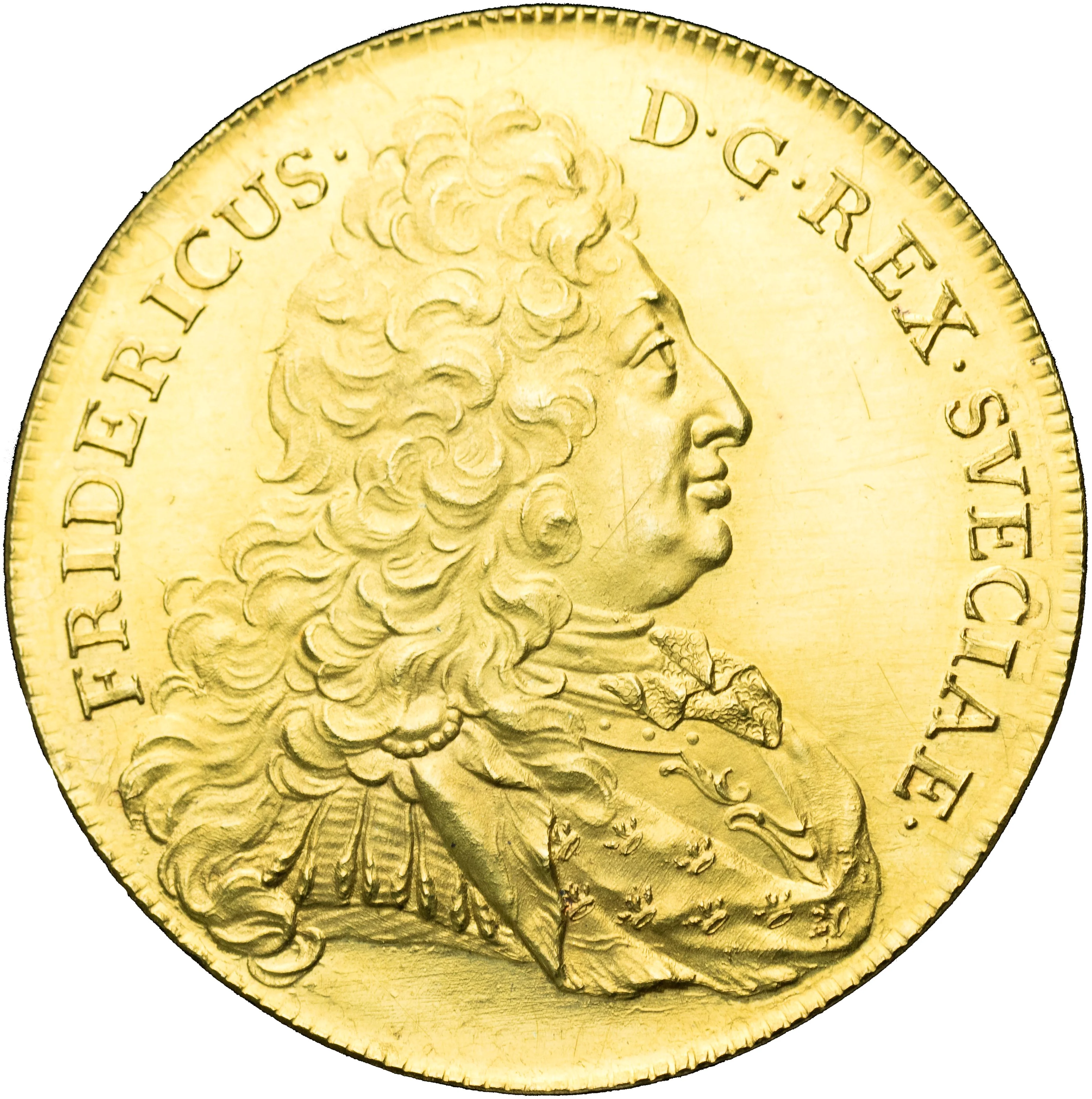
Obverse
Description:
Frederick I bust right within circular legend.
Inscription:
FRIDERICVS· D·G·REX·ET·REG·SVECIAE·
Script: Latin
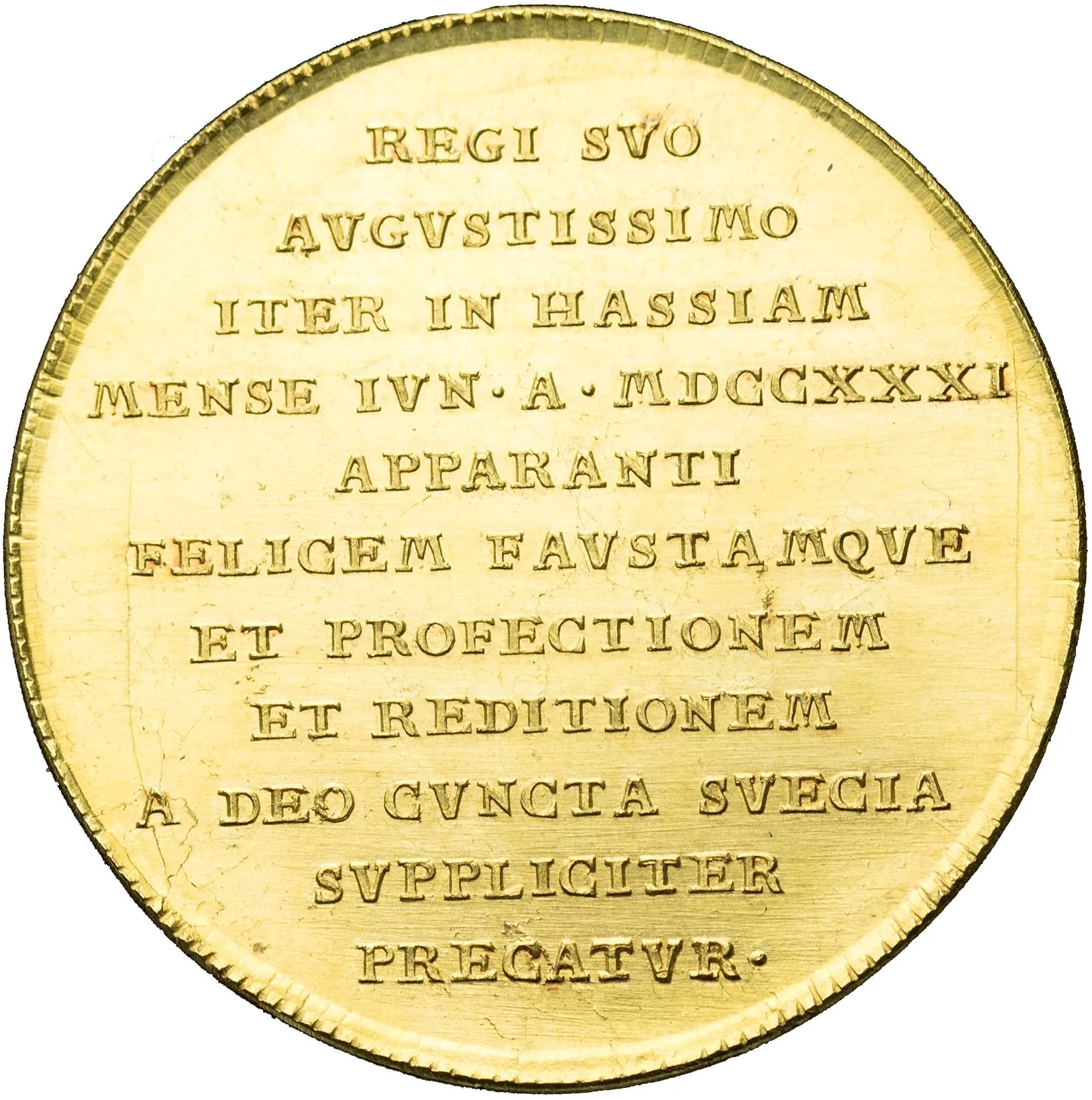
Reverse
Description:
Eleven-line inscription marking a commemorative visit, dated in Roman numerals.
Inscription:
REGI SVO
AVGVSTISSIMO
ITER IN HASSIAM
MENSE IVN. A. MDCCXXXI
APPARANTI
FELICEM FAVSTAMQVE
ET PROFECTIONEM
ET REDITIONEM
A DEO CVNCTA SVECIA
SVPPLICITER
PRECATVR
AVGVSTISSIMO
ITER IN HASSIAM
MENSE IVN. A. MDCCXXXI
APPARANTI
FELICEM FAVSTAMQVE
ET PROFECTIONEM
ET REDITIONEM
A DEO CVNCTA SVECIA
SVPPLICITER
PRECATVR
Edge
Mints
| Name | Mark |
|---|---|
| Stockholm | — |
Mintings
| Year | Mint Mark | Mintage | Quality | Collection |
|---|---|---|---|---|
| 1731 | — | — |
Historical background
In 1731, Sweden operated under a complex and strained monetary system, a legacy of its failed Great Power ambitions in the 17th century. The nation was officially on a silver standard, with the riksdaler specie as the primary unit of account, but the reality was a chaotic circulation of both domestic and foreign coin. Decades of war financing had led to severe debasement under King Charles XII, and the subsequent peace saw the government issuing vast quantities of low-quality copper plate money (plåtmynt) and credit notes to cover state debts. This resulted in a dual system where the intrinsic value of coins (their metal content) often differed sharply from their face value, causing widespread confusion and economic friction.
The year itself fell within the Age of Liberty (Frihetstiden), a period of parliamentary rule where the Riksdag's estates held significant power. Monetary policy was a central and contentious issue, with deep divisions between the estates. The nobility and clergy generally advocated for a deflationary return to the old silver standard to protect creditors and stabilize the currency. In contrast, the burgher and peasant estates, burdened by debt, often favored a more flexible system with accessible credit to stimulate commerce and agriculture. This political deadlock prevented decisive reform, allowing the problematic mix of overvalued copper money and undervalued silver coins to persist.
Consequently, the currency situation in 1731 was characterized by instability and a lack of public trust. Exchange rates between copper and silver money fluctuated, and foreign silver coins like German and Dutch riksdalers circulated widely, often preferred for large transactions due to their reliable metallic content. This environment hampered both domestic trade and international commerce, creating an urgent backdrop for the economic debates that would eventually lead to the establishment of the Riksens Ständers Bank (the precursor to the Riksbank) in 1727 and its ongoing struggle to manage the nation's monetary affairs.
The year itself fell within the Age of Liberty (Frihetstiden), a period of parliamentary rule where the Riksdag's estates held significant power. Monetary policy was a central and contentious issue, with deep divisions between the estates. The nobility and clergy generally advocated for a deflationary return to the old silver standard to protect creditors and stabilize the currency. In contrast, the burgher and peasant estates, burdened by debt, often favored a more flexible system with accessible credit to stimulate commerce and agriculture. This political deadlock prevented decisive reform, allowing the problematic mix of overvalued copper money and undervalued silver coins to persist.
Consequently, the currency situation in 1731 was characterized by instability and a lack of public trust. Exchange rates between copper and silver money fluctuated, and foreign silver coins like German and Dutch riksdalers circulated widely, often preferred for large transactions due to their reliable metallic content. This environment hampered both domestic trade and international commerce, creating an urgent backdrop for the economic debates that would eventually lead to the establishment of the Riksens Ständers Bank (the precursor to the Riksbank) in 1727 and its ongoing struggle to manage the nation's monetary affairs.

✨ Legendary