

6 Hellers – Landgraviate of Hesse-Cassel
Context
Years: 1756–1759
Issuer: Landgraviate of Hesse-Cassel
Ruler: William VIII
Currency:
Demonetized: Yes
References
KM: #Click to copy to clipboard457
Numista: #182064
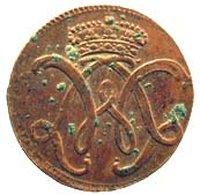
Obverse
Description:
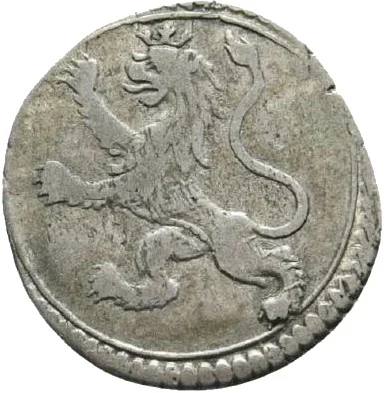
Crowned rampant lion facing left.
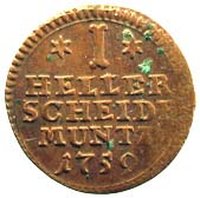
Reverse
Description:
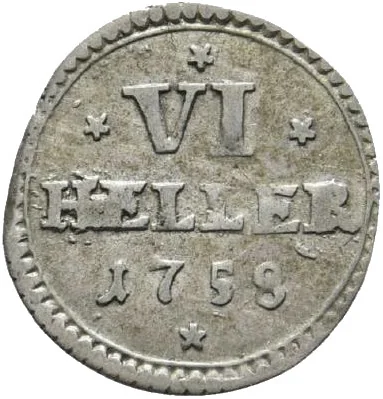
Denomination and date in three lines, with stars flanking and above "VI," and one below the date.
Inscription:
VI
HELLER
1758
HELLER
1758
Script: Latin
Edge
Mintings
| Year | Mint Mark | Mintage | Quality | Collection |
|---|---|---|---|---|
| 1756 | — | — | ||
| 1757 | — | — | ||
| 1758 | — | — | ||
| 1759 | — | — |
Historical background
In 1756, the Landgraviate of Hesse-Cassel stood on the precipice of the Seven Years' War, and its currency system reflected both its strategic importance and its underlying financial strain. The primary currency was the Reichsthaler, a standard silver coin of the Holy Roman Empire, divided into 24 Gutegroschen or 288 Pfennige. However, the reality was a complex mosaic of circulating coins, including local issues from the landgrave's mints, neighboring German state currencies, and older, worn coins, all trading at fluctuating values. This complexity created a persistent challenge for commerce and state finance, exacerbated by the costs of maintaining a large, modern army—Hesse-Cassel's most famous export.
Financially astute Landgrave William VIII, ruling since 1751, understood that a sound currency was crucial for funding his military and ensuring economic stability. He pursued policies aimed at standardizing and controlling the coinage to prevent debasement, which eroded public trust and caused inflation. However, these efforts were constantly pressured by the immense expense of his standing army, which was not only a point of pride but also a key asset for generating foreign subsidies. The need to pay and supply these troops created a constant tension between the desire for monetary stability and the immediate need for state revenue.
The outbreak of the Seven Years' War in 1756 dramatically intensified these pressures. Hesse-Cassel immediately became a major theatre of conflict, aligning with Prussia and Great Britain. While the British subsidy treaty promised substantial foreign income (eventually paid in high-quality silver), the initial costs of mobilization were enormous. The war would soon test the landgrave's monetary policies to their limit, leading to increased issuance of coinage to cover wartime expenditures, with the ever-present risk of inflation and disorder in the currency system as the conflict ravaged the landgraviate's territory and economy.
Financially astute Landgrave William VIII, ruling since 1751, understood that a sound currency was crucial for funding his military and ensuring economic stability. He pursued policies aimed at standardizing and controlling the coinage to prevent debasement, which eroded public trust and caused inflation. However, these efforts were constantly pressured by the immense expense of his standing army, which was not only a point of pride but also a key asset for generating foreign subsidies. The need to pay and supply these troops created a constant tension between the desire for monetary stability and the immediate need for state revenue.
The outbreak of the Seven Years' War in 1756 dramatically intensified these pressures. Hesse-Cassel immediately became a major theatre of conflict, aligning with Prussia and Great Britain. While the British subsidy treaty promised substantial foreign income (eventually paid in high-quality silver), the initial costs of mobilization were enormous. The war would soon test the landgrave's monetary policies to their limit, leading to increased issuance of coinage to cover wartime expenditures, with the ever-present risk of inflation and disorder in the currency system as the conflict ravaged the landgraviate's territory and economy.
✨ Legendary