

5 guineas – England
Add to wishlist
United Kingdom
Context
Years: 1705–1706
Country: United Kingdom
Issuer: England
Ruler: Anne
Currency:
(1158—1970)
Demonetized: Yes
Material
References
KM: #
Numista: #182052
Value
Bullion value: $5898.70
Obverse
Description:
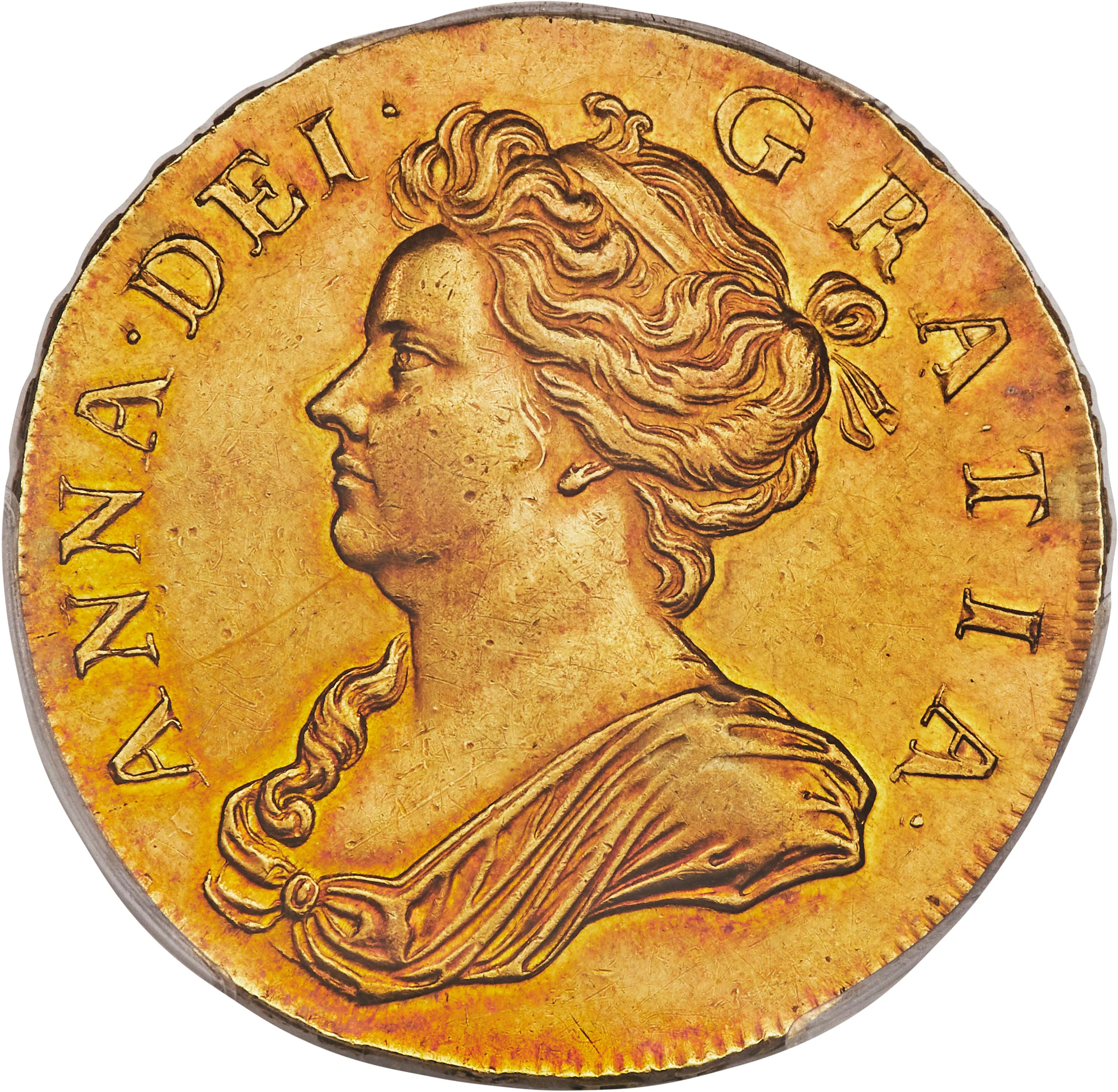
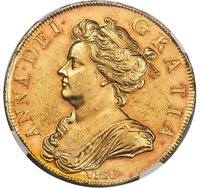
Queen Anne left-facing bust, legend surrounding.
Inscription:
ANNA · DEI GRATIA ·
Script: Latin
Reverse
Description:
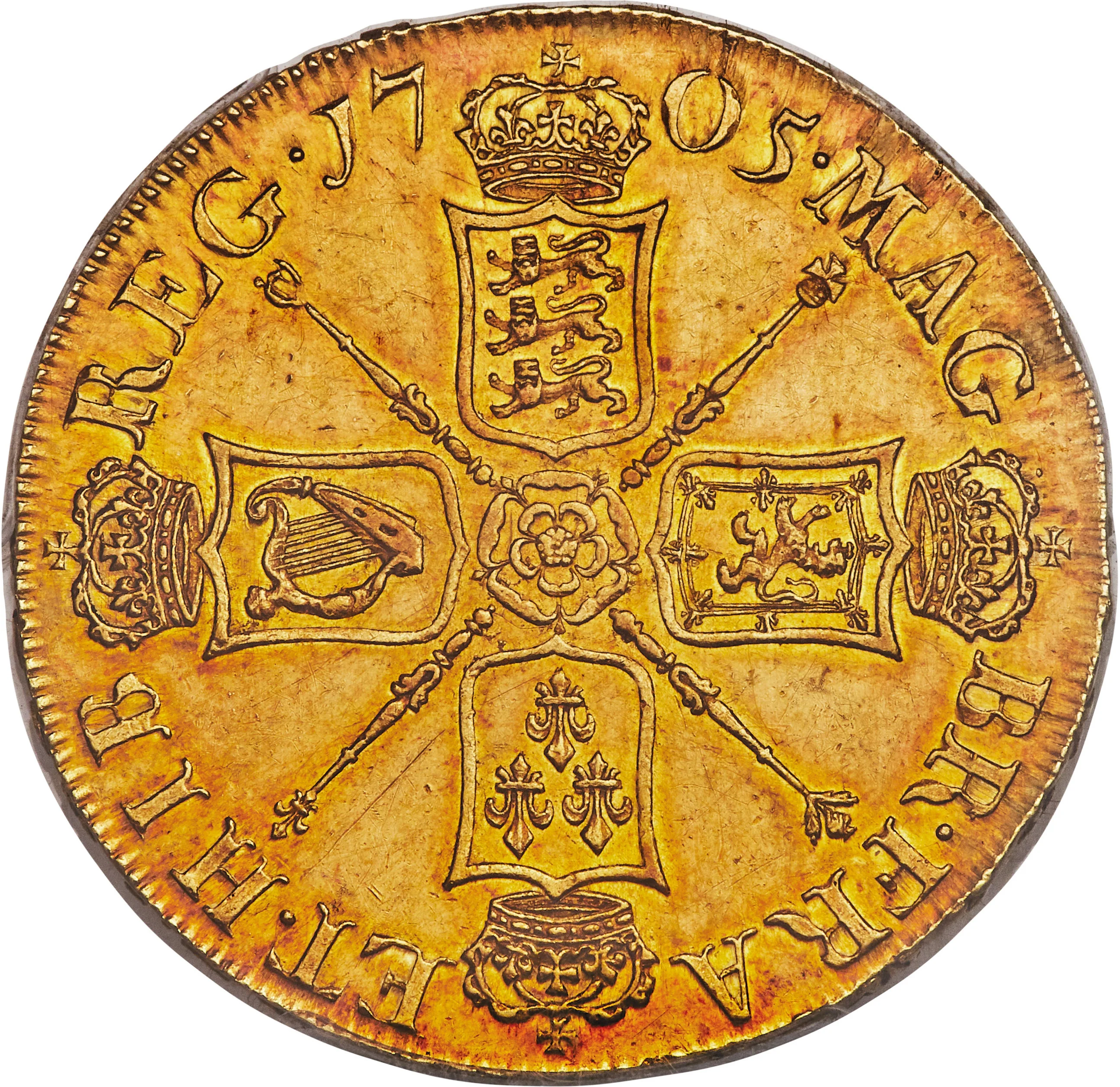
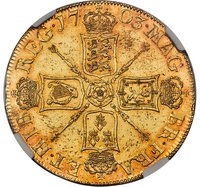
Crowned shields (England, Scotland, France, Ireland) around a central rose, with sceptres bearing national emblems in the angles. Divided date above, legend around.
Inscription:
MAG BR·FRA ET·HIB REG·17 05·
Script: Latin
Edge
Regnal year in Latin
Legend:
QVARTO
Categories
| Animal> Feline |
| Symbol> Crown |
| Plants> Flower |
| Symbols> Coat of Arms |
| Symbol> Fleur-de-lis |
Mintings
| Year | Mint Mark | Mintage | Quality | Collection |
|---|---|---|---|---|
| 1705 | — | — | ||
| 1706 | — | — |
Historical background
In 1705, England’s currency was in a state of profound crisis, a direct consequence of the Great Recoinage of 1696. That earlier effort had sought to replace clipped and worn silver coins with new, milled-edge currency, but it had failed to address a fundamental economic reality: the official mint price of silver was below its market value. This meant it was more profitable for merchants and bullion dealers to melt down English silver coins and export the metal abroad than to keep them in circulation. Consequently, good silver coinage rapidly drained from the domestic economy, leaving a severely depleted and often poor-quality circulating medium.
The shortage of reliable specie crippled everyday trade and state finances. The economy relied heavily on a chaotic mix of underweight silver coins, foreign currency (like Spanish pieces of eight), and a proliferation of paper alternatives. Promissory notes, bills of exchange, and tokens issued by tradesmen filled the gap, but these were localised and insecure. The situation was exacerbated by the ongoing War of the Spanish Succession (1701-1714), which placed immense strain on public funds and required large shipments of bullion to finance armies overseas, further depleting the nation’s monetary stock.
This crisis set the stage for a pivotal intellectual and political debate about the very nature of money. Figures like Isaac Newton, who became Warden of the Mint in 1696, observed that gold coins, particularly the guinea, were circulating at a premium over their official face value. The fundamental question facing policymakers in 1705 was whether to adjust the silver standard or to effectively allow gold to become the principal measure of value. The resolution, which would come with Newton’s guidance as Master of the Mint in the following years, began a deliberate but unplanned shift towards the gold standard, a transformation that would define British finance for centuries.
The shortage of reliable specie crippled everyday trade and state finances. The economy relied heavily on a chaotic mix of underweight silver coins, foreign currency (like Spanish pieces of eight), and a proliferation of paper alternatives. Promissory notes, bills of exchange, and tokens issued by tradesmen filled the gap, but these were localised and insecure. The situation was exacerbated by the ongoing War of the Spanish Succession (1701-1714), which placed immense strain on public funds and required large shipments of bullion to finance armies overseas, further depleting the nation’s monetary stock.
This crisis set the stage for a pivotal intellectual and political debate about the very nature of money. Figures like Isaac Newton, who became Warden of the Mint in 1696, observed that gold coins, particularly the guinea, were circulating at a premium over their official face value. The fundamental question facing policymakers in 1705 was whether to adjust the silver standard or to effectively allow gold to become the principal measure of value. The resolution, which would come with Newton’s guidance as Master of the Mint in the following years, began a deliberate but unplanned shift towards the gold standard, a transformation that would define British finance for centuries.
✨ Legendary