

1 Riksdaler – Sweden
Sweden
Context
Years: 1676–1909
Year: 1676
Issuer: Sweden 
Ruler: Charles XI
Currency:
(1665—1715)
Demonetized: Yes
Total mintage: 791
Material
References
KM: #Click to copy to clipboard280
Numista: #181693
Value
Bullion value: $73.00
Obverse
Description:
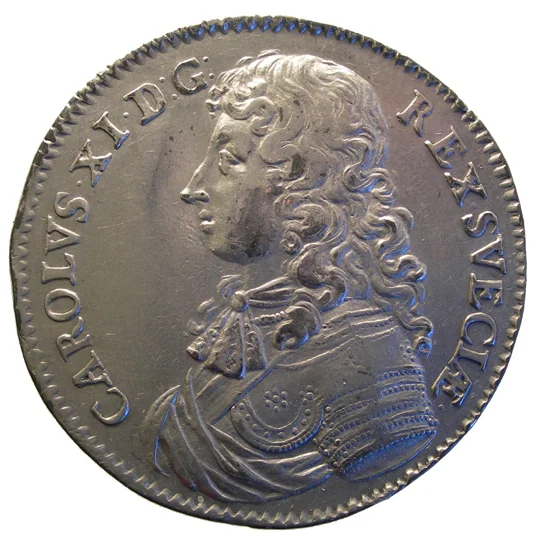
Armored bust of Carl XI left, within encircling legend.
Inscription:
CAROLVS·XI·D:G: REX·SVECIÆ:
Script: Latin
Reverse
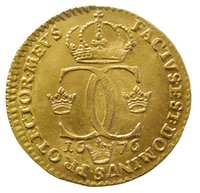
Description:
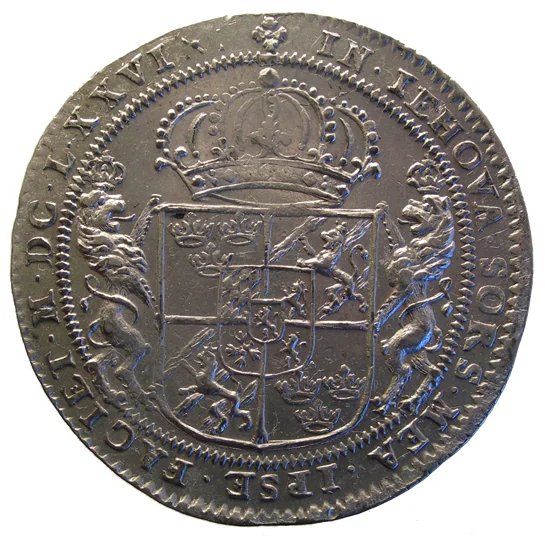
Swedish crowned shield with lion supporters within circular legend.
Inscription:
IN·IEHOVA·SORS·MEA·IPSE·FACIET·M·DC·L·XXVI·
Script: Latin
Edge
Categories
| Symbols> Coat of Arms |
Mints
| Name | Mark |
|---|---|
| Stockholm | — |
Mintings
| Year | Mint Mark | Mintage | Quality | Collection |
|---|---|---|---|---|
| 1676 | — | 791 | ||
| 1909 | — | — |
Historical background
In 1676, Sweden was embroiled in the Scanian War against a coalition led by Denmark-Norway. The financial demands of this conflict placed immense strain on a monetary system already in a state of profound crisis. For decades, Sweden had struggled with a chronic shortage of precious metals, leading to a reliance on copper as a primary monetary base. The famous large copper plates (plåtmynt), while physically impressive, were cumbersome and their value was intrinsically linked to volatile international copper prices, creating an unstable foundation for the economy.
To finance the war, the Swedish state, under the regency of young King Charles XI, resorted to aggressive debasement of the already-circulating silver coinage. The government recalled existing silver coins, melted them down, and re-minted them with a significantly reduced silver content, a process known as "crying down" the currency. This deliberate inflation was a form of hidden taxation, allowing the crown to produce more coins from the same silver reserve to pay soldiers and suppliers in the short term, but at the cost of destroying public trust in the currency's value.
Consequently, the year 1676 saw a classic monetary breakdown: a severe loss of confidence leading to rampant inflation and a fractured currency system. Older, purer coins were hoarded and disappeared from circulation (Gresham's Law in action), while the new, debased coins flooded the market and were spent quickly, driving up prices for provisions and crippling the real economy. This chaotic situation severely hampered the war effort, as the state's money bought less and less, contributing to the domestic turmoil that would later compel Charles XI to enact sweeping financial and land reforms after the war's conclusion.
To finance the war, the Swedish state, under the regency of young King Charles XI, resorted to aggressive debasement of the already-circulating silver coinage. The government recalled existing silver coins, melted them down, and re-minted them with a significantly reduced silver content, a process known as "crying down" the currency. This deliberate inflation was a form of hidden taxation, allowing the crown to produce more coins from the same silver reserve to pay soldiers and suppliers in the short term, but at the cost of destroying public trust in the currency's value.
Consequently, the year 1676 saw a classic monetary breakdown: a severe loss of confidence leading to rampant inflation and a fractured currency system. Older, purer coins were hoarded and disappeared from circulation (Gresham's Law in action), while the new, debased coins flooded the market and were spent quickly, driving up prices for provisions and crippling the real economy. This chaotic situation severely hampered the war effort, as the state's money bought less and less, contributing to the domestic turmoil that would later compel Charles XI to enact sweeping financial and land reforms after the war's conclusion.

✨ Legendary