

1 ducat – Sweden
Add to wishlist
Sweden
Context
Years: 1725–1728
Issuer: Sweden
Ruler: Frederick I
Currency:
(1719—1798)
Demonetized: Yes
Total mintage: 6,796
Material
References
KM: #
Numista: #107091
Value
Bullion value: $521.80
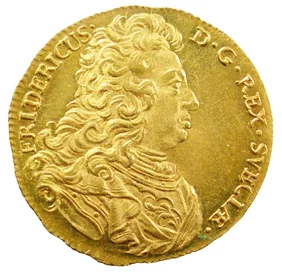
Obverse
Description:
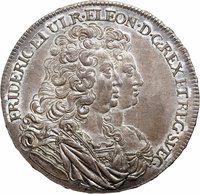
Bust of Frederick I with curly hair, wearing pearled armor and a draped cloak.
Inscription:
FRIDERICUS • D•G • REX • SVECIÆ •
Script: Latin
Engraver: Johann Karl von Hedlinger
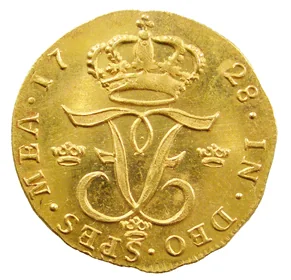
Reverse
Description:
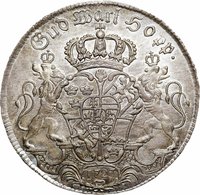
King's mirrored monogram flanked by the Three Crowns, with date split by the crown below.
Inscription:
IN • DEO • SPES • MEA • 17 26 •
FF
FF
Script: Latin
Engraver: Johann Karl von Hedlinger
Edge
Reeded
Mintings
| Year | Mint Mark | Mintage | Quality | Collection |
|---|---|---|---|---|
| 1725 | — | 1,485 | ||
| 1726 | — | 1,283 | ||
| 1727 | — | 1,154 | ||
| 1728 | — | 2,874 |
Historical background
In 1725, Sweden was grappling with the severe economic and monetary consequences of the Great Northern War (1700-1721). The war had been financially catastrophic, fought largely on credit and funded by massive coinage debasement. The state, under King Frederick I, had flooded the economy with low-quality copper and silver coins containing far less precious metal than their face value, leading to rampant inflation and a profound loss of confidence in the currency. The monetary system was a chaotic mix of old, full-value coins and new, debased ones, causing confusion in trade and daily transactions.
The situation was further complicated by Sweden's unique copper-based standard, established alongside silver. Large, cumbersome copper plate money (plåtmynt) still circulated, but its intrinsic value as a bulky commodity often diverged from its nominal value. The post-war government, led by the Estates and the influential "Hat" party faction, faced the urgent task of stabilization. Their primary focus in the mid-1720s was on defining and fixing the relationship between the two metal standards—the silver daler and the copper daler—to create a predictable exchange rate and restore some semblance of order to the national accounts.
Therefore, the currency situation in 1725 was one of fragile transition. The immediate crisis of wartime finance was over, but the legacy of debasement and dual-metallism posed a deep structural challenge. The period was characterized by political debates and preparatory work towards a more formal monetary reform, which would eventually culminate in the 1726 ordinance that officially set a fixed exchange rate between copper and silver. This was a crucial, though not entirely successful, step in the long and difficult process of restoring the credibility of Sweden's currency after the fiscal trauma of war.
The situation was further complicated by Sweden's unique copper-based standard, established alongside silver. Large, cumbersome copper plate money (plåtmynt) still circulated, but its intrinsic value as a bulky commodity often diverged from its nominal value. The post-war government, led by the Estates and the influential "Hat" party faction, faced the urgent task of stabilization. Their primary focus in the mid-1720s was on defining and fixing the relationship between the two metal standards—the silver daler and the copper daler—to create a predictable exchange rate and restore some semblance of order to the national accounts.
Therefore, the currency situation in 1725 was one of fragile transition. The immediate crisis of wartime finance was over, but the legacy of debasement and dual-metallism posed a deep structural challenge. The period was characterized by political debates and preparatory work towards a more formal monetary reform, which would eventually culminate in the 1726 ordinance that officially set a fixed exchange rate between copper and silver. This was a crucial, though not entirely successful, step in the long and difficult process of restoring the credibility of Sweden's currency after the fiscal trauma of war.
✨ Legendary