

1 Piastra – Papal States
Circulating commemorative coins
Commemoration: Vacant Seat 1669-1770
Vatican City
Context

Material
References
KM: #Click to copy to clipboard319
Numista: #180930
Value
Bullion value: $85.25
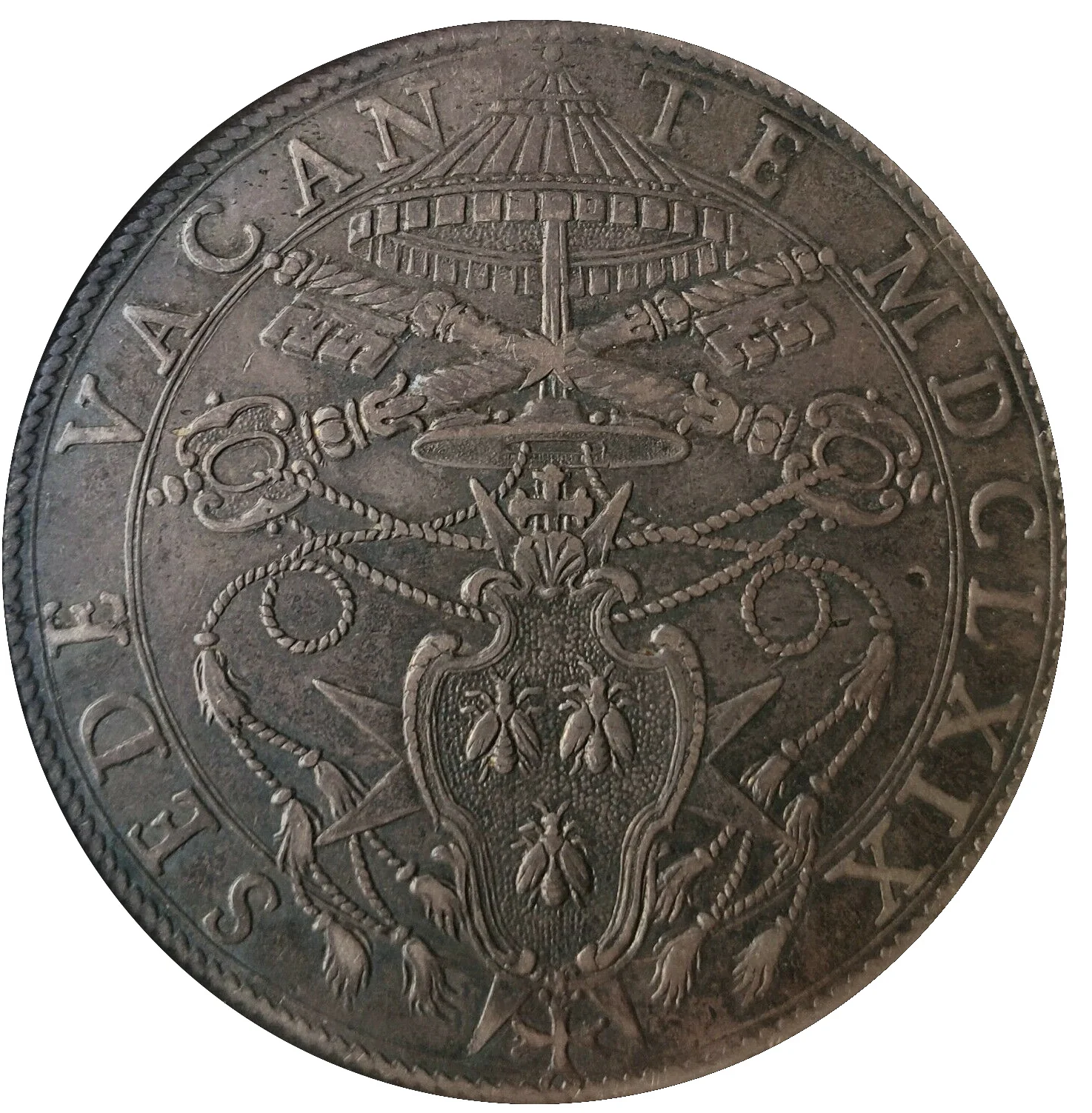
Obverse
Description:
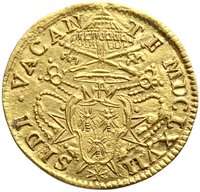
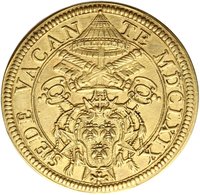
Cardinal Antonio Barberini's coat of arms.
Inscription:
SEDE VACANTE MDCLXIX
Script: Latin
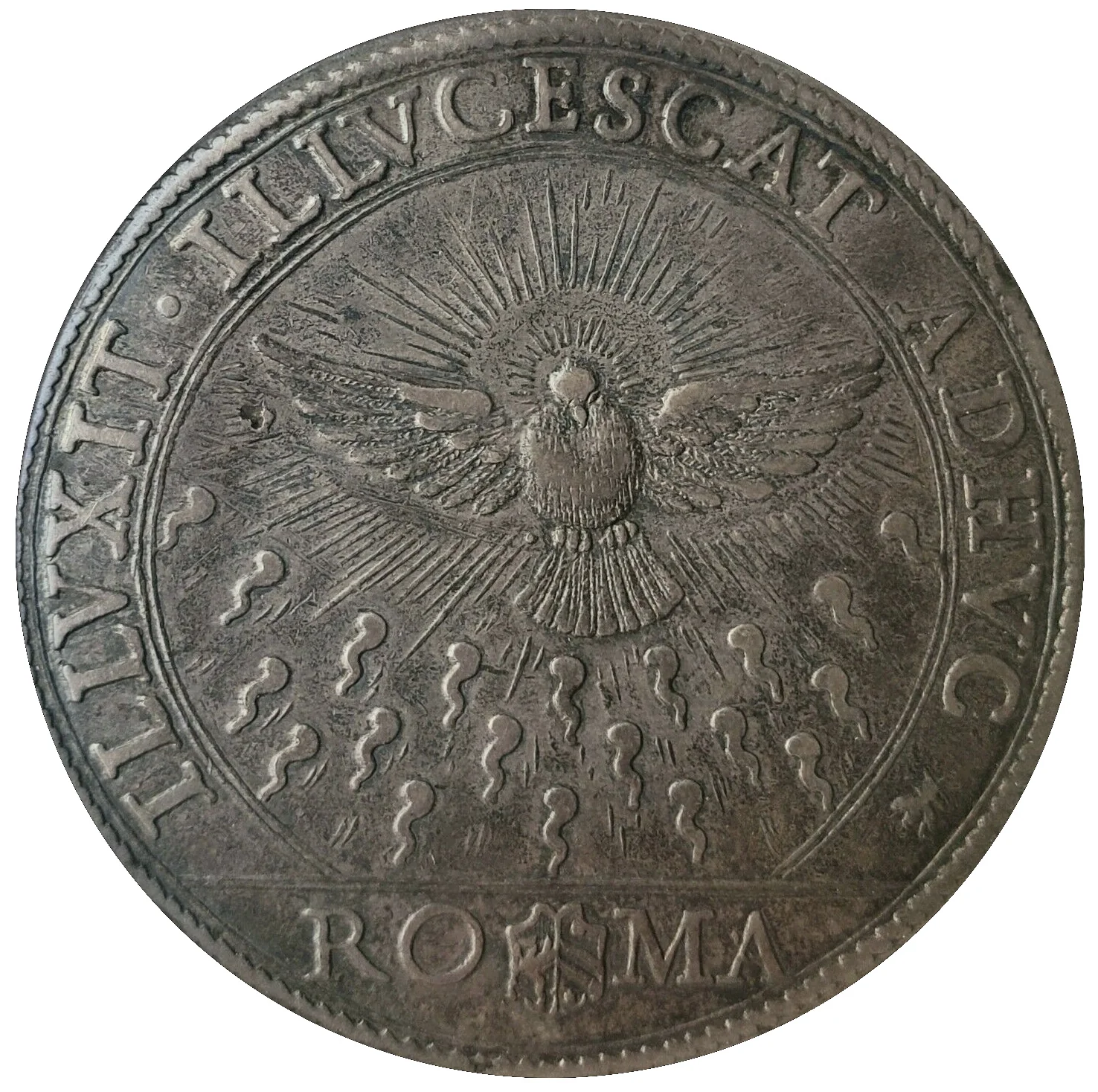
Reverse
Edge
Mints
| Name | Mark |
|---|---|
| Rome | — |
Mintings
| Year | Mint Mark | Mintage | Quality | Collection |
|---|---|---|---|---|
| — | — | — |
Historical background
In 1669, the Papal States operated under a complex and strained monetary system, characteristic of many Italian states in the early modern period. The primary unit of account was the scudo, a silver coin, but the circulating medium was a chaotic mix of physical coins from various Italian and foreign mints, including Spanish reales and Florentine fiorini. This proliferation of foreign and debased coinage, alongside official papal issues, created significant challenges for commerce and state finance, as values had to be constantly calculated and reconciled.
The financial health of the Papal treasury was precarious, heavily reliant on taxes, fees from the expansive bureaucracy, and revenue from the Papal territories. However, the costs of administration, patronage, and maintaining Rome's status as a cultural capital were immense. Furthermore, Pope Clement IX (reigned 1667-1669) was not a financially focused pontiff; his brief reign was more concerned with diplomatic peace in Europe (notably the Peace of Aix-la-Chapelle) and his personal interests in arts and literature, rather than substantive monetary reform. Consequently, the underlying structural issues of the currency were left unaddressed.
Therefore, the currency situation in 1669 was one of inherited instability rather than acute crisis. There was no major devaluation or reform in that specific year, but the system suffered from chronic problems: a disconnect between accounting units and physical coins, widespread debasement, and the circulation of countless foreign issues. This monetary confusion hindered economic efficiency and reflected the broader administrative challenges of governing the Papal States, where spiritual priorities and temporal financial pressures often existed in a tense balance.
The financial health of the Papal treasury was precarious, heavily reliant on taxes, fees from the expansive bureaucracy, and revenue from the Papal territories. However, the costs of administration, patronage, and maintaining Rome's status as a cultural capital were immense. Furthermore, Pope Clement IX (reigned 1667-1669) was not a financially focused pontiff; his brief reign was more concerned with diplomatic peace in Europe (notably the Peace of Aix-la-Chapelle) and his personal interests in arts and literature, rather than substantive monetary reform. Consequently, the underlying structural issues of the currency were left unaddressed.
Therefore, the currency situation in 1669 was one of inherited instability rather than acute crisis. There was no major devaluation or reform in that specific year, but the system suffered from chronic problems: a disconnect between accounting units and physical coins, widespread debasement, and the circulation of countless foreign issues. This monetary confusion hindered economic efficiency and reflected the broader administrative challenges of governing the Papal States, where spiritual priorities and temporal financial pressures often existed in a tense balance.
✨ Legendary