

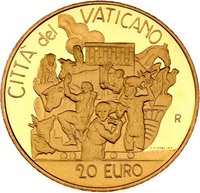
20 Euro – Vatican City
Non-circulating coins
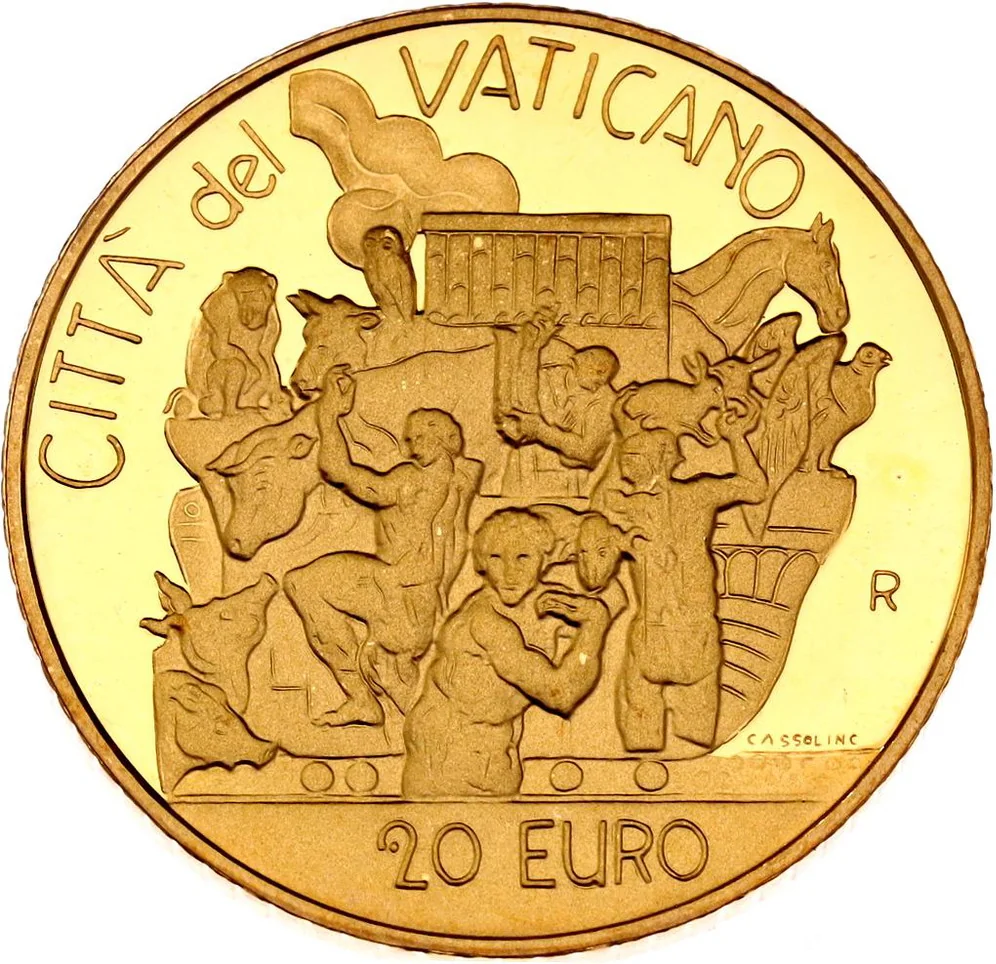
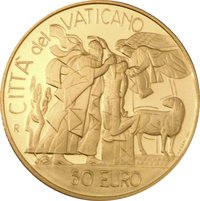
Commemoration: Roots of the faith: Arche Noah
Vatican City
Context
Material
References
KM: #Click to copy to clipboard361
Numista: #122529
Value
Exchange value: 20 EUR = $23.63
Bullion value: $916.31
Mints
| Name | Mark |
|---|---|
| Rome | R |
Mintings
| Year | Mint Mark | Mintage | Quality | Collection |
|---|---|---|---|---|
| 2002 | R | 2,800 | Proof |
Historical background
In 2002, Vatican City, as a sovereign city-state, participated in one of the most significant monetary transitions in modern European history: the introduction of the euro. While not a member of the European Union, the Vatican's unique geographical and political position within Italy, coupled with its previous use of the Italian lira as its official currency, necessitated a formal arrangement. Through a series of agreements with the Italian Republic (acting on behalf of the EU), the Holy See secured the right to adopt the euro as its official legal tender, replacing the Vatican lira at the fixed conversion rate of 1,936.27 lire to one euro.
This adoption was governed by a specific 2000 convention with Italy, which granted the European Central Bank and the European Commission the right to approve the volume of Vatican euro coin issuance. The agreement strictly limited minting to quantities that would not disrupt the overall eurozone monetary system, capping annual coin production for circulation at a modest €310,000 face value. Furthermore, the Vatican committed to selling a significant portion of its special commemorative and collector coin sets outside the eurozone to prevent them from entering general circulation and affecting the money supply.
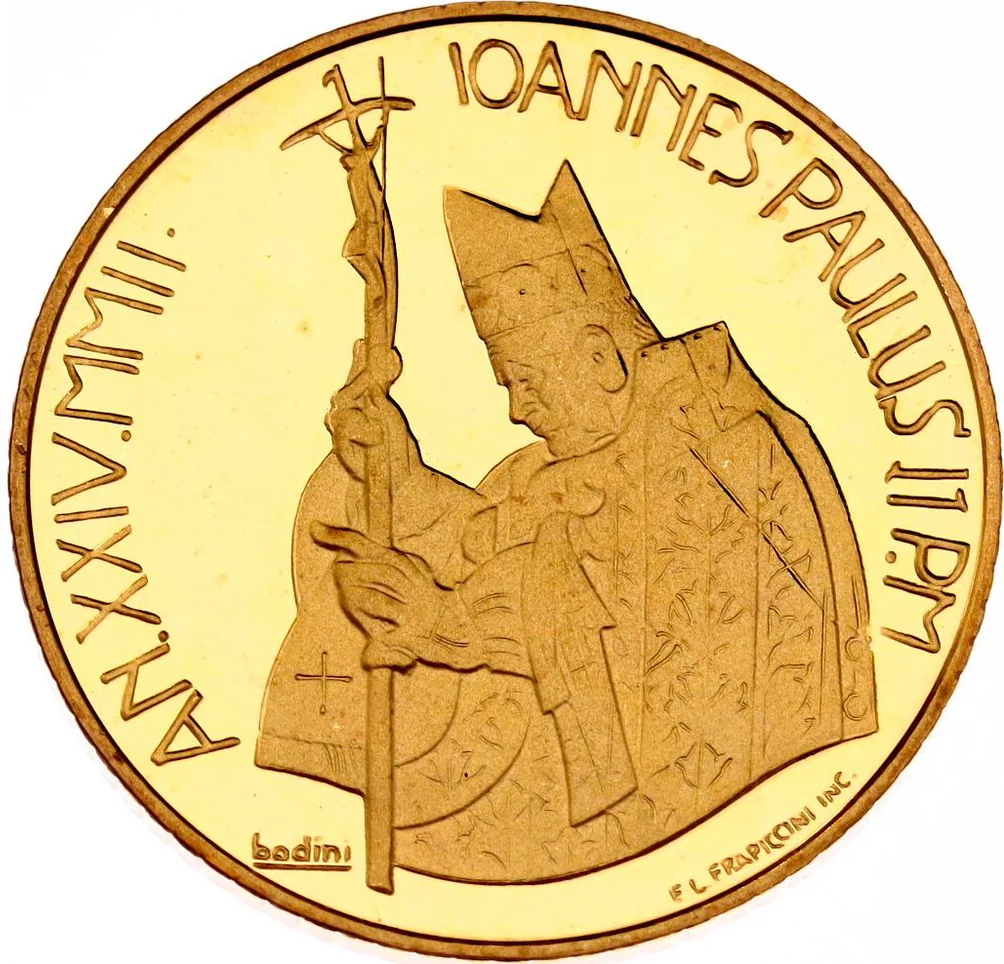
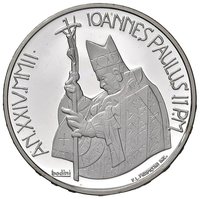
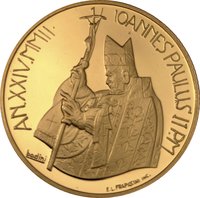
Thus, the 2002 currency situation was one of carefully negotiated integration. The Vatican euro coins, which feature the distinctive portrait of Pope John Paul II and later designs of the reigning pontiff, became sought-after collectibles. The transition solidified the Vatican's practical economic ties to the eurozone while allowing it to maintain a symbolic expression of its sovereignty through the issuance of its own uniquely designed, though quantitatively limited, euro coins.
This adoption was governed by a specific 2000 convention with Italy, which granted the European Central Bank and the European Commission the right to approve the volume of Vatican euro coin issuance. The agreement strictly limited minting to quantities that would not disrupt the overall eurozone monetary system, capping annual coin production for circulation at a modest €310,000 face value. Furthermore, the Vatican committed to selling a significant portion of its special commemorative and collector coin sets outside the eurozone to prevent them from entering general circulation and affecting the money supply.
Thus, the 2002 currency situation was one of carefully negotiated integration. The Vatican euro coins, which feature the distinctive portrait of Pope John Paul II and later designs of the reigning pontiff, became sought-after collectibles. The transition solidified the Vatican's practical economic ties to the eurozone while allowing it to maintain a symbolic expression of its sovereignty through the issuance of its own uniquely designed, though quantitatively limited, euro coins.
✨ Legendary