

1⁄24 thaler – Reuss-Untergreiz
Add to wishlist
Germany
Context
Material
References
KM: #
Numista: #180498
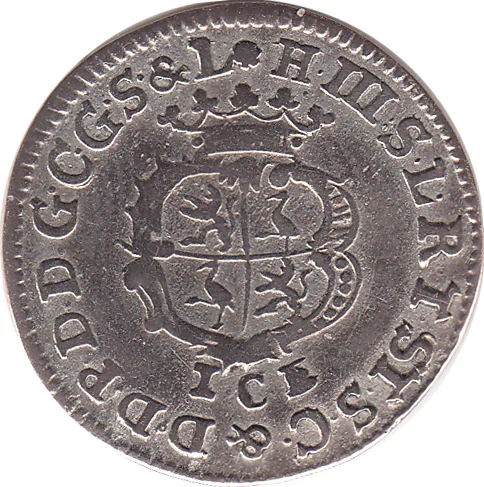
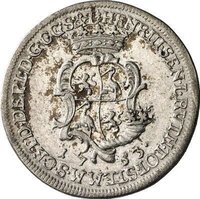
Obverse
Description:
Crowned coat of arms.
Inscription:
✿ H.III.S.L.R.T.ST.S.C.& D.D.P.D.D.G.C.G.S.& L
ICE
ICE
Script: Latin
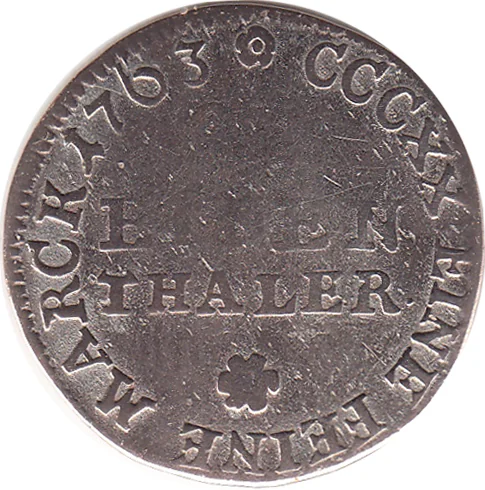
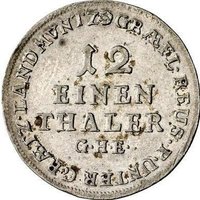
Reverse
Description:
Value, date in legend.
Inscription:
✿ CCCXX EINE FEINE MARCK 1763
24
EINEN
THALER
✱
24
EINEN
THALER
✱
Script: Latin
Edge
Mints
| Name | Mark |
|---|---|
| Saalfeld | — |
Mintings
| Year | Mint Mark | Mintage | Quality | Collection |
|---|---|---|---|---|
| 1763 | — | — | ||
| 1764 | — | — |
Historical background
In 1763, the small Thuringian principality of Reuss-Untergreiz, like much of the Holy Roman Empire, was navigating a complex and fragmented monetary landscape. The region operated within the framework of the Reichstaler, a theoretical imperial standard, but the reality was a proliferation of circulating coins from numerous German states and foreign entities. This created chronic issues of valuation and exchange, as the intrinsic silver content and official worth of coins from different minters varied widely. For a minor state like Reuss-Untergreiz, controlling its own currency was a significant challenge, often overshadowed by the monetary policies of larger, more powerful neighbors.
The immediate post-Seven Years' War (1756-1763) period presented a specific crisis. The war had been financed in part through the debasement of coinage by various warring states, flooding the German lands with underweight and inferior money. This led to widespread inflation, loss of public trust, and economic dislocation. While Reuss-Untergreiz itself was not a major belligerent, it could not escape the regional monetary chaos. The principality faced the practical problem of receiving devalued coins in trade and tax payments while striving to maintain the integrity of its own limited issues.
In response to this empire-wide crisis, 1763 saw the promulgation of the Imperial Coinage Ordinance (Reichsmünzordnung), an attempt to standardize and restore order. For Reuss-Untergreiz, this meant aligning its local currency practices with the new, stricter standards for the Konventionstaler. The transition required careful management to recall old coins and introduce new ones, a costly process for a small treasury. Thus, the currency situation in 1763 was one of transition—from the inflationary aftermath of war toward a hoped-for stability under renewed, but still difficult-to-enforce, imperial regulations.
The immediate post-Seven Years' War (1756-1763) period presented a specific crisis. The war had been financed in part through the debasement of coinage by various warring states, flooding the German lands with underweight and inferior money. This led to widespread inflation, loss of public trust, and economic dislocation. While Reuss-Untergreiz itself was not a major belligerent, it could not escape the regional monetary chaos. The principality faced the practical problem of receiving devalued coins in trade and tax payments while striving to maintain the integrity of its own limited issues.
In response to this empire-wide crisis, 1763 saw the promulgation of the Imperial Coinage Ordinance (Reichsmünzordnung), an attempt to standardize and restore order. For Reuss-Untergreiz, this meant aligning its local currency practices with the new, stricter standards for the Konventionstaler. The transition required careful management to recall old coins and introduce new ones, a costly process for a small treasury. Thus, the currency situation in 1763 was one of transition—from the inflationary aftermath of war toward a hoped-for stability under renewed, but still difficult-to-enforce, imperial regulations.
✨ Legendary