

12 kreuzers – Austrian Empire
Add to wishlist
Austria
Context
Year: 1795
Country: Austria
Issuer: Austrian Empire
Ruler: Francis II
Currency:
(1754—1857)
Demonetized: Yes
Total mintage: 95,376,000
Material
References
KM: #
Numista: #18040
Obverse
Description:
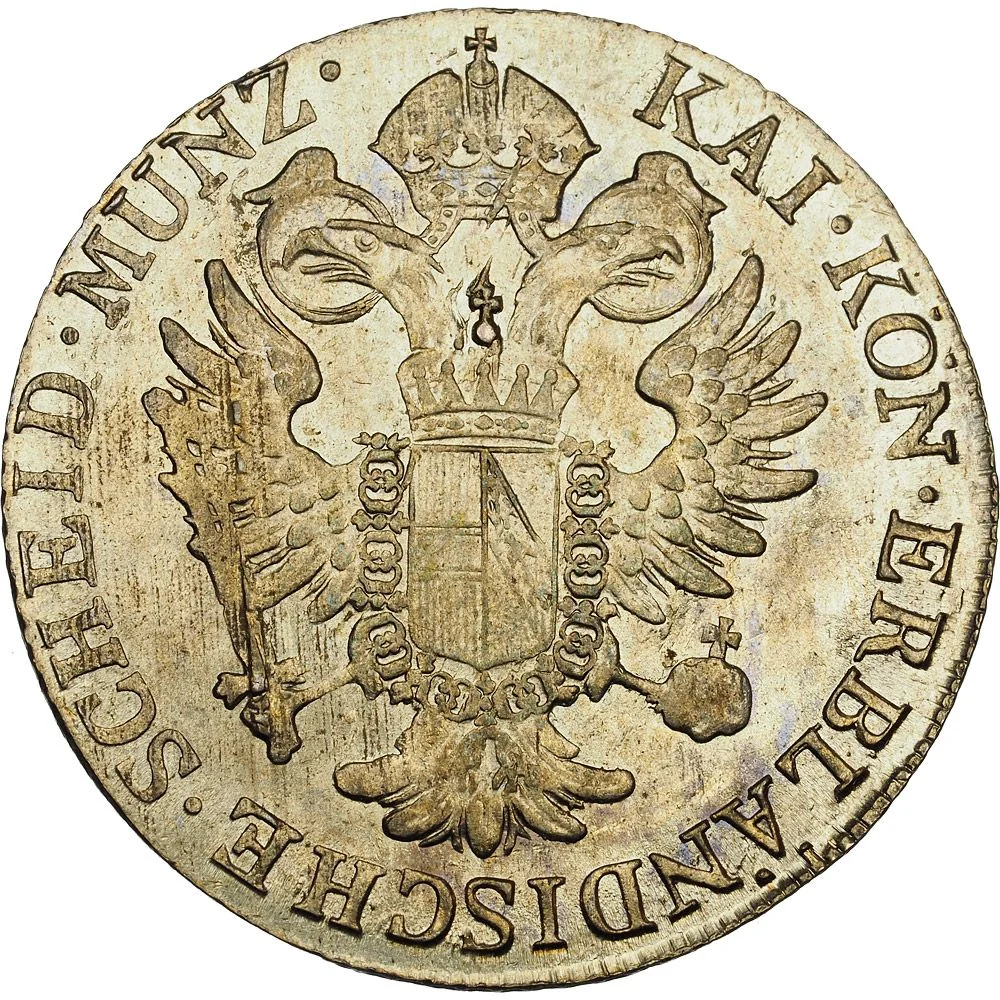
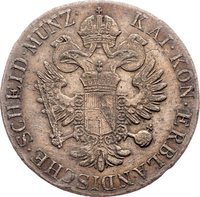
Imperial double-headed eagle with crown, holding orb and sword, its breast shield bearing the arms of Austria and Lorraine, encircled by the chain of the Order of the Golden Fleece.
Inscription:
KAI·KÖN·ERBLANDISCHE·SCHEID·MUNZ·
Script: Latin
Reverse
Description:
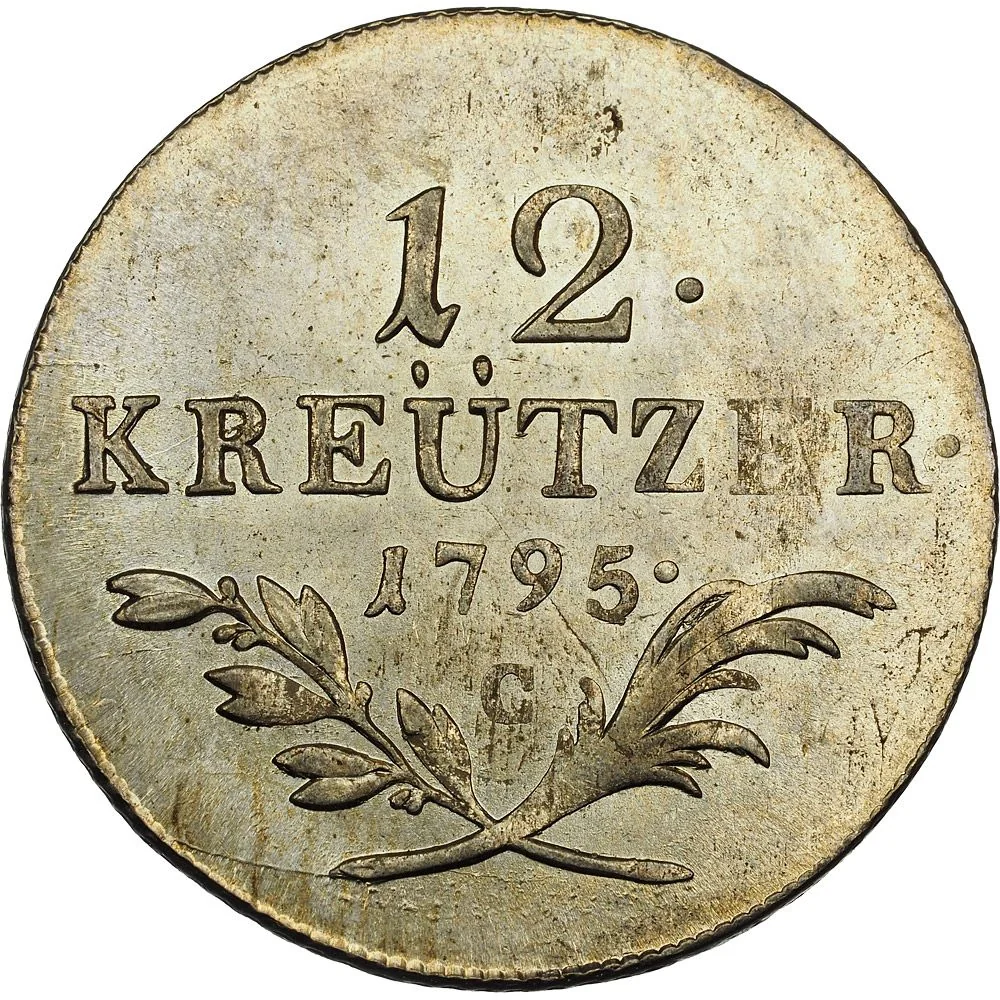
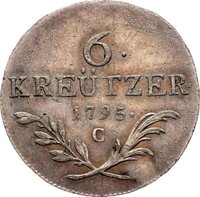
Value, date, mintmark above
laurel and palm branches.
laurel and palm branches.
Inscription:
12
KREÜTZER
1795·
C
KREÜTZER
1795·
C
Script: Latin
Edge
Chain ornament
Mints
| Name | Mark |
|---|---|
| Münze Österreich | A |
| Kremnica | B |
| Prague | C |
| Alba Iulia | E |
| Hall | F |
| Baia Mare | G |
Mintings
Historical background
In 1795, the currency situation in the Habsburg Monarchy was one of profound crisis, directly fueled by the immense financial demands of the ongoing war against revolutionary France. The state's traditional revenues were utterly insufficient to fund the military, leading the government of Emperor Francis II to rely overwhelmingly on the expedient of printing paper money. This currency, known as Bancozettel, was initially introduced in 1762 as a state bond but had evolved into a forced circulating paper money. By 1795, new issues were being printed at an accelerating pace to meet urgent wartime expenditures, flooding the economy with unbacked currency.
This massive expansion of the money supply led to severe inflation and a dramatic loss of confidence. While the Bancozettel nominally traded alongside silver coinage, a sharp and growing disparity emerged between their values. A vibrant and destabilizing black market for specie (silver and gold coins) developed, as the public and merchants, distrusting the ever-depreciating paper, hoarded metallic money. Consequently, a dual-price system became common, with goods priced much higher when paid for with paper Bancozettel than with silver gulden, effectively creating a chaotic monetary schism within the empire's economy.
The government's attempts to manage the crisis were largely ineffective. Official decrees aimed at fixing the exchange rate between paper and silver failed, as market forces and public skepticism rendered them unenforceable. The fundamental problem was the absence of fiscal discipline or sufficient metallic reserves to back the paper issues. Thus, by 1795, the Austrian Empire was entrenched in a cycle of inflationary finance, where printing money to pay for war further devalued the currency, increasing the real cost of the war and eroding economic stability—a pattern that would worsen dramatically in the coming decades.
This massive expansion of the money supply led to severe inflation and a dramatic loss of confidence. While the Bancozettel nominally traded alongside silver coinage, a sharp and growing disparity emerged between their values. A vibrant and destabilizing black market for specie (silver and gold coins) developed, as the public and merchants, distrusting the ever-depreciating paper, hoarded metallic money. Consequently, a dual-price system became common, with goods priced much higher when paid for with paper Bancozettel than with silver gulden, effectively creating a chaotic monetary schism within the empire's economy.
The government's attempts to manage the crisis were largely ineffective. Official decrees aimed at fixing the exchange rate between paper and silver failed, as market forces and public skepticism rendered them unenforceable. The fundamental problem was the absence of fiscal discipline or sufficient metallic reserves to back the paper issues. Thus, by 1795, the Austrian Empire was entrenched in a cycle of inflationary finance, where printing money to pay for war further devalued the currency, increasing the real cost of the war and eroding economic stability—a pattern that would worsen dramatically in the coming decades.
🌟 Limited