

10 Bahts (Queen Sikirit) – Thailand
Non-circulating coins
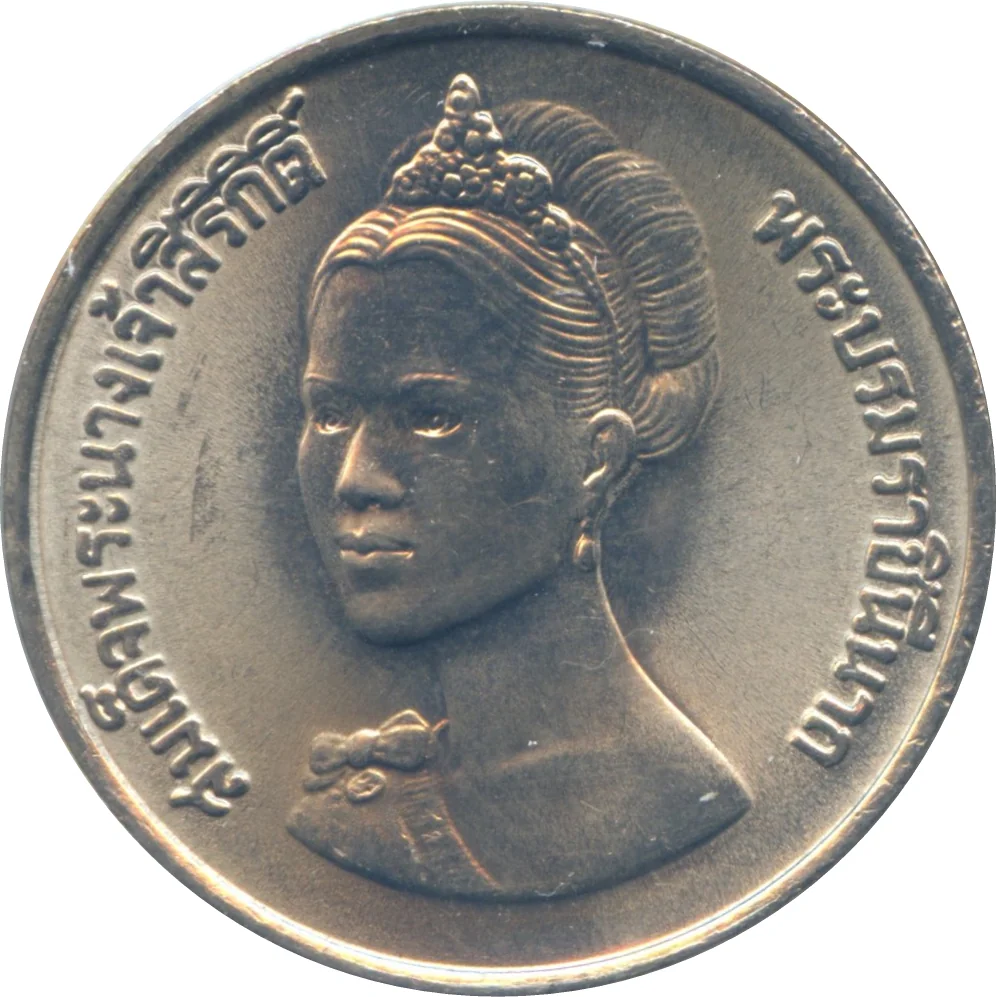
Commemoration: 50th Anniversary of Queen Sikirit
Thailand
Context
Year: 1982
Thai Year: 2525
Issuer: Thailand 
Ruler: Bhumibol Adulyadej
Currency:
(since 1897)
Total mintage: 507,210
Material
References
Y: #Click to copy to clipboard154
Numista: #12248
Value
Exchange value: 10 THB = $0.32
Obverse
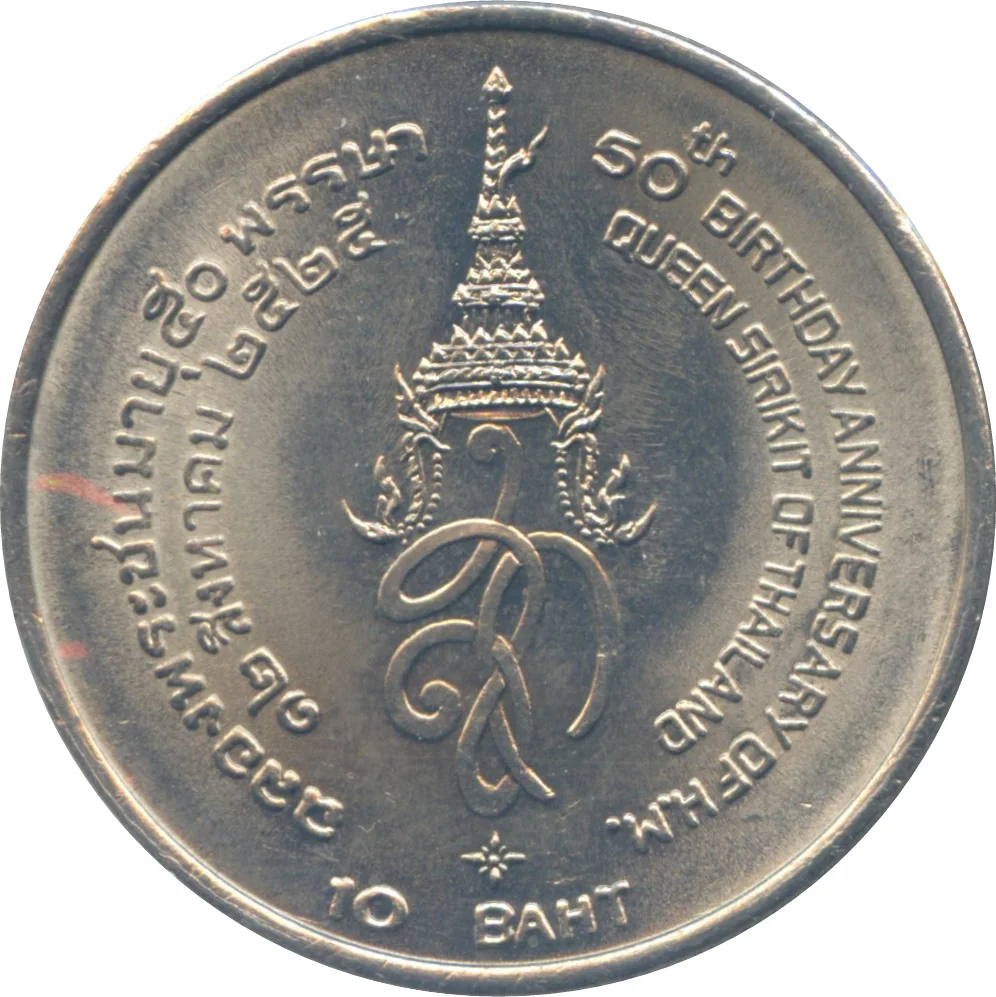
Reverse
Description:
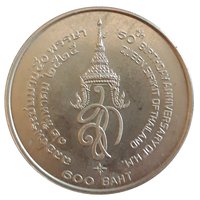
Queen Sirikit's cypher crowned.
Inscription:
ฉลองพระชนมายุ ๕๐ พรรษา 50th BIRTHDAY ANNIVERSARY OF H.M.
๑๒ สิงหาคม ๒๕๒๕ QUEEN SIRIKIT OF THAILAND
10 BAHT
๑๒ สิงหาคม ๒๕๒๕ QUEEN SIRIKIT OF THAILAND
10 BAHT
Translation:
Celebrating the 50th Birthday Anniversary of H.M. Queen Sirikit of Thailand
12 August 1982
10 Baht
12 August 1982
10 Baht
Edge
Reeded
Mintings
| Year | Mint Mark | Mintage | Quality | Collection |
|---|---|---|---|---|
| 1982 | — | 500,000 | ||
| 1982 | — | 7,210 | Proof |
Historical background
In 1982, Thailand's currency situation was characterized by a managed exchange rate system under significant pressure. The Thai baht was pegged to a basket of currencies, heavily weighted towards the US dollar, which had been appreciating strongly due to high US interest rates and tight monetary policy. This created a major challenge for Thailand, as the strong dollar made Thai exports more expensive and less competitive on the global market, exacerbating a growing trade deficit and straining foreign exchange reserves.
Domestically, the Thai economy was grappling with the aftermath of the 1979 oil shock and a period of high global inflation. While inflation had been brought down from double digits to around 5% by 1982 through tight fiscal and monetary policies, this came at the cost of slower economic growth. The government, led by Prime Minister Prem Tinsulanonda, was pursuing stabilization policies under guidance from the International Monetary Fund (IMF), which included reducing budget deficits and controlling credit growth to restore macroeconomic balance and protect the currency peg.
Consequently, the Bank of Thailand was forced to actively defend the baht's fixed exchange rate. This defense required high domestic interest rates to attract capital and frequent interventions in the foreign exchange market, depleting reserves. The situation highlighted the inherent tensions of the peg and set the stage for future financial liberalization. The pressures of 1982 were a precursor to the more profound reforms that would come later in the decade, including a shift to a more market-oriented exchange rate system in the early 1990s.
Domestically, the Thai economy was grappling with the aftermath of the 1979 oil shock and a period of high global inflation. While inflation had been brought down from double digits to around 5% by 1982 through tight fiscal and monetary policies, this came at the cost of slower economic growth. The government, led by Prime Minister Prem Tinsulanonda, was pursuing stabilization policies under guidance from the International Monetary Fund (IMF), which included reducing budget deficits and controlling credit growth to restore macroeconomic balance and protect the currency peg.
Consequently, the Bank of Thailand was forced to actively defend the baht's fixed exchange rate. This defense required high domestic interest rates to attract capital and frequent interventions in the foreign exchange market, depleting reserves. The situation highlighted the inherent tensions of the peg and set the stage for future financial liberalization. The pressures of 1982 were a precursor to the more profound reforms that would come later in the decade, including a shift to a more market-oriented exchange rate system in the early 1990s.
🌟 Limited