

8 daler sm – Sweden
Add to wishlist
Sweden
Material
References
KM: #
Numista: #179564
Obverse
Description:
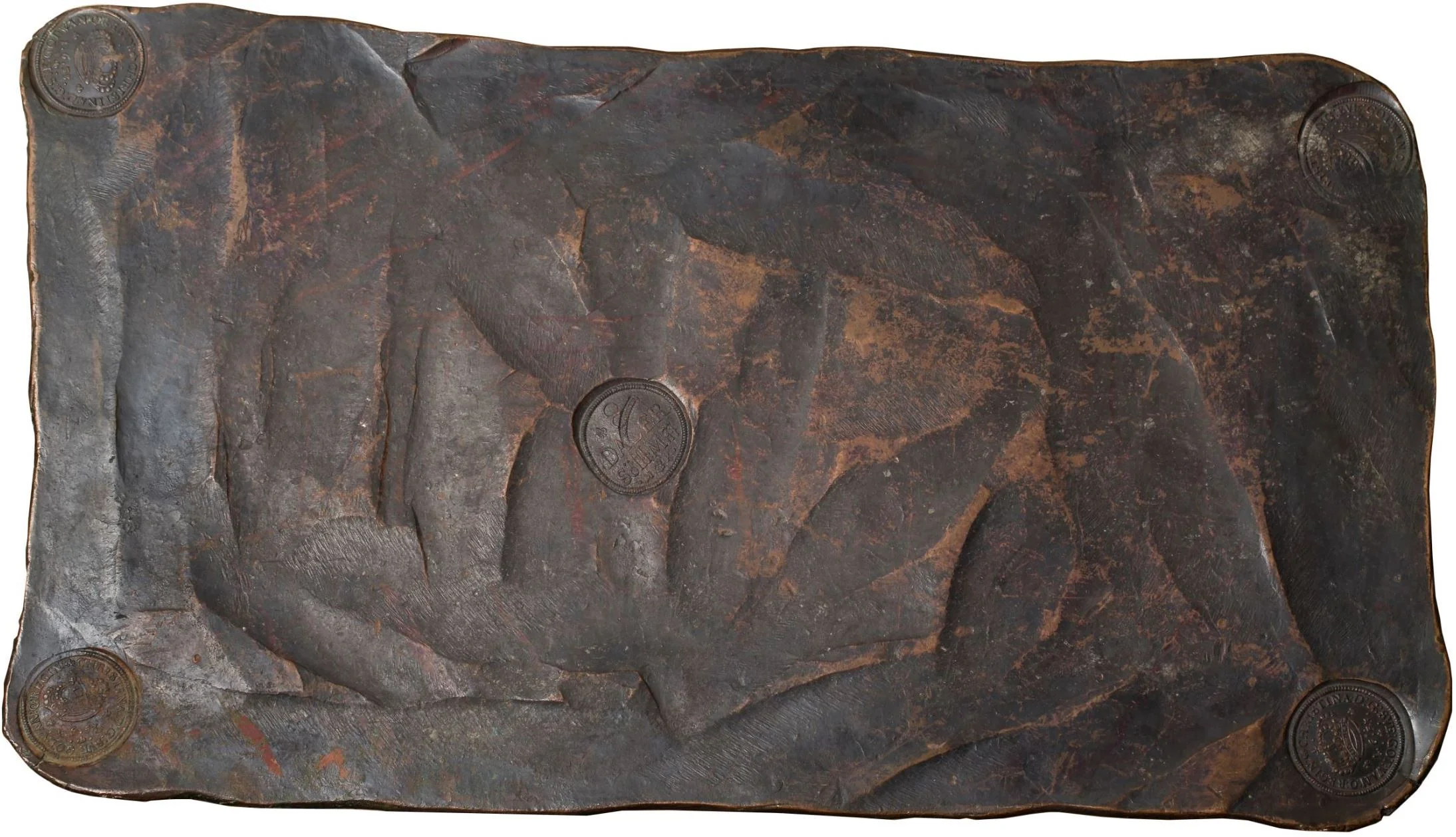
Five stamps on field.
Inscription:
Center stamp:
8
DALER
Sölff:Mnt
M R
Corner stamp:
CHRISTINA·D:G:SVE:GOT:WAN:Q:REGINA
1.6.53.
8
DALER
Sölff:Mnt
M R
Corner stamp:
CHRISTINA·D:G:SVE:GOT:WAN:Q:REGINA
1.6.53.
Script: Latin
Reverse
Edge
Mints
| Name | Mark |
|---|---|
| Avesta | — |
Mintings
| Year | Mint Mark | Mintage | Quality | Collection |
|---|---|---|---|---|
| 1652 | — | — | ||
| 1653 | — | — |
Historical background
In 1652, Sweden was navigating a complex and deteriorating monetary situation, largely a legacy of its costly involvement in the Thirty Years' War (1618-1648). To finance its military ambitions, the state had significantly increased the production of copper coinage, most notably through the large, rectangular plåtmynt (plate money), some weighing several kilograms. This was due to Sweden's rich copper reserves and a policy of copper standard, where the intrinsic metal value theoretically backed the currency. However, the war had drained resources, and the economy was struggling under the weight of a dual-metal system (copper and silver) that was increasingly unbalanced.
The core problem was a severe shortage of silver, the preferred metal for international trade, leading to a disparity between the face value of coins and their actual metal content. The government, under Queen Christina and her advisors, repeatedly engaged in debasement—reducing the silver content in coins while maintaining their nominal value—to create seigniorage profit for the treasury. This practice, combined with an over-issuance of copper money, fueled inflation and a loss of public confidence. Different types of coins circulated simultaneously at fluctuating rates, creating a chaotic and inefficient monetary environment that hampered commerce.
Consequently, 1652 fell within a period of intense monetary experimentation and crisis management. Efforts to stabilize the system, including a major monetary ordinance in 1652 itself, attempted to fix exchange rates between copper and silver and recall old debased coins. These measures were largely unsuccessful in the long term, as the fundamental pressures remained. The situation would eventually culminate in the 1660s with the establishment of the Stockholm Banco (a precursor to the central bank) and the issuance of Europe's first regular banknotes, a direct innovation born from the impracticality of the heavy copper plate money and the urgent need for a more functional medium of exchange.
The core problem was a severe shortage of silver, the preferred metal for international trade, leading to a disparity between the face value of coins and their actual metal content. The government, under Queen Christina and her advisors, repeatedly engaged in debasement—reducing the silver content in coins while maintaining their nominal value—to create seigniorage profit for the treasury. This practice, combined with an over-issuance of copper money, fueled inflation and a loss of public confidence. Different types of coins circulated simultaneously at fluctuating rates, creating a chaotic and inefficient monetary environment that hampered commerce.
Consequently, 1652 fell within a period of intense monetary experimentation and crisis management. Efforts to stabilize the system, including a major monetary ordinance in 1652 itself, attempted to fix exchange rates between copper and silver and recall old debased coins. These measures were largely unsuccessful in the long term, as the fundamental pressures remained. The situation would eventually culminate in the 1660s with the establishment of the Stockholm Banco (a precursor to the central bank) and the issuance of Europe's first regular banknotes, a direct innovation born from the impracticality of the heavy copper plate money and the urgent need for a more functional medium of exchange.
✨ Legendary